

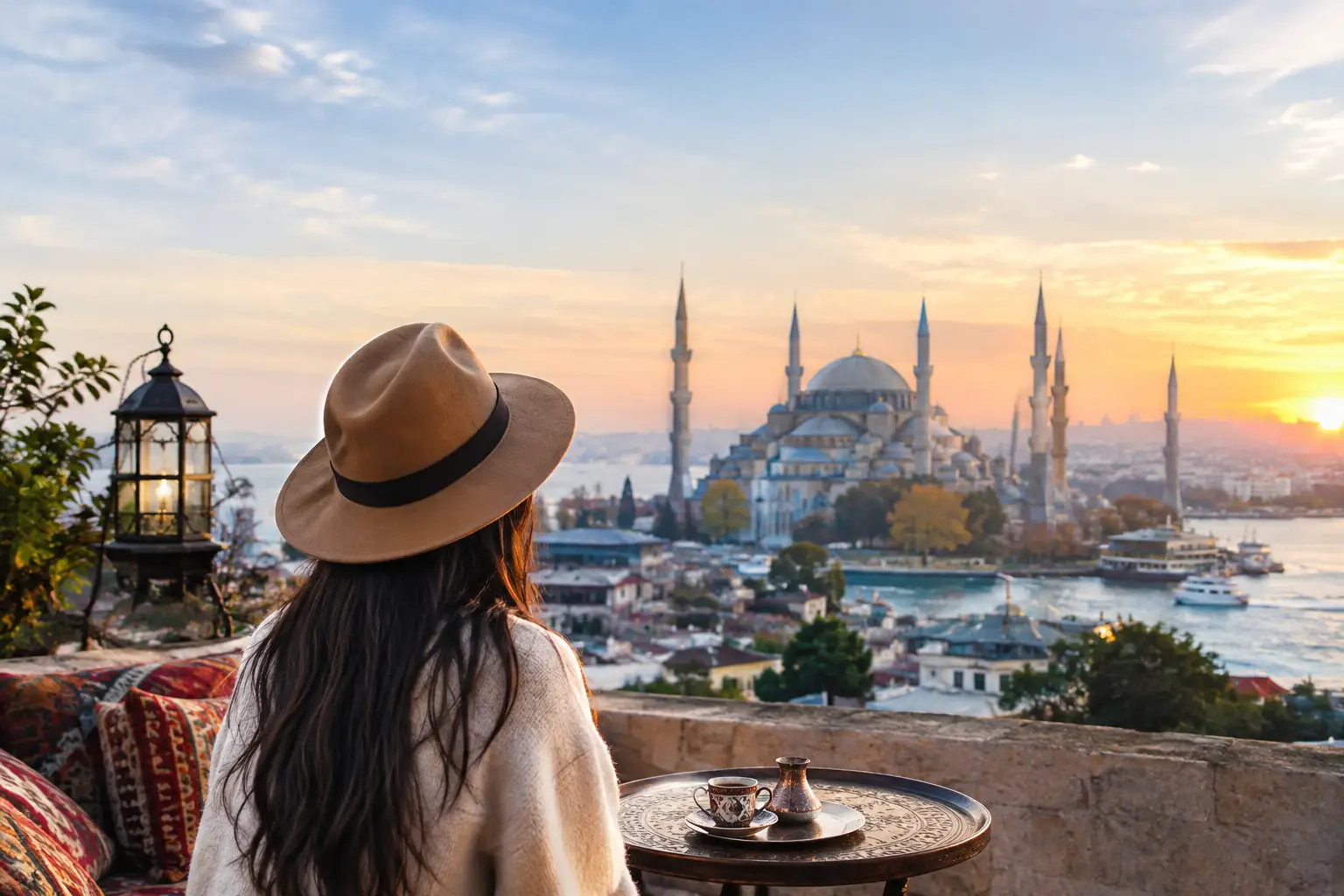
Turkey in January rewards travelers who would rather stand in the Hagia Sophia area with room to look around than spend an afternoon in a summer queue. This is a month for atmospheric city walks, uncrowded archaeological sites, warm Turkish breakfasts, and carefully paced travel between the country’s most memorable regions. It is not a beach vacation season, and weather can change quickly, but for cultural travelers, couples, families, and private groups, January can be an exceptionally satisfying time to visit.
The key is to plan for the season rather than against it. A well-designed itinerary combines indoor and outdoor sightseeing, selects hotels in convenient locations, and uses domestic flights and private transfers to keep longer travel days comfortable. With an experienced local guide, winter travel in Turkey feels calm, personal, and refreshingly unhurried.
Why Visit Turkey in January?
January is one of the quietest months across Turkey’s leading cultural destinations. Istanbul’s major landmarks, Cappadocia’s valleys, Ephesus, and Pamukkale generally have fewer visitors than they do from spring through fall. That changes the experience in meaningful ways: guides can explain a site without competing with large crowds, photographs are easier to take, and there is more time to linger over the details.
It is also a strong month for travelers who appreciate food, museums, and historic neighborhoods as much as outdoor scenery. In Istanbul, a cold morning is an excellent reason to visit the Ottoman collections of Topkapi Palace, the underground atmosphere of the Basilica Cistern, or the galleries of the Istanbul Archaeological Museums. Between visits, a traditional lunch, Turkish coffee, and a comfortable hotel provide natural pauses in the day.
January does require flexibility. Istanbul can be cold and rainy, Cappadocia can be snowy, and temperatures at Ephesus and Pamukkale vary from brisk sunshine to wet conditions. Coastal resorts are much quieter, and swimming or blue cruise itineraries are generally better saved for the warmer months. For travelers focused on heritage, landscapes, and authentic local experiences, however, these seasonal trade-offs are often an advantage.
Istanbul in January: A More Relaxed City Break
Istanbul is especially appealing in winter because so much of its character can be enjoyed in every kind of weather. The Blue Mosque, Hagia Sophia area, Grand Bazaar, Spice Market, and Bosphorus shoreline remain compelling when the air is crisp. A private Istanbul tour gives you the flexibility to adjust the order of visits around rain, museum hours, and your interests, rather than following a fixed group schedule.
A typical January day might begin in Sultanahmet, continue through the historic peninsula, and finish with a Bosphorus cruise or dinner in a well-chosen neighborhood. Private guiding is particularly useful for travelers who want to focus on art, Ottoman history, architecture, culinary stops, or family-friendly pacing. Boutique hotels near Sultanahmet, Sirkeci, Karakoy, and the Bosphorus also make it easy to return for a short break before an evening meal.
Allow at least three nights for Istanbul. Four nights is better if you would like a full-day city tour, a Bosphorus experience, time for shopping, and a more leisurely museum visit. January’s shorter daylight hours mean a sensible itinerary is more valuable than trying to fit every attraction into one long day.
Cappadocia in January: Snow, Stone, and Cave Hotels
Cappadocia in winter has a distinct appeal. When snow settles on the fairy chimneys and valleys, the landscape takes on a quiet, almost sculpted appearance. Cave hotels feel particularly inviting at this time of year, offering warm interiors, distinctive rooms, and views over the villages and rock formations.
A two- or three-night Cappadocia stay works well in a January itinerary. Private Cappadocia tours can cover the Goreme Open-Air Museum, Pasabag, Devrent Valley, Avanos, Uchisar, and an underground city while allowing for weather and road conditions. Your guide can also adapt the schedule so that outdoor viewpoints are visited during the clearest part of the day.
Hot-air balloon flights operate year-round when conditions allow, but they are weather-dependent in January. Travelers should view a balloon flight as a desirable possibility rather than the only reason to visit. Cappadocia remains memorable without it: sunrise views, pottery workshops, cave hotels, regional cuisine, and the extraordinary volcanic landscape are experiences in their own right.
Domestic flights make the Istanbul-Cappadocia combination straightforward. Arriving at Kayseri or Nevsehir airport with a pre-arranged transfer avoids unnecessary waiting in winter weather and allows the trip to begin smoothly.
Ephesus and Pamukkale: Winter’s Quiet Advantage
The Aegean region is cooler in January but often comfortable for sightseeing when dressed appropriately. Ephesus is particularly rewarding outside peak season. With fewer visitors along Curetes Street and around the Library of Celsus, it is easier to understand the scale and planning of this remarkably preserved ancient city.
A private Ephesus tour from Kusadasi, Izmir, or Selcuk can be tailored to the pace of your group and paired with a relaxed regional lunch. January is not the time to expect resort-style coastal activity, but it is a fine time for history, local food, and uncrowded exploration.
Pamukkale can be combined with Ephesus as part of a wider itinerary or enjoyed with an overnight stay. The white travertine terraces remain striking in winter, especially under changing skies, while the ancient ruins of Hierapolis add depth to the visit. A hotel in Pamukkale is useful for travelers who prefer not to rush the journey between destinations.
For a comfortable route, consider Istanbul, Cappadocia, Ephesus, and Pamukkale over eight to ten days. This allows time for three or four nights in Istanbul, two or three nights in Cappadocia, two nights in the Ephesus area, and one night in Pamukkale. Domestic flights and private vehicle services reduce long overland travel and make the itinerary more enjoyable in shorter daylight hours.
Practical Tips for Turkey in January
Pack layers rather than one heavy outfit. A waterproof outer layer, warm sweater, comfortable walking shoes with good grip, scarf, and compact umbrella cover most January conditions. Cappadocia is usually colder than Istanbul and the Aegean, so thermal layers and a warmer coat are worthwhile if it is included in your route.
Book hotels with location and comfort in mind. In Istanbul, staying close to the sights you most want to see minimizes time outdoors between visits. In Cappadocia, a quality cave hotel adds real value in winter. In the Ephesus and Pamukkale areas, select hotels that make early starts and overnight stops easy rather than trying to fit every destination into day trips.
Plan at least seven days for Istanbul and Cappadocia, or eight to ten days to add Ephesus and Pamukkale. Travelers with 12 days can create a more relaxed tailor-made journey that includes Antalya’s old town or Gallipoli and Troy, depending on their interests. January is not the ideal season for a gulet cruise along the Turquoise Coast, but it can be a good time to discuss a future spring or summer blue cruise as part of a return visit.
Keep the daily structure balanced. One major guided visit in the morning, a relaxed lunch, and a second nearby attraction is often more enjoyable than crossing a city or region repeatedly. Licensed local guides bring context to each place while private transportation gives you the freedom to pause, adjust, and travel at your preferred pace.
A January itinerary should feel considered, not crowded. Travel Store Turkey can arrange private and small-group Turkey tours with hotels, domestic flights, airport transfers, and licensed guides coordinated around your dates and priorities. Begin with the places that interest you most, leave room for winter’s changing rhythms, and let Turkey’s quieter season show you its most thoughtful side.
0 Comment