
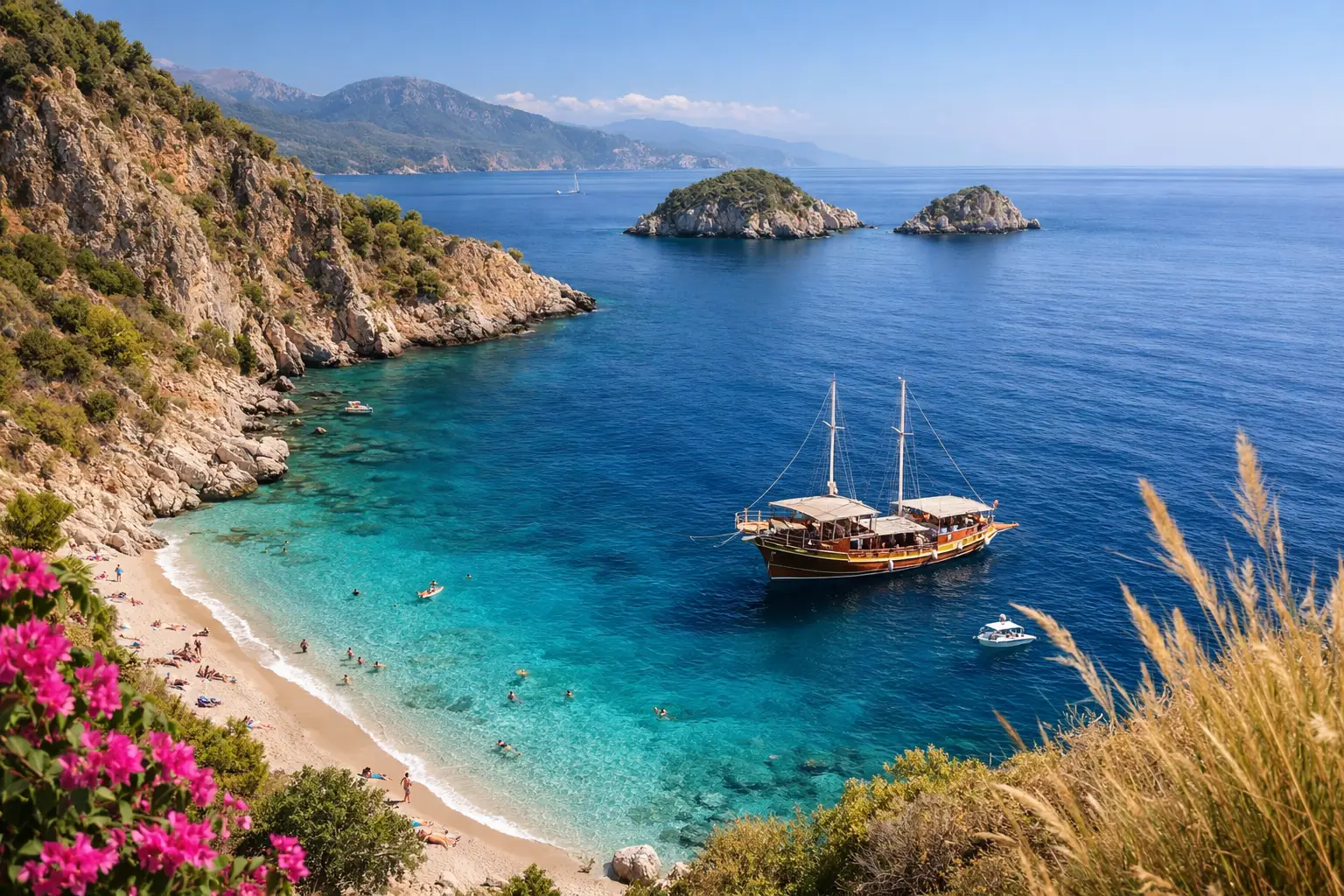
The best places on Turquoise Coast are not all trying to give you the same trip – and that is exactly why this stretch of southern Turkey (Türkiye) works so well for tailor-made travel. Some stops are built around beaches and stylish marinas, some around ancient ruins and harbor towns, and some are best experienced from the deck of a gulet rather than from a hotel terrace. If you want a coastal itinerary that feels easy, polished, and well-paced, choosing the right bases matters more than trying to see everything.
Best places on Turquoise Coast for different travel styles
The Turquoise Coast generally refers to the Mediterranean and southwestern shoreline around Antalya, Kaş, Kalkan, Fethiye, Göcek, Marmaris, and Bodrum. It is one of the most rewarding regions in Turkey for travelers who want sea views, archaeological sites, good hotels, and smooth connections between destinations.
For some travelers, Antalya is the best starting point because it combines resort comfort with a historic old town and strong flight access. Others prefer Fethiye or Göcek for blue cruise departures and a more yachting-focused atmosphere. If your priority is a refined small-town stay with excellent dining and easy access to beach clubs, Kalkan usually stands out. If you want a classic mix of sea, history, and relaxed evenings, Kaş often becomes the favorite.
Antalya
Antalya is one of the easiest coastal gateways in Turkey (Türkiye), which makes it ideal for travelers building a wider itinerary that may also include Istanbul, Cappadocia, Pamukkale, or Ephesus. The city offers a practical combination of international-standard hotels, airport convenience, private transfer options, and a historic center that still feels atmospheric rather than staged.
Kaleiçi, Antalya’s old quarter, is the part most visitors remember. Narrow streets, Ottoman-era houses, the old harbor, and easy seaside dining make it especially appealing for a two- or three-night stay. Antalya also works well for travelers who want a luxury hotel base while taking private day trips to nearby ancient sites such as Perge, Aspendos, and Side.
If you prefer a coastal trip with comfort and structure, Antalya is often the most efficient place to begin.
Kaş
Kaş has a calm confidence that appeals to travelers who want charm without excessive resort scale. It is compact, walkable, and beautifully set above the sea, with whitewashed houses, bougainvillea-lined streets, and a harbor that feels active but not hectic.
What makes Kaş special is its balance. You can spend the morning on a boat, visit Lycian ruins in the afternoon, and have an excellent dinner in town without needing a complicated plan. It suits couples particularly well, but it also fits small private itineraries that pair the coast with inland cultural destinations.
Kaş is also a strong base for travelers interested in Kekova and the sunken city area, which is best experienced on a private boat excursion or well-organized small group outing.
Kalkan
Kalkan is one of the most polished stops along the coast. It is known for elegant hillside villas, upscale boutique hotels, rooftop restaurants, and a harbor-centered layout that feels intimate rather than sprawling. While it does not have a wide sandy beach in town, that trade-off is often worth it for travelers who care more about atmosphere, dining, and refined accommodations.
Nearby Kaputaş Beach and Patara Beach add the classic postcard scenery many visitors are looking for. Patara also offers archaeological interest, which is a recurring advantage on the Turquoise Coast – beach time rarely has to come at the expense of culture.
Kalkan works best for travelers who want a slower, more stylish coastal stay. It is less about ticking off attractions and more about enjoying a well-chosen base.
Best places on Turquoise Coast for scenery and sailing
Fethiye
Fethiye is one of the most versatile destinations on the coast. It gives you marina life, resort comfort, historical texture, and easy access to some of Turkey’s best-known natural scenery. This is where many travelers begin or end a blue cruise, especially itineraries that continue toward Göcek, Kaş, or Olympos.
The town itself is lively and practical, with a good range of hotels and services. Nearby highlights include Ölüdeniz, the Blue Lagoon, and the rock tombs overlooking the city. Fethiye also connects well with inland routes, making it a smart addition to a broader private Turkey itinerary.
If you want a destination that can support both hotel-based sightseeing and yacht-based travel, Fethiye is one of the safest choices.
Ölüdeniz
Ölüdeniz is often the image travelers already have in mind when they think of the Turquoise Coast – bright blue water, a calm lagoon, and dramatic mountain scenery. It is undeniably beautiful, though it is more focused on beach time and day visitors than on the layered town atmosphere you find in Kaş or Kalkan.
That does not make it less worthwhile. It simply means it works best as part of a route rather than as the only stop. Many travelers choose to stay in nearby Fethiye and visit Ölüdeniz with a private transfer or a day excursion. That approach gives you more flexibility and usually a better balance between scenery and overall experience.
Göcek
Göcek is one of the most refined sailing hubs in Turkey (Türkiye). It is known for marinas, quality waterfront hotels, and access to sheltered bays that are best seen by boat. Travelers who value privacy, comfort, and a quieter atmosphere often prefer Göcek over busier resort towns.
Unlike destinations built around big sightseeing lists, Göcek is more about how the trip feels. Lazy mornings by the sea, short cruises through pine-fringed coves, and smooth hotel-to-marina logistics are the real appeal here. For guests considering a gulet charter or a private blue cruise, Göcek is one of the strongest embarkation points on the coast.
Kekova
Kekova is less of a conventional town stop and more of a signature experience. The area is famous for clear water, historic ruins, and the remains of a sunken ancient settlement visible from the sea. It is one of those places where a boat is not an extra – it is the whole point.
Because of that, Kekova is usually best visited from Kaş or nearby coastal bases with a well-planned excursion. Travelers who enjoy archaeology but do not want a museum-heavy itinerary often find this part of the coast especially rewarding. You are seeing history in its landscape, not behind glass.
Coastal towns worth adding to a longer route
Marmaris
Marmaris is a larger and more developed coastal center, with a broad bay, marina infrastructure, and strong access for yacht travel. It suits travelers who want a wider hotel selection and a more active resort setting. While it can feel busier than Kaş or Göcek, it remains a practical stop for longer coastal journeys, especially when combined with a gulet itinerary or onward travel toward Bodrum.
Bodrum
Bodrum sits at the western edge of many Turquoise Coast itineraries, and while some travelers see it as a separate destination, it pairs naturally with the southwest coast for a longer luxury route. It offers high-end resorts, stylish dining, historical landmarks, and excellent marina culture. If your trip is meant to end with a more cosmopolitan coastal stay, Bodrum is a strong finishing point.
How to plan the right Turquoise Coast route
A common mistake is trying to move too often. Distances along the coast can look short on a map, but the roads are scenic and winding, which means pace matters. For most travelers, the best route is built around two or three bases rather than five or six quick stops.
If you have 5 to 6 days, Antalya with Kaş or Kalkan works well. If you have 7 to 9 days, Fethiye, Göcek, and Kaş create a very strong combination. If you want a broader Turkey (Türkiye) trip, pairing the coast with Istanbul and Cappadocia often gives the most satisfying contrast – sea, history, and landscapes in one itinerary.
Travelers who want the coast without handling transfers, domestic flights, hotel coordination, and boat schedules themselves usually benefit from a private or tailor-made arrangement. That is especially true when combining blue cruise segments with land touring.
Practical tips for visiting the best places on Turquoise Coast
The best time to visit is usually late April through June and September through October, when the weather is warm and the coast feels lively without peak summer intensity. July and August bring classic beach weather, but also fuller resorts and stronger heat, especially for travelers planning archaeological visits.
For a relaxed trip, plan at least 4 nights for one coastal base or 7 nights for a multi-stop route. Less than that can feel rushed, particularly if you are adding a gulet cruise or private sightseeing days.
A very workable route for first-time visitors is Antalya to Kaş to Fethiye. Another excellent option is Fethiye to Göcek with a blue cruise segment. Travelers adding major inland highlights often do Istanbul, Cappadocia, and then finish on the coast for a more comfortable pace at the end of the trip.
If you are choosing between hotel time and sailing time, it depends on what kind of rest you want. Hotels give you more structure, dining choice, and shore access. Blue cruises offer unmatched scenery and privacy, but with a more self-contained rhythm. Many of the best itineraries combine both.
The Turquoise Coast rewards travelers who plan for quality over quantity. A well-chosen route, the right hotel base, and reliable local coordination can turn a beautiful coastline into a genuinely easy and memorable part of your Turkey journey. If you are shaping a private trip, it is worth building around the places that match your pace rather than simply the ones that look best on a map.
0 Comment