

Nestled along the stunning Mediterranean coastline in the Konyaaltı district lies one of Turkey’s most extraordinary cultural treasures. The Antalya Archaeology Museum (Antalya Müzesi) is not merely a repository of old objects—it is a time capsule that transports visitors through thousands of years of human civilization. From the fossilized bones of prehistoric cave dwellers to the exquisite marble gods of the Roman Empire, this museum offers an unparalleled journey through the history of the Mediterranean and Pamphylia regions.
In this comprehensive 2026 guide, we will explore everything you need to know—from the museum’s fascinating halls and iconic artifacts to practical visitor information and insider tips.
The History of Antalya Archaeology Museum
The story of the Antalya Archaeology Museum is itself a testament to the importance of cultural preservation. During the aftermath of World War I, when Antalya was under Italian military occupation, Italian archaeologists began removing valuable artifacts from the region under the guise of “civilizing” missions .
In response, Süleyman Fikri Bey, a dedicated local educator and Sultan’s advisor, took decisive action. In 1919, he appointed himself as voluntary curator of antiquities and began collecting whatever treasures remained in the area . This grassroots effort led to the formal establishment of the museum in 1922, initially operating within the historic Alâeddin Mosque.
The collection grew steadily, moving to the Yivli Minare Mosque in 1937, where it remained for 35 years . In 1972, the museum relocated to its current, specially constructed building in Konyaaltı, designed to properly showcase the region’s archaeological wealth . After significant renovations in 1982-1985, the museum reopened with a modern exhibition concept that continues to impress visitors today .
Museum Collection: A Journey Through 5,000 Years
The Antalya Archaeology Museum houses an extraordinary collection of approximately 25,000 to 30,000 artifacts, spanning from the Paleolithic Age to the Ottoman period . Of these, around 5,000 works are on display across 13 exhibition halls and an open-air gallery, covering an area of 7,000 square meters .
The museum’s richness is due to its location—Antalya sits on land that has witnessed uninterrupted human history, hosting magnificent cities of the Lycian, Roman, and Byzantine civilizations . The artifacts displayed here are considered masterpieces of their kind, many unearthed from nearby ancient cities such as Perge, Side, and Aspendos.
The 13 Exhibition Halls: What to See
The museum is organized into chronological and thematic halls, allowing visitors to trace the development of human culture through the ages.
Natural History Hall
This hall provides context for human development by displaying the natural world that surrounded ancient peoples. Visitors can see fossils and bones of living creatures, from single-celled animals to mammals, alongside informative charts and pictures .
Pre-History Hall
Here, artifacts discovered in Karain Cave, Öküzini Cave, and Sehahöyük are exhibited. Karain Cave, located just outside Antalya, is one of the most important prehistoric sites in Turkey, containing evidence of human habitation dating back to the Paleolithic Age. The collection includes animal fossils, early stone tools, and kitchen utensils that illuminate the lives of our ancient ancestors .
The Neanderthal skeleton fragments discovered in Karain Cave are particularly significant, representing some of the earliest human remains found in Anatolia .
Proto-History Hall
This hall showcases artifacts from the Neolithic, Chalcolithic, and Early Bronze Ages, primarily excavated at Hacılar and Semahöyük. Visitors can admire early earthenware pottery, figurines, and tools that demonstrate the development of settled agricultural communities .
Classic Period Hall
Works dating from the Mycenaean Age to the Hellenistic Age fill this gallery. Earthenware figurines, wine bowls, and dishes reveal the artistic and cultural influences that shaped the region. An important statuette of Apollo from the Hellenistic period is among the highlights .
A fascinating array of ancient vessel types is also displayed, including Lekythos, Alabastron, Oinokhoe, Kothon, Aryballos, and Lagynos—each designed for specific purposes in daily life and religious ritual .
Hall of Gods (Statuary Hall)
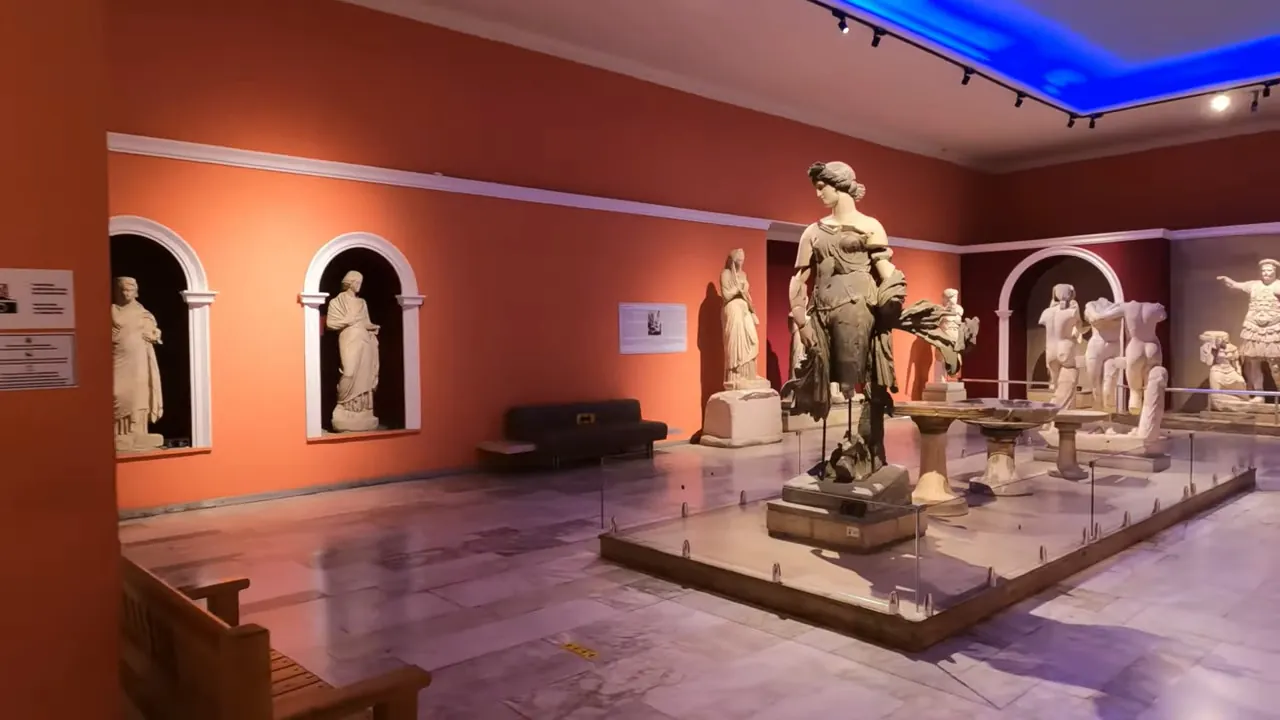
This is perhaps the most breathtaking gallery in the entire museum. Here, magnificent marble statues of mythological figures from the 2nd and 3rd centuries AD stand in dramatic, well-lit displays . Excavated from the ancient city of Perge, these sculptures represent the pinnacle of Roman-period artistry.
The hall features an impressive pantheon including:
-
Zeus: King of the gods, rendered in powerful marble
-
Artemis: Goddess of the hunt, depicted with her characteristic attributes
-
Aphrodite: Goddess of love and beauty, embodying classical grace
-
Athena: Goddess of wisdom and warfare
-
Apollo: God of music and light, represented with idealized features
-
Hermes: Messenger of the gods
-
Marsyas: The satyr who challenged Apollo to a musical contest
The Dancer Sculpture, assembled from pieces discovered during excavations, serves as a symbol of the Antalya Museum. Visitors consistently praise its monumentality, fine details, and remarkable vitality .
Hall of Imperial Statues
This hall showcases portraits of Roman emperors, empresses, and prominent figures, also excavated from Perge . These sculptures are considered masterpieces of Roman portraiture, capturing both the physical likeness and character of their subjects.
Notable statues include:
-
Plancia Magna: A large central statue honoring this influential administrator who contributed greatly to Perge’s golden age
-
Emperor Hadrian: One of Rome’s most celebrated rulers
-
Emperor Septimius Severus and his wife Julia Domna
-
Emperor Trajan
-
Emperor Caracalla
-
Lucius Verus: Co-emperor of Rome
-
Alexander the Great: The legendary Macedonian king
Sarcophagus Hall
The Sarcophagus Hall displays magnificent stone coffins from the Roman period, originating from Pamphylia and Sidemara . Their intricate decorations range from simple floral motifs to complex figured scenes depicting mythology and daily life .
Three sarcophagi stand out as particularly noteworthy:
-
The Domitias Sarcophagus: Dedicated to a husband and wife who remained inseparable even in death, this piece bears inscriptions naming Domitias Julianus and Domita Philiska
-
The Heracles Sarcophagus: Depicting the 12 labors of the mythical hero Heracles (Hercules), this masterpiece draws visitors from around the world
-
The Garland Sarcophagus: Adorned with intricate floral motifs and figures
Mosaic Hall
Byzantine period mosaics discovered during excavations at Xanthos are exhibited here, alongside icons from the Antalya region . These colorful floor and wall decorations demonstrate the continuation of artistic traditions into the Christian era.
Hall of Church Artifacts
This hall contains wooden church furnishings depicting scenes from the life of Jesus Christ. Most significantly, artifacts associated with Saint Nicholas—the historical figure who inspired Santa Claus—are displayed here, including relics preserved in special cases . Excavations at the Church of St. Nicholas in nearby Demre (Myra) yielded these precious objects.
Hall of Small Objects
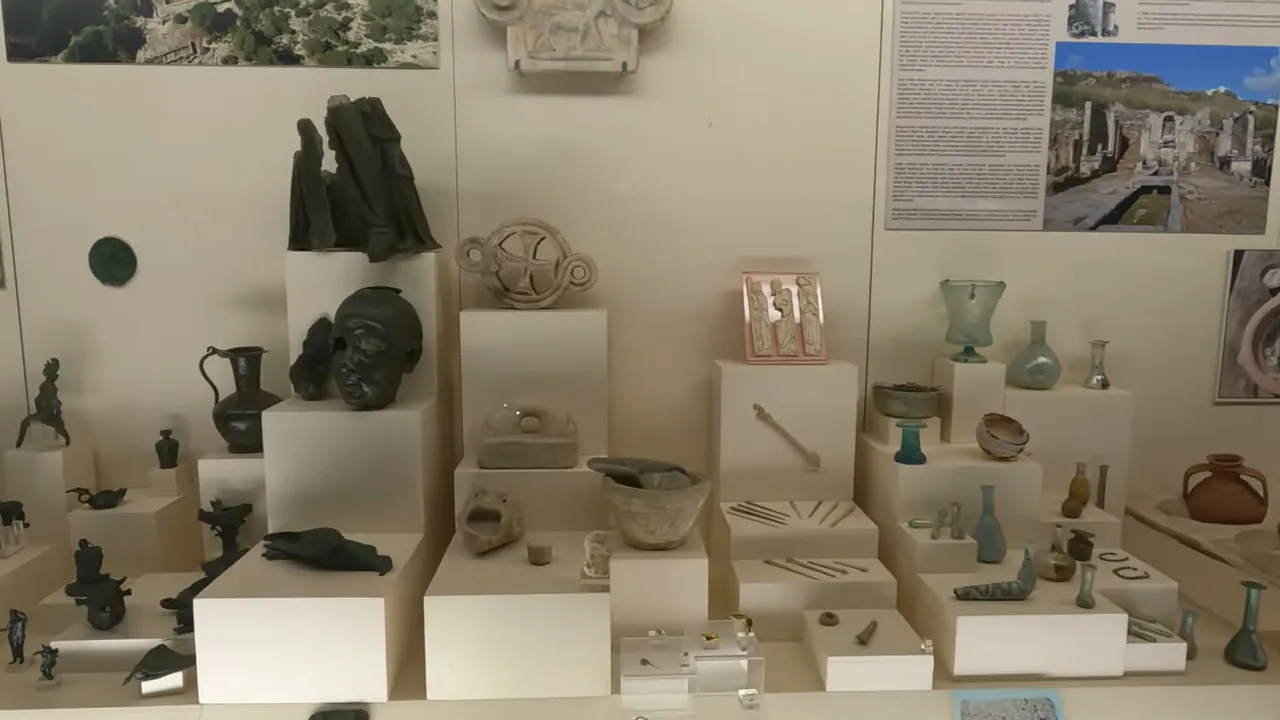
Roman and Byzantine period lamps and glass objects fill this gallery. A gold-inlaid silver tray discovered by treasure hunters at Kumluca, along with 6th-century incense holders and lamps, demonstrate the craftsmanship of the period .
Hall of Coins
Numismatists will delight in this comprehensive collection spanning the Hellenistic through Ottoman periods. Gold, electrum, silver, and copper coins illustrate the economic history of the region .
The most famous exhibits here are the “Elmalı Coins,” also known as the “Treasure of the Century” . This extraordinary hoard of 5th-century BC Greek silver coins, discovered near the town of Elmalı, represents one of the most significant numismatic finds in modern history. Many were illegally smuggled abroad but were successfully repatriated between 1995 and 1999 .
Turkish-Islamic Period Hall
Examples of Seljuk and Ottoman tiles, Anatolian carpets, inscriptions, books, candlesticks, lamps, and dervish paraphernalia showcase the rich artistic traditions of the Islamic era .
Ethnography Hall
This gallery displays traditional clothing, embroidery, weapons, and metal objects from the Antalya region. One corner has been furnished as a typical Anatolian house, offering visitors a visual journey into the domestic life of the recent past .
Children’s Section
Turkey’s first museum section designed specifically for young visitors, this hall features display windows with various children’s toys and antique moneyboxes . Simple restoration activities and educational opportunities in ceramic sculpture and drawing help children connect with history in engaging ways .
Iconic Artifacts You Cannot Miss
Beyond the hall-by-hall exploration, certain artifacts stand as the museum’s crown jewels:
-
The Weary Heracles (Hercules Farnese): This remarkable statue tells a story of loss and recovery. Excavated in Perge in 1980, only the lower half was found. The upper portion had been illegally smuggled abroad, but in 2011 it was returned to Turkey and reunited with its lower half . The complete statue depicts Heracles resting on his club after slaying the Nemean Lion—a task that could not be accomplished with weapons. While many Roman copies of this 4th-century BC original by Lysippos exist, the Antalya version is deemed superior due to its exceptional craftsmanship .
-
The Apollo Head: This exquisite marble head of Apollo, wearing a laurel crown, is considered the museum’s symbolic treasure . Despite its age, the expression remains remarkably lifelike, demonstrating the extraordinary skill of ancient sculptors.
-
The Dancer Sculpture: Discovered in pieces and meticulously reassembled, this graceful figure has become an emblem of the museum .
-
The Elmalı Coins: This internationally significant hoard of 5th-century BC Greek silver coins represents the pinnacle of ancient minting art .
-
Saint Nicholas Relics: Artifacts from the Church of St. Nicholas in Demre offer a tangible connection to the beloved bishop who inspired Santa Claus traditions .
Practical Information for Your 2026 Visit
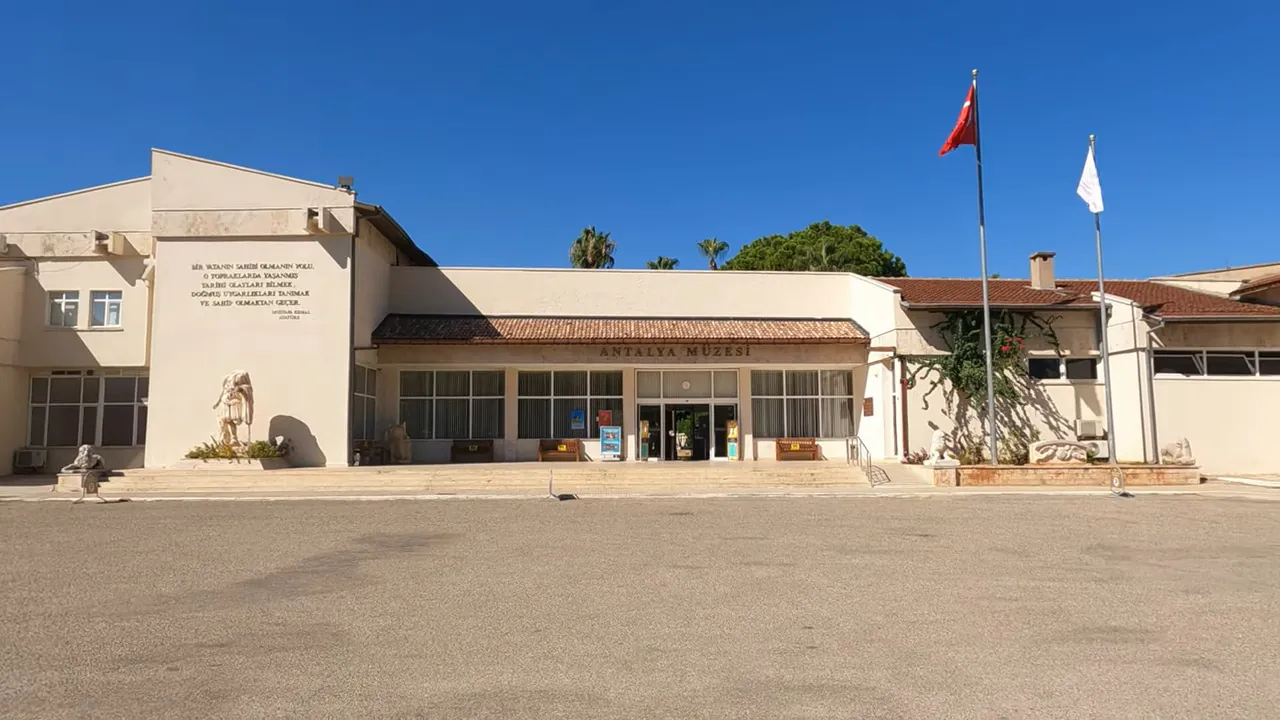
To ensure a smooth and enjoyable visit to the Antalya Archaeology Museum, here is all the practical information you need:
Location and Contact
-
Address: Bahçelievler, Konyaaltı Cd. No:88, 07050 Muratpaşa/Antalya, Türkiye
-
Phone: +90 (242) 238-5688
-
Email:[email protected]
Opening Hours (2026)
The museum has extended hours during peak seasons and offers evening visiting opportunities. Based on current information:
-
Summer Hours (approx. April-October): 08:30 – 19:00 or later
-
Evening Summer Hours: Some sources indicate evening openings from 19:00 – 22:00 (last ticket at 20:30)
-
Winter Hours (approx. October-April): 08:30 – 17:30
The museum is reportedly open every day, including Mondays during peak season . However, some older sources suggest Monday closures, so it is advisable to verify before visiting.
Admission Fees (2026)
Prices have changed significantly in recent years, and current visitor reports indicate:
-
Regular Entry: Approximately €13 – €15 (or 340-440 Turkish Lira equivalent) for foreign visitors
-
Audio Guide: €5 – €7 additional fee
Important Note: There is a dual pricing system in place, with Turkish citizens paying considerably less via the MüzeKart. Foreign visitor prices are higher but reflect access to one of the world’s great archaeological collections.
How to Get There
The museum is conveniently located along Konyaaltı Street in the Bahçelievler neighborhood:
-
By Tram: Take the AntRay tram line to the museum stop
-
By Bus: Routes 400, KL08, LC07A, and UC11 serve the area
-
By Taxi: Readily available throughout Antalya
-
By Car: Accessible via the D400 highway, with parking available on site
Facilities and Accessibility
-
Restrooms: Available on site
-
Accessibility: Most areas are wheelchair accessible
-
Gift Shop: Books, replicas, and souvenirs available
-
Cafeteria: On-site refreshments
-
Gardens: Beautiful outdoor areas with scattered artifacts and friendly cats
Visitor Tips for an Optimal Experience
Based on recent visitor feedback, here are essential tips for your visit:
-
Plan for 2 Hours: Most visitors spend approximately 2 hours exploring the 13 halls
-
Skip the Paid Audio Guide: Recent reviews indicate that written English descriptions are adequate, and the paid audio guide may not be necessary
-
Scan for Free Audio: Some sources mention QR codes on tickets providing free audio access
-
Visit on Weekdays: Weekends can be crowded with tour groups and local families
-
Don’t Miss the Gardens: The outdoor exhibition areas and the resident cats add charm to the experience
-
Photography: Allowed, but flash photography may be restricted in some areas
-
Bring Water: Stay hydrated, especially during summer months
Visitor Reviews: What Others Are Saying
The Antalya Archaeology Museum consistently earns outstanding reviews from visitors worldwide:
-
Google Rating: 4.7/5 (13,676+ reviews)
-
Tripadvisor Rating: 4.5/5 (2,370+ reviews)
Recent reviewers highlight:
“Outstanding museum, especially for statuary and sarcophagi from Perge and other nearby sites. The current price is 13 euro.”
“Interesting and very well maintained museum, not too big – you will probably not get too tired… They have an impressive collection of statues, mosaics, and artifacts.”
“Nicely curated collection of Greco-Roman and Neolithic objects. While the collection is rich and well organized… Don’t miss the gardens where the ubiquitous cats suntan among the sarcophagi and column capitals.”
Nearby Attractions
Combine your museum visit with these nearby destinations:
-
Konyaaltı Beach: Just a short walk away, this beautiful Mediterranean beach offers swimming and relaxation
-
Antalya Aquarium: One of the world’s largest aquarium complexes
-
Düden Waterfalls: Approximately 30 minutes from the museum
-
Kaleiçi (Old Town): Antalya’s historic center with narrow streets, Ottoman houses, and Hadrian’s Gate
-
Perge Ancient City: The source of many museum artifacts, located about 18 km east
The Antalya Archaeology Museum stands as one of Turkey’s greatest cultural institutions—a place where 15-million-year-old fossils, the gods of Olympus, and the relics of saints coexist in perfect harmony. Its 13 halls offer a chronological journey through human achievement that few museums in the world can match. From the haunting Neanderthal remains of Karain Cave to the magnificent marble emperors of Perge, from the legendary “Treasure of the Century” coins to the reunited Weary Heracles, every artifact tells a story of creativity, faith, and human endeavor.
0 Comment