
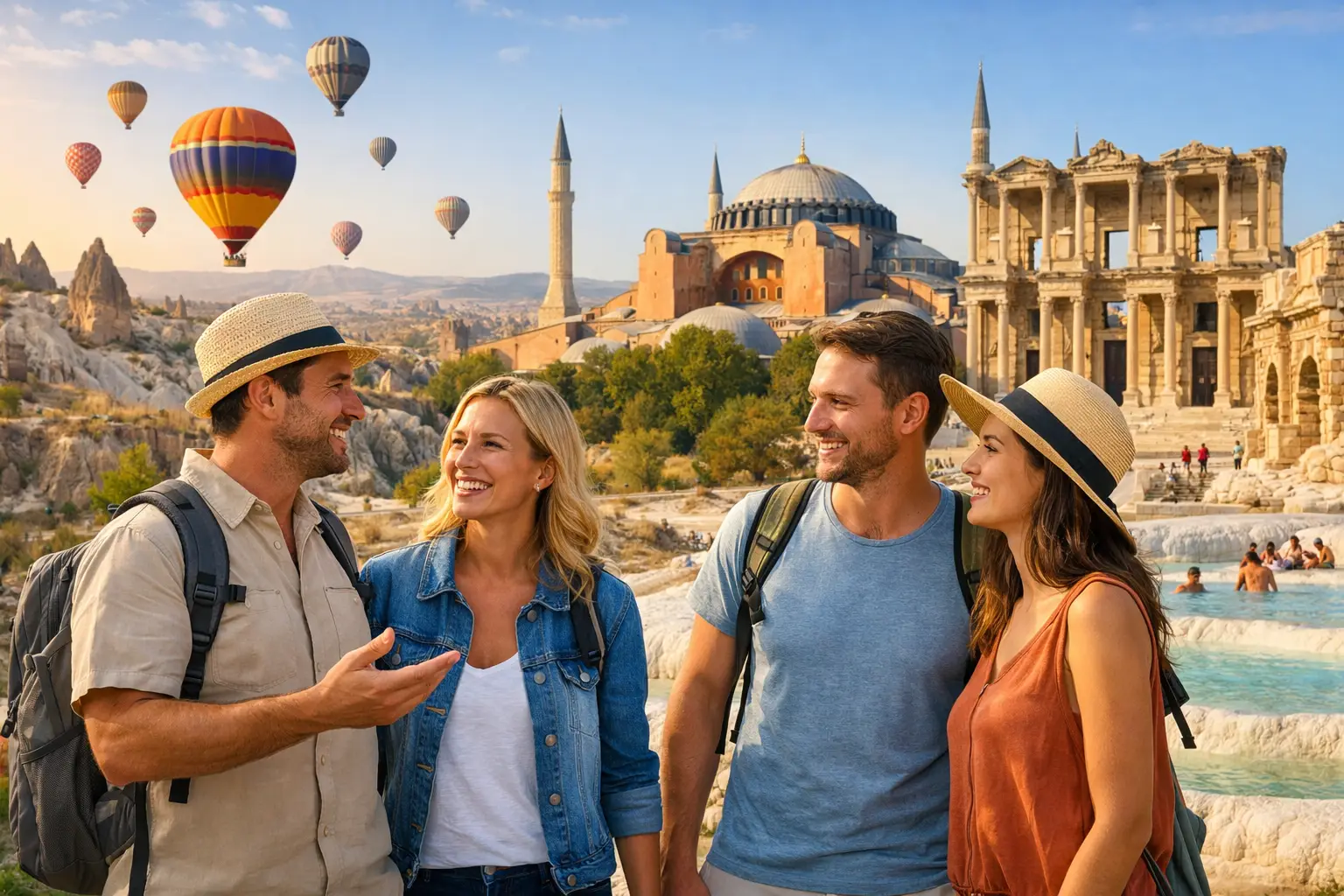
If you want to see more of Turkey (Türkiye) without spending your vacation figuring out flights, transfers, and hotel changes, small group Turkey tours are often the smartest way to travel. They give you the structure of a well-planned itinerary, but with a more personal pace, better guide access, and a travel experience that feels far less crowded than a large coach tour.
For many visitors from the US and other long-haul markets, that balance matters. Turkey is rich, varied, and surprisingly wide in scope. You can stand in Byzantine and Ottoman landmarks in Istanbul, watch sunrise over the valleys of Cappadocia, walk Roman streets in Ephesus, and finish along the Aegean or Mediterranean coast – all in one trip. The challenge is not finding places worth visiting. The challenge is fitting them together smoothly.
Why small group Turkey tours work so well
Turkey rewards travelers who cover several regions in one journey, but it also asks for good planning. Distances between major highlights can be significant, and the most enjoyable itineraries usually combine road travel with domestic flights, timed entry planning, and carefully chosen hotel locations. That is where a small group format becomes especially useful.
A well-run small group tour usually offers a more efficient route, better pacing, and more meaningful time on the ground. Instead of waiting on a bus full of dozens of guests, you move more easily between sites and have more flexibility when schedules shift. Guides can answer real questions, adapt the day when needed, and provide context that goes beyond a standard script.
This style also suits travelers who want comfort without giving up the social side of travel. You share the experience with a limited number of like-minded guests, but you still have room to enjoy independent moments, relaxed meals, and a quieter hotel atmosphere.
What to expect from a well-planned itinerary
The strongest small group Turkey tours are itinerary-led in a practical sense. They are not just a list of famous places. They are built around realistic travel times, smart overnights, and a logical regional flow.
A classic first-time route often starts in Istanbul for two or three nights. This gives enough time for the Blue Mosque area, Hagia Sophia, Topkapi Palace, the Grand Bazaar, and a Bosphorus experience without rushing. From there, many travelers continue to Cappadocia for two nights, where the landscape shifts dramatically and the pace slows in the best possible way.
After Cappadocia, some tours move toward Pamukkale and Ephesus, especially for travelers focused on archaeology and major UNESCO-level landmarks. Others continue south to Antalya or the coast, where the program feels lighter and more scenic. If you have more time, Gallipoli and Troy can be added for a strong historical route, especially for Australian and New Zealand visitors who want that part of the journey handled with care and context.
The right sequence depends on your interests and your available days. Seven to eight days can cover Istanbul, Cappadocia, and Ephesus at a brisk but comfortable pace. Ten to twelve days gives more breathing room and allows Pamukkale, Antalya, or Gallipoli to fit naturally.
The difference between small group and private travel
This is where it depends on your travel style. Small group touring works best for travelers who want professional planning, excellent value, and some shared experiences while still avoiding the scale of large bus touring. Private tours are usually the better fit if your dates are fixed, your pace is specific, or your interests are highly personalized.
For example, a couple celebrating an anniversary may prefer a tailor-made itinerary with upgraded boutique hotels, a private guide in Istanbul, and extra time in Cappadocia. A family with older children may want private transfers and flexible start times. On the other hand, friends or solo travelers often find that a small group format offers the right level of structure with a more approachable price point.
Many travelers also combine both. It is common to take a small group cultural route through key inland destinations, then extend the trip with a private coastal stay, a gulet or blue cruise segment, or a few custom nights in Bodrum, Fethiye, or Antalya.
Best destinations for small group Turkey tours
Istanbul
Istanbul is where most international trips begin, and it sets the tone for the entire journey. In a small group, the city becomes far easier to manage. You can move through the historic center more efficiently, understand the layers of Byzantine and Ottoman history, and still leave room for neighborhood restaurants, rooftop views, or a cruise on the Bosphorus.
Cappadocia
Cappadocia is particularly well suited to smaller groups because the experience is about texture as much as sightseeing. Underground cities, rock-cut churches, valley walks, cave hotels, and optional hot air balloon flights all benefit from a guide who can adjust the pace and explain the region properly. Two nights is the minimum most travelers should consider here.
Ephesus and Pamukkale
For travelers interested in classical history, Ephesus is essential. It is one of the standout ancient cities in the Mediterranean world, and a knowledgeable guide makes a major difference. Pamukkale pairs well with Ephesus on a multi-day route, especially if you enjoy combining archaeological sites with natural scenery.
Gallipoli and Troy
These destinations add a more focused historical dimension. They are often included on western Turkey itineraries and work especially well when the trip is designed around meaningful commentary rather than a rushed pass-through.
Coastal extensions
If your ideal trip includes downtime after cultural touring, the coast is an easy next step. Antalya offers resort comfort and access to historical sites. Bodrum and Marmaris work well for stylish seaside stays. Fethiye and Göcek are excellent for travelers considering a blue cruise or gulet experience after inland touring.
Practical travel tips for planning your route
The best time for small group Turkey tours is generally spring and fall, especially April to June and September to October. These months usually offer pleasant sightseeing weather in Istanbul, Cappadocia, and the western archaeological regions. Summer can work very well too, especially when paired with coastal stays, but inland sightseeing is warmer and days should be paced accordingly.
For a first visit, plan at least seven days if you want two major regions done well. Nine to twelve days is a better range for a fuller cross-country itinerary that includes Istanbul, Cappadocia, and the Aegean highlights. If the coast is part of your plan, adding three or four extra nights makes a noticeable difference.
One of the most practical routes is Istanbul, Cappadocia, Pamukkale, Ephesus, then the coast. Another strong option is Istanbul, Gallipoli, Troy, Ephesus, Pamukkale, and Antalya. Travelers who value comfort and time efficiency often benefit from including domestic flights rather than relying only on long overland segments.
Hotel style and service matter more than many travelers expect
On a multi-city trip, the quality of your hotels affects more than sleep. It shapes how rested you feel, how easy your mornings are, and whether changing regions feels exciting or tiring. In Turkey, a good itinerary usually mixes location, comfort, and character rather than chasing one category alone.
That might mean a well-positioned hotel in Istanbul’s historic center, a cave hotel in Cappadocia, and a relaxed seaside property at the end of the journey. Small group touring works best when those transitions are handled cleanly, with coordinated transfers, realistic check-in planning, and support behind the scenes.
This is also why working with an experienced local operator helps. Details such as airport timing, domestic flight coordination, and the order of sightseeing are not glamorous, but they often determine whether a trip feels smooth or fragmented.
How to choose the right tour for your travel style
Start with the amount of time you actually have, not the number of places you wish to see. Then decide whether your priority is history, landscapes, coastal relaxation, or a balanced mix of all three. A shorter trip should focus on fewer stops done properly. A longer journey can afford more variety.
If you are unsure whether to choose a scheduled small group or a more customized route, that is often a good sign to ask for both options. Many travelers begin with a classic framework and then refine it with hotel upgrades, additional nights, private airport services, or a post-tour blue cruise. That approach keeps the trip efficient while still making it feel personal.
Travel Store Turkey, for example, often helps guests compare these formats based on pace, destination mix, and service level rather than pushing one style for every traveler. That is usually the right approach in Turkey, because the best itinerary is the one that fits your timing and interests cleanly.
A well-designed trip through Turkey should feel rich, not rushed. If you choose a small group format with the right route, the country opens up in a way that is both easy to manage and deeply rewarding – from Istanbul’s imperial landmarks to Cappadocia’s valleys and the sunlit ruins of the Aegean. When the logistics are handled well, you can focus on what you came for: seeing more, understanding more, and enjoying each stop with confidence.
0 Comment