
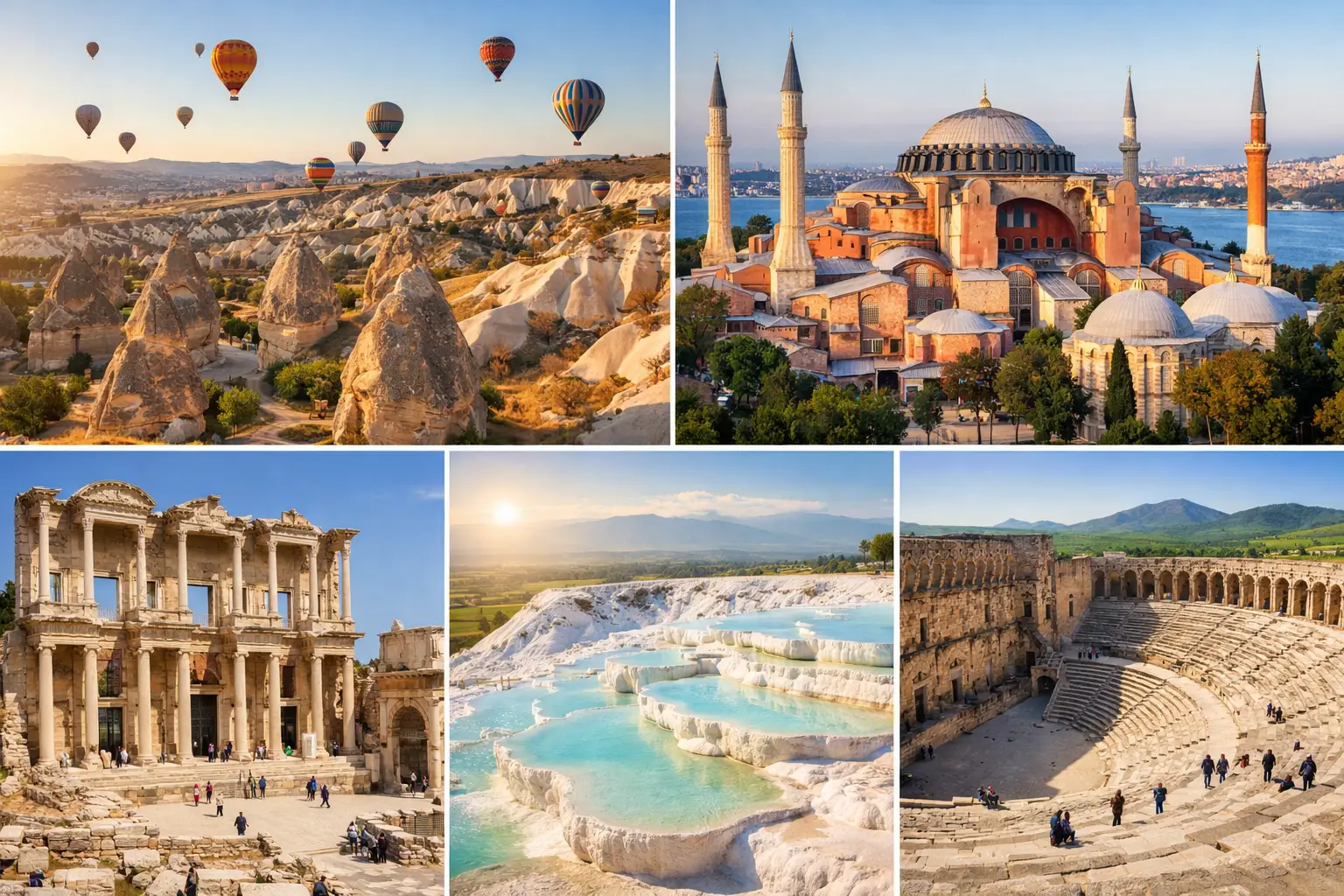
Some countries ask you to choose one era. Turkey does not. A single well-planned trip can take you from Roman streets and Byzantine churches to Ottoman palaces and rock-cut sanctuaries, which is why the top historical sites in Turkey appeal to travelers who want depth, not just sightseeing. The real challenge is not finding places worth visiting. It is deciding how to combine them into a route that feels comfortable, efficient, and genuinely memorable.
For most international visitors, the best approach is to pair iconic headline sites with a few places that add context. Istanbul gives you imperial scale. Ephesus shows the sophistication of the classical world. Cappadocia adds an entirely different layer, where history is shaped into valleys and stone. If you are planning a private or tailor-made journey, these are the places that usually form the backbone of a strong Turkey itinerary.
Top historical sites in Turkey worth prioritizing
Hagia Sophia and the Historic Center of Istanbul
Few places explain Turkey’s layered past better than Istanbul’s old city. Hagia Sophia remains the landmark most travelers want to see first, and for good reason. Its scale is striking, but what stays with many visitors is the sense of continuity around it. Within a short distance, you can also visit the Blue Mosque, Hippodrome area, Basilica Cistern, and Topkapi Palace, all of which help turn one monument into a broader historical narrative.
This is also where guided touring matters. Istanbul has major sites close together, but the stories behind them are what make the day meaningful. Many travelers benefit from a private Istanbul tour, especially if they want to move at a comfortable pace, avoid wasting time between entrances, and focus on the sites that fit their interests rather than following a rigid group schedule.
Ephesus
If your trip includes only one major ancient city, Ephesus is often the right choice. The site is large, visually impressive, and relatively easy to understand on the ground. Walking down Curetes Street toward the Library of Celsus gives you a rare sense of how a Roman city actually functioned, not just how it looked in ruins.
Ephesus works especially well for travelers who want history without too much physical complexity. There is walking, of course, but the layout is readable and rewarding. It also pairs naturally with nearby cultural stops and quality hotel stays in the region, which is why it fits so well into private western Turkey routes. For many guests, an organized Ephesus tour is the most practical way to combine transfers, timing, and guiding without turning the day into a logistical exercise.
Topkapi Palace
Topkapi deserves separate attention even though it sits within Istanbul’s historic core. This was not simply a royal residence. It was the administrative and ceremonial center of the Ottoman Empire for centuries. Courtyards, pavilions, kitchens, treasury spaces, and imperial chambers reveal how power was structured and displayed.
Some travelers prefer Roman and Byzantine sites, while others are far more interested in Ottoman history. Topkapi often shifts that preference. It gives shape to a period that many visitors know only in broad terms before arriving. If your time in Istanbul is limited, it is one of the strongest arguments for building a focused itinerary rather than trying to see everything in a rush.
Cappadocia’s rock-cut churches and underground cities
Cappadocia is often introduced through its landscapes, but its historical value is just as significant. The region’s rock-cut churches, frescoed interiors, monastic settlements, and underground cities make it one of the most distinctive cultural areas in the country. This is not history placed on top of scenery. The scenery itself became part of how communities lived, worshiped, and protected themselves.
The Goreme Open-Air Museum is the clearest starting point, but Cappadocia is best understood over at least two days. One day covers major valleys and churches. Another can include an underground city, local villages, and panoramic stops that show how the region developed over time. Many travelers combine this with a cave hotel stay, which adds comfort and location without sacrificing practicality. A well-structured Cappadocia tour is especially useful here because the sites are spread out and the region offers far more than the standard photo stops.
Pamukkale and Hierapolis
Pamukkale is famous for its white travertine terraces, but the historical site of Hierapolis is what gives the area lasting depth. The ancient city includes a theater, necropolis, streets, and thermal heritage that explain why people were drawn here for centuries. Travelers who come only for the terraces sometimes underestimate how much time the full site deserves.
This is one of the best examples of why route planning matters. Pamukkale can be done quickly, but it is better when treated as part of a broader inland journey through western Turkey. With proper transport and an overnight stay or carefully timed transfer, it connects smoothly with Ephesus, Antalya, or even Cappadocia depending on the trip style. A guided Pamukkale tour helps keep the visit balanced, especially for travelers who want both the natural setting and the historical context.
Troy
Troy appeals to a specific type of traveler, and that is exactly why it belongs on this list. It is not the most visually dramatic ancient site in Turkey, at least not in the way Ephesus is. What makes it important is its legendary status and archaeological significance. For travelers interested in epic history, layered settlement remains, and the long fascination with the ancient world, Troy adds something few other sites can.
It works best when combined with Gallipoli and the Dardanelles region as part of a northwestern route. On its own, Troy can feel brief. As part of a wider itinerary, it feels purposeful.
Gallipoli
Gallipoli is one of the most emotionally resonant historical places in Turkey for visitors from Australia, New Zealand, the UK, and other international markets. While it differs from classical archaeological sites, it remains central to understanding the country’s modern historical landscape. Memorials, preserved battlefields, and coastal viewpoints create a visit that is reflective rather than monumental.
Because of that tone, pacing matters here. Gallipoli is best experienced with a knowledgeable guide and a well-organized schedule that allows time for interpretation rather than just transportation between stops. It is often paired with Troy on short routes from Istanbul or built into longer cultural itineraries.
Pergamon
Pergamon is one of Turkey’s most rewarding sites for travelers who want something substantial beyond the standard circuit. Its acropolis setting is dramatic, and the remains speak to the city’s importance as a major cultural and political center of the Hellenistic world. The steep theater alone leaves a strong impression.
Pergamon is also a smart addition for repeat visitors or for first-time travelers who want a more complete western Turkey program. It fits naturally between Istanbul, Ephesus, and the inland route toward Pamukkale.
Aspendos
Near Antalya, Aspendos is best known for its remarkably preserved Roman theater. It is one of those sites where the architecture still communicates its original function almost instantly. Even travelers with a broad Turkey itinerary often remember Aspendos because the building feels unexpectedly intact.
For guests combining history with a Mediterranean stay, Aspendos is an easy and worthwhile inclusion. Antalya works well for travelers who want cultural touring balanced with high-quality coastal hotels and a slower rhythm.
Nemrut and the eastern legacy
Mount Nemrut is different from the other sites on this list, both geographically and logistically. The monumental stone heads and summit setting make it unforgettable, but it requires more planning and is usually better suited to travelers building a specialized itinerary. It is not the right fit for every first-time visitor.
That said, for travelers who have more time or a strong interest in unusual archaeological landscapes, Nemrut can become a highlight. This is where tailor-made planning becomes especially valuable, since eastern routes require more careful coordination of flights, transfers, and overnight stays.
How to plan a route around Turkey’s historical highlights
The best route depends on your available days and how much moving you want to do. For a first trip of seven to ten days, Istanbul, Cappadocia, Ephesus, and Pamukkale create a strong foundation. If you have ten to fourteen days, you can add Gallipoli and Troy or extend toward Antalya.
Domestic flights usually make the biggest difference in comfort. Turkey is large, and while overland travel can work, many visitors prefer to save time for the sites themselves. Private transfers, boutique hotel stays, and a clear city-to-city plan often turn a crowded wish list into a genuinely enjoyable itinerary. That is especially true for couples, families, and small groups who want flexibility without having to manage every detail themselves.
Practical tips for visiting the top historical sites in Turkey
Spring and fall are usually the best seasons for historical travel in Turkey. April, May, September, and October offer comfortable temperatures in most regions and work particularly well for multi-city tours. Summer is excellent for adding coastal destinations, but midday heat can make major archaeological sites more demanding.
For Istanbul, allow at least three nights. Cappadocia deserves two or three nights. Ephesus and the surrounding area work well with one or two nights, while Pamukkale is often best with one night unless it is part of a faster private route. If you want to include Gallipoli and Troy, add at least two more days.
Shoes matter more than many travelers expect. Ancient streets, uneven stones, slopes, and large site areas are part of the experience. A thoughtful itinerary should also leave space for proper meals, scenic drives, and hotel check-ins that do not feel rushed.
If you are trying to decide which historical sites to prioritize, start with your interests and your pace, not just a longest-possible checklist. Some travelers want the Roman world of Ephesus and Pergamon. Others want Istanbul’s imperial layers or Cappadocia’s distinctive religious heritage. The strongest Turkey trips are usually the ones built around those preferences, with the logistics handled clearly from the start. If you are ready to map out a private or small-group journey, a customized itinerary can help you connect these sites in a way that feels smooth, well-paced, and worth the flight.
0 Comment