
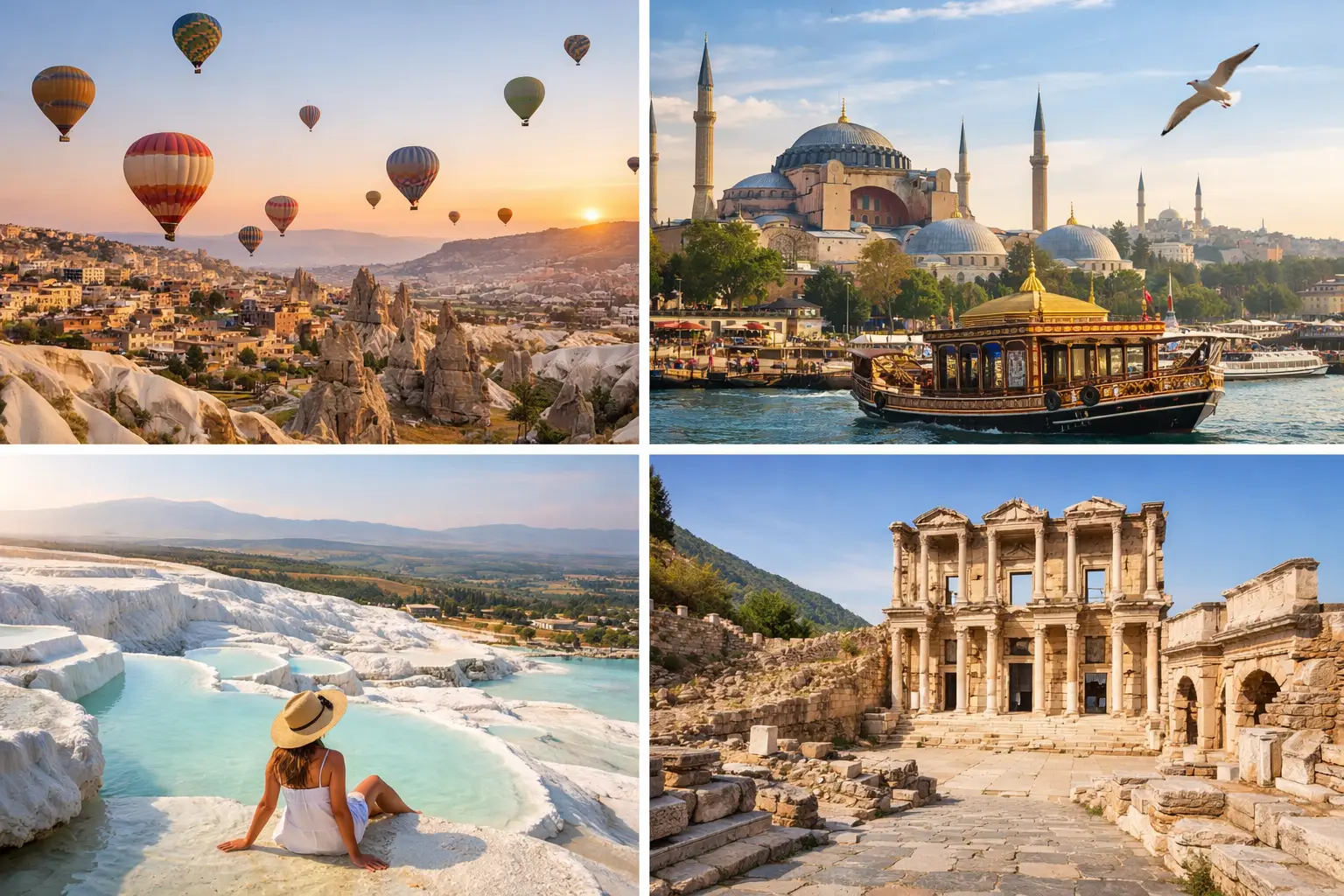
A good multi city Turkey itinerary is not just about fitting famous places into one trip. The real challenge is pace. Turkey looks manageable on a map, but once you combine Istanbul traffic, domestic flights, ancient sites, hotel changes, and long overland distances, the difference between a smooth trip and a tiring one usually comes down to route design.
For most travelers visiting from the US, Canada, the UK, Australia, and Europe, the best approach is to combine 3 to 5 major stops and connect them with a mix of flights and private transfers. That gives you enough variety to experience Ottoman landmarks, Cappadocia’s landscapes, classical ruins, and the Aegean or Mediterranean coast without turning every other day into a travel day.
How to build a multi city Turkey itinerary that works
The smartest itineraries usually begin in Istanbul. It is Turkey’s main international gateway, and it gives first-time visitors a strong cultural foundation before moving on to central or western Anatolia. From there, Cappadocia is often the next stop, followed by Ephesus and Pamukkale, or a coastal extension such as Bodrum, Fethiye, or Antalya.
This order works well because it reduces backtracking. Istanbul pairs naturally with domestic flights to Cappadocia, Izmir, Denizli, or Antalya. It also allows travelers to start with museums, mosques, palaces, and Bosphorus views before shifting into landscapes, archaeology, and leisure.
That said, the right route depends on what kind of trip you want. If history matters most, spend more time in Istanbul, Ephesus, Gallipoli, and Troy. If you want a wider mix, add Cappadocia and Pamukkale. If your goal is a cultural trip with a coastal finish, build the trip around Istanbul, Cappadocia, Ephesus, and a blue cruise or beach stay.
Best 10-day multi city Turkey itinerary
Ten days is often the sweet spot for first-time visitors. It is long enough to cover the headline destinations but short enough to stay efficient.
Days 1-3: Istanbul
Start with three nights in Istanbul. This gives you time for the Hagia Sophia, Blue Mosque, Topkapi Palace, Basilica Cistern, Grand Bazaar, and a Bosphorus cruise without rushing from one district to another. A well-planned stay also leaves room for neighborhoods such as Balat, Galata, or Kadikoy if you prefer a more local feel alongside the classic sites.
For many travelers, Istanbul is best explored with a licensed guide, especially if this is your first visit and you want context rather than just photo stops. Private Istanbul tours are particularly useful here because traffic patterns, opening hours, and museum pacing can affect the day more than people expect.
Days 4-5: Cappadocia
Fly to Cappadocia for two nights. This is enough time to see Goreme Open-Air Museum, Uchisar, Pasabag, Devrent Valley, and an underground city, while also allowing for a sunrise balloon experience if weather permits.
Two nights works well for most people, but three is better if you want slower mornings, a cave hotel stay, or a fuller exploration of the region’s valleys and villages. Cappadocia tours are especially valuable when combined with airport transfers and hotel planning, since arrival and departure logistics can eat into sightseeing time if handled poorly.
Days 6-7: Ephesus and Kusadasi or Selcuk
From Cappadocia, fly to Izmir and continue to the Ephesus region. Stay two nights in either Kusadasi or Selcuk depending on whether you prefer a resort-style base or a smaller town atmosphere.
Ephesus deserves more than a quick pass. The site itself is one of the most impressive classical cities in the Mediterranean, and nearby places such as the House of Virgin Mary, the Temple of Artemis area, and Sirince add variety to the stay. A guided Ephesus tour helps bring the site into focus because the scale of the ruins can feel overwhelming without interpretation.
Days 8-9: Pamukkale
Continue to Pamukkale for one night or two if you want a slower pace. The white travertines are the visual highlight, but the larger draw is the combination of thermal terraces and the ancient city of Hierapolis. This stop works best as a contrast point in the itinerary – lighter, more open, and less urban after Istanbul and before any coastal extension.
Some travelers visit Pamukkale as a long day trip from the Aegean coast, but an overnight stay is often more comfortable and lets you experience the site with better timing. Pamukkale tours can also be combined neatly with transfers between the Ephesus region and onward destinations.
Day 10: Return to Istanbul or depart from the coast
On the final day, either fly back to Istanbul for your international departure or continue directly to a coastal airport if you are extending the trip. This is where tailored planning matters. A route that looks efficient online can become awkward if flight schedules do not line up with hotel check-out times and driving distances.
When to add the coast to your itinerary
If you have 12 to 14 days, adding the coast makes the trip feel more balanced. After several days of cities, ruins, and early starts, a seaside finish in Bodrum, Fethiye, Marmaris, or Antalya changes the rhythm in the best way.
Bodrum works well for travelers who want stylish hotels, marina dining, and easy access to the Aegean. Fethiye suits those looking for scenic bays, beach time, and the option of a blue cruise. Antalya is a strong choice if you want resort comfort combined with access to major archaeological sites in the surrounding region.
A blue cruise fits particularly well after a land-based cultural route. Instead of adding more hotels and airport transitions, it gives you a few days to slow down on the water while still enjoying historical stops, swimming coves, and the Turkish coast at a more relaxed pace.
Multi city Turkey itinerary options by trip length
Not every traveler needs the same route, and trying to do too much usually weakens the trip.
For 7 days, keep it simple with Istanbul, Cappadocia, and either Ephesus or Pamukkale. For 10 days, Istanbul, Cappadocia, Ephesus, and Pamukkale is the strongest first-time combination. For 12 to 14 days, add Antalya or the southwest coast. For 2 weeks or more, you can include Gallipoli and Troy in the northwest or shape the trip around special interests such as Biblical sites, Seven Churches locations, or luxury coastal stays.
Families often prefer fewer hotel changes and slightly longer stays in each place. Couples may want cave hotels in Cappadocia and a coastal finish. History-focused travelers may choose Gallipoli, Troy, Pergamon, Ephesus, and Istanbul over a beach extension. There is no single perfect route – only the route that matches your time, interests, and travel style.
Practical travel tips for a smoother route
The best time for a multi-city trip is usually spring and fall, when sightseeing is more comfortable and routes across Istanbul, Cappadocia, and the Aegean feel well balanced. Summer is excellent for combining culture with the coast, but inland sites can be warm in the middle of the day. Winter can work well for Istanbul and Cappadocia, especially if you prefer fewer crowds and a quieter pace.
As a general rule, plan at least 3 nights in Istanbul, 2 nights in Cappadocia, 2 nights in the Ephesus area, and 1 night in Pamukkale. If you are adding the coast, give it at least 3 nights so it feels like part of the trip rather than a brief stop.
Domestic flights are usually the most efficient way to connect major regions. Private transfers and organized touring are then useful for the ground sections, especially around Cappadocia, Ephesus, Pamukkale, and coastal routes. This is one of the biggest advantages of a tailor-made plan – flights, airport pickups, hotels, and touring can be timed together rather than left to chance.
Why private and tailor-made planning matters in Turkey
Turkey rewards travelers who move with purpose. The distances are real, the experiences are varied, and the quality of the trip often depends on how well each part connects to the next. A private or small-group plan is not just about comfort. It helps avoid wasted hours, poorly timed transfers, and itineraries that look ambitious but feel rushed on the ground.
That is why many travelers prefer to arrange a route that combines hotels, domestic flights, airport transfers, and guided touring into one clear plan. Whether you want a classic cultural circuit, a family-friendly route, a luxury trip with boutique hotels, or a land-and-sea combination with a blue cruise, a customized structure makes the journey easier to enjoy.
If you are planning your first trip, or want to compare route options before booking, Travel Store Turkey can help shape a multi-city itinerary around your schedule, preferred pace, and hotel style. The best Turkey trips usually feel effortless once you are traveling – but that ease starts with thoughtful planning before you arrive.
The right route is the one that leaves room to actually experience each place, not just check it off.
0 Comment