


Perched gracefully on Istanbul’s Third Hill, the Süleymaniye Mosque (Süleymaniye Camii) stands as one of the city’s most iconic landmarks. For centuries, visitors have gazed upon its magnificent silhouette and asked the same question: why does the Suleymaniye mosque look like the hagia sophia?
The answer reveals one of the most fascinating stories in architectural history—a tale of conquest, competition, and cultural transformation. This comprehensive guide explores the deep connections between these two architectural giants, providing your clients with the historical context that brings both monuments to life.
The Short Answer: A Deliberate Architectural Dialogue
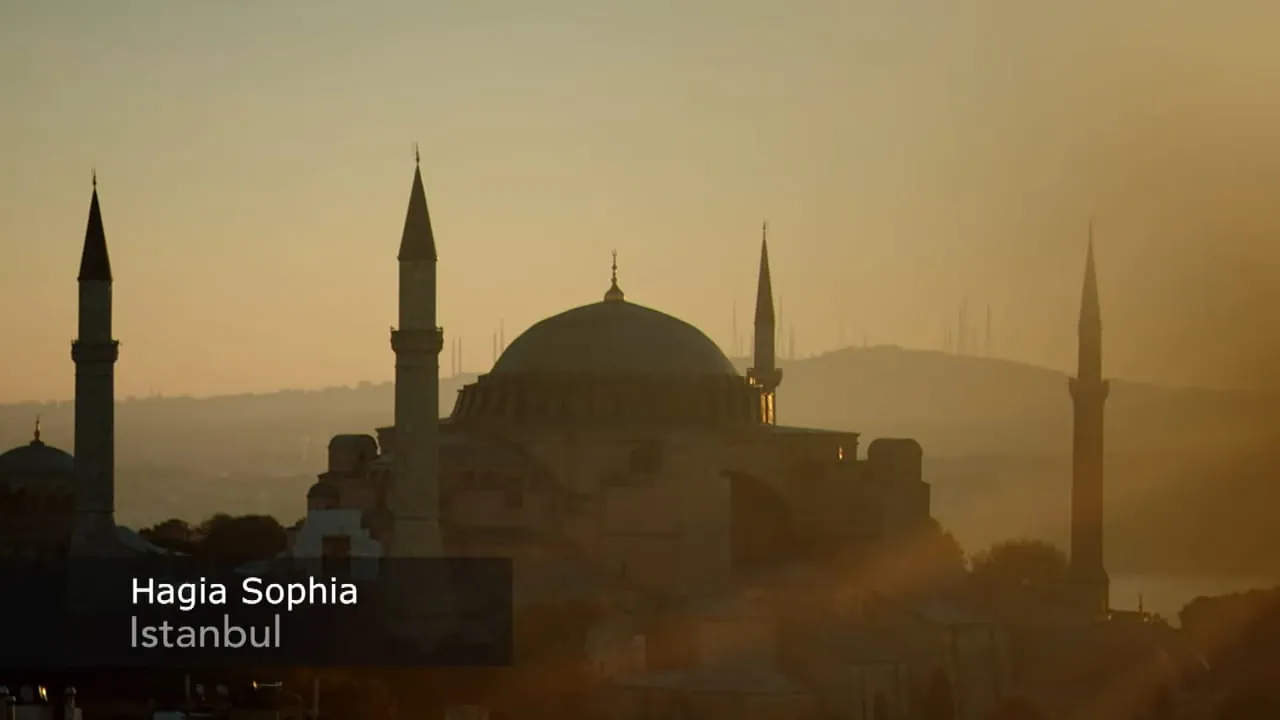
The Süleymaniye Mosque resembles the Hagia Sophia because it was intentionally designed as an architectural response to the 6th-century Byzantine masterpiece . When Sultan Mehmed II conquered Constantinople in 1453, the Hagia Sophia was converted into the city’s premier imperial mosque. For subsequent Ottoman sultans, building a mosque that could stand alongside—or even surpass—this venerable structure became a symbol of legitimacy and power .
Mimar Sinan, the greatest architect of the Ottoman Empire, designed the Süleymaniye Mosque between 1550 and 1557 as a conscious architectural counterpoint to the Hagia Sophia . However, as we’ll explore throughout this article, the relationship between these two structures goes far beyond simple imitation.
Historical Background: Two Empires, Two Masterpieces
The Hagia Sophia: Justinian’s Triumph (537 AD)
The Hagia Sophia was commissioned by the Byzantine Emperor Justinian I and completed in 537 AD. For nearly a thousand years, it was the largest cathedral in the world and the crowning achievement of Byzantine architecture. Upon its completion, Justinian is famously said to have exclaimed, “Solomon, I have surpassed thee!” —a boast comparing his achievement to the legendary Temple of Solomon in Jerusalem .
The Hagia Sophia’s most revolutionary feature was its massive central dome, which appears to float above the interior space. This dome rests on four massive piers, with two semi-domes on either side that extend the central space. This basilica-dome combination was unprecedented and remains breathtaking to this day.
The Süleymaniye Mosque: Sinan’s Response (1557)
Nearly a thousand years later, Sultan Süleyman the Magnificent—known in Turkish as Kanuni Sultan Süleyman—commissioned his chief architect, Mimar Sinan, to build a mosque complex that would bear his name . Construction began in 1550 and was completed in 1557, creating what many consider Sinan’s finest work in Istanbul.
Süleyman consciously represented himself as a “second Solomon,” directly evoking the biblical king associated with wisdom and magnificent building projects . This self-image made the comparison with Justinian’s boast all the more pointed. The Süleymaniye Mosque, being more magnificent than preceding structures, was designed to assert Süleyman’s historical importance alongside—if not above—his Byzantine predecessor .
Architectural Similarities: The Byzantine Blueprint
So why does the Suleymaniye mosque look like the hagia sophia? Let’s examine the specific architectural elements that create this visual dialogue.
The Central Dome and Semi-Domes
Both structures feature a central dome flanked by semi-domes that create a vast, unified interior space. In the Hagia Sophia, the central dome is supported by two semi-domes, one on the east and one on the west. The Süleymaniye Mosque adopts this same basic scheme .
However, there are important differences:
-
Hagia Sophia Dome: 32 meters in diameter, 55 meters high
-
Süleymaniye Dome: 27.25 meters in diameter, 53 meters high
At the time of its construction, the Süleymaniye’s dome was the highest in the Ottoman Empire when measured from its base, though it remained lower from ground level and smaller in diameter than that of Hagia Sophia .
Square Interior Plan
Both buildings feature a square interior plan that creates a sense of spaciousness and monumentality. The Süleymaniye Mosque’s interior measures 59 meters by 58 meters, dimensions that deliberately echo the proportions of its Byzantine predecessor while establishing its own identity .
Monumental Scale and Grandeur
Perhaps the most obvious similarity is sheer monumentality. Both structures were designed to inspire awe and demonstrate imperial power. When Sultan Süleyman looked across Istanbul, he saw the Hagia Sophia dominating the skyline—and he wanted his own mosque to claim equal visual prominence.
How Sinan Improved Upon Hagia Sophia
Here’s where the story becomes truly fascinating. Sinan didn’t simply copy the Hagia Sophia; he analyzed its structural weaknesses and created something better. This is the key to understanding why does the Suleymaniye mosque look like the hagia sophia while remaining distinctly Ottoman.
Rationalized Symmetry
The Hagia Sophia, while revolutionary, has structural irregularities. Its dome rests on pendentives that transfer weight to massive piers, but the overall geometry is complex and somewhat improvisational.
Sinan’s Süleymaniye is more symmetrical and rationalized . He created a clearer, more logical structural system that distributes weight more efficiently. The dome seems to float even more effortlessly than its Byzantine predecessor .
Light-Filled Interior
One of Sinan’s greatest achievements was his mastery of natural light. The Süleymaniye Mosque features numerous windows that flood the interior with illumination . Recent scholarly analysis confirms that while both the Süleymaniye Mosque and Hagia Sophia were designed to dramatize daylighting, the former has been more successful .
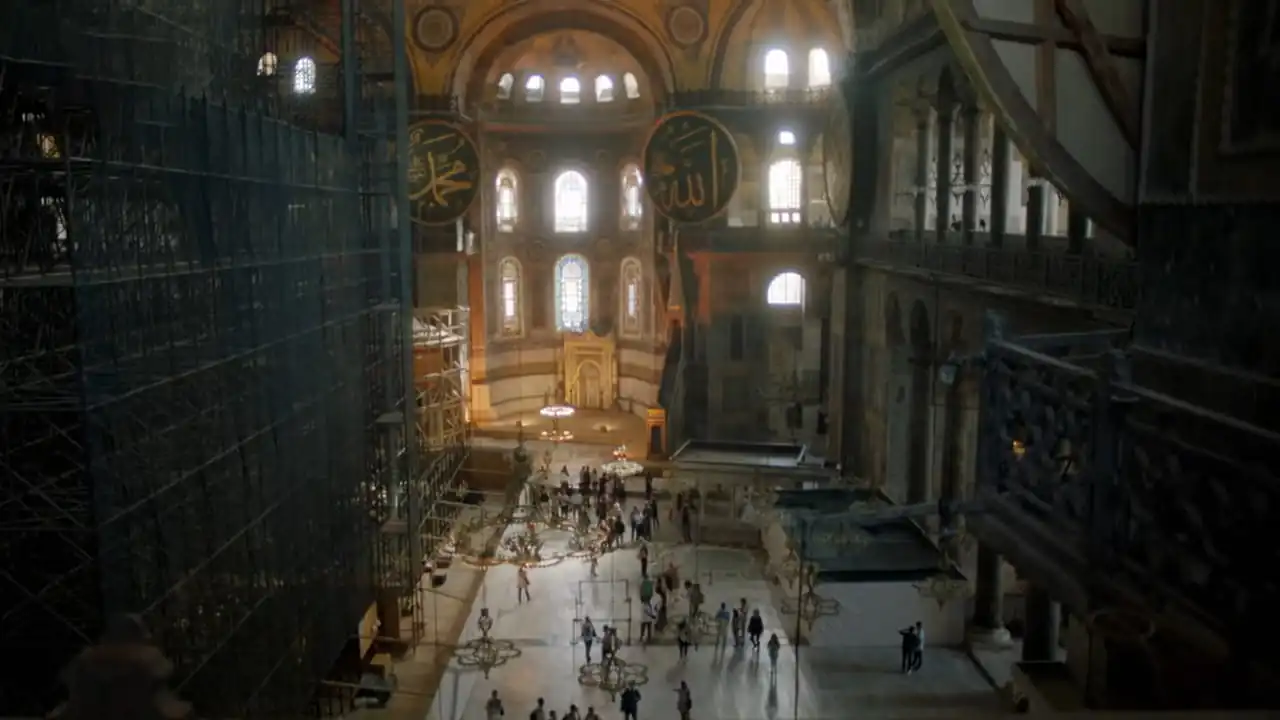
Whereas Hagia Sophia is relatively dim inside, natural light alone fully illuminates the upper half of the Süleymaniye Mosque. In the lower half, mosque lamps provide task lighting for worshippers—a practical and spiritual enhancement .
Spatial Unity
Sinan created a more unified spatial experience than the Hagia Sophia. Byzantine church design traditionally emphasized directionality toward the apse (the eastern end where the altar stood). Sinan deliberately eliminated this directional focus, creating a space where worshippers experience what scholars call “concentration and diffusion” —a visual effect that supports Islamic prayer practices .
Symbolic References
The architectural dialogue between these two structures carries profound symbolic weight.
The “Second Solomon” Concept
Sultan Süleyman’s self-representation as a “second Solomon” was central to the mosque’s design. The Süleymaniye references both the Dome of the Rock in Jerusalem (built on the traditional site of Solomon’s Temple) and Justinian’s boast upon completing the Hagia Sophia .
By building a mosque that could stand comparison with both these legendary structures, Süleyman positioned himself in an illustrious lineage of great rulers—Solomon the wise king, Justinian the Christian emperor, and now Süleyman the Ottoman sultan.
Visual Succession
For Ottoman sultans, the Hagia Sophia—converted into a mosque under Mehmed II—served as a model for imperial mosques in Istanbul . All sultanic mosques share certain structural similarities, visually representing the line of succession from sultan to sultan .
The Süleymaniye Mosque’s four minarets signal its imperial patronage—only sultans could build mosques with multiple minarets. The ten balconies on these minarets indicate that Süleyman was the 10th Ottoman sultan .
Distinctly Ottoman Elements
While the question “why does the Suleymaniye mosque look like the hagia sophia” focuses on similarities, understanding the differences enriches any visit.
The Mosque Complex (Külliye)
Unlike the Hagia Sophia, which stood relatively isolated, the Süleymaniye Mosque is part of a vast social complex that served the community . This külliye included:
-
A caravanserai (han) for travelers
-
A public kitchen (imaret) serving food to the poor
-
A hospital (darüşşifa)
-
Four Qur’an schools (medrese)
-
A specialized school for hadith study
-
A bathhouse (hamam)
-
Shops whose rents supported the complex’s maintenance
This integrated social function reflects Islamic charitable traditions and Ottoman urban planning.
The Tombs (Türbe)
In the garden behind the mosque rest the tombs of Sultan Süleyman I, his wife Hürrem Sultan (Roxelana), their daughter Mihrimah, and other family members . These elaborate tombs, adorned with magnificent Iznik tiles, add a personal dimension absent from the Hagia Sophia.
The Architect’s Tomb
Just outside the mosque walls to the north lies the humble tomb of Mimar Sinan himself . The great architect chose to be buried near his masterpiece, a testament to his pride in this achievement.
What Scholars Say: The Academic Consensus
Architectural historians have extensively studied the relationship between these two monuments. The academic consensus, based on research from Harvard University and other leading institutions, confirms several key points.
From Imitation to Innovation
For decades, Western scholars dismissed Ottoman mosques as mere imitations of Hagia Sophia . However, modern scholarship recognizes that Sinan’s work represents a sophisticated reinterpretation and Ottomanization of Byzantine elements.
As one scholar explains, the Süleymaniye intentionally adopts Hagia Sophia’s spatial formula while transforming it into something distinctly Ottoman . Sinan combined Byzantine vocabulary with Islamic architectural traditions to create an entirely new synthesis .
Selective Integration
The Süleymaniye Mosque demonstrates how Ottoman architects selectively integrated elements from Roman-Byzantine and Italian Renaissance traditions into their own architectural idiom . This wasn’t passive copying but active transformation—taking what worked and adapting it to Ottoman needs and aesthetic sensibilities.
Lighting as Theophany
Recent scholarship explores how Sinan designed the Süleymaniye Mosque as a “theophanic tool” —a spiritual instrument to manifest divine presence through light . The mosque’s sophisticated lighting design goes beyond practical considerations to create a genuinely religious experience that differs from the Hagia Sophia’s more diffuse illumination.
Visitor Tips: Appreciating the Architectural Dialogue
For your clients visiting Istanbul, here’s how to appreciate the relationship between these two magnificent structures.
Visit Both, in Order
To fully understand why does the Suleymaniye mosque look like the hagia sophia, visitors should experience both buildings. Start with the Hagia Sophia to understand the original, then visit the Süleymaniye Mosque to see how Sinan transformed and improved upon that model.
What to Look For
At the Hagia Sophia:
-
The massive dome and its pendentives
-
The directional focus toward the apse
-
The Byzantine mosaics (now being uncovered)
-
The overall sense of ancient majesty
At the Süleymaniye Mosque:
-
The more rationalized dome structure
-
The abundance of natural light through numerous windows
-
The absence of directional focus—a unified prayer space
-
The serene courtyard with its alternating red and white arches
-
The breathtaking view of the Golden Horn from the garden terraces
Timing Your Visit
-
Hagia Sophia: Now functioning as a mosque, it’s closed to tourists during prayer times. Visit between prayers for the best experience.
-
Süleymaniye Mosque: Open daily except during prayers. Early morning (9:00-10:30 AM) offers the best light and fewest crowds.
Practical Information for 2026
Hagia Sophia Grand Mosque
-
Location: Sultanahmet Square
-
Opening Hours: Open daily, closed during prayer times
-
Admission: Free for worshippers; tourists require paid entry
-
Dress Code: Headscarves required for women; modest dress for all
Süleymaniye Mosque
-
Location: Süleymaniye District, Third Hill
-
Opening Hours: 9:00 AM – 6:00 PM daily, closed during prayers
-
Admission: Free (donations welcome)
-
Dress Code: Headscarves available at entrance; modest dress required
The Legacy: Two Monuments, One City
The relationship between the Hagia Sophia and the Süleymaniye Mosque represents something beautiful about Istanbul itself—a city where civilizations meet, where Byzantine domes inspire Ottoman architects, where continuity and transformation coexist.
When visitors ask “why does the Suleymaniye mosque look like the hagia sophia,” they’re touching on something profound about human creativity. Great art doesn’t emerge in a vacuum. It responds to what came before, sometimes in homage, sometimes in competition, sometimes in both.
Sinan’s Süleymaniye acknowledges the Hagia Sophia’s magnificence while asserting Ottoman achievement. It says, “We see your greatness, and we have created something worthy to stand beside it.” A thousand years after Justinian’s boast, Süleyman could legitimately claim to have matched—if not surpassed—his predecessor.
The Süleymaniye Mosque’s resemblance to the Hagia Sophia is no accident. It represents a deliberate architectural dialogue spanning a millennium, two empires, and two faiths. Sultan Süleyman and his architect Mimar Sinan created a mosque that acknowledged Byzantine achievement while establishing Ottoman identity—a structure that looks back to the past while confidently asserting its own place in history.
FAQs
Is the Süleymaniye Mosque a copy of Hagia Sophia?
No, it’s better understood as a creative response and improvement. Sinan studied Hagia Sophia’s structure, addressed its weaknesses, and created a more rational, light-filled space while incorporating distinctly Ottoman elements .
Which is older, Hagia Sophia or Süleymaniye Mosque?
Hagia Sophia is far older, completed in 537 AD—more than a thousand years before the Süleymaniye Mosque, which was completed in 1557 .
Which is bigger?
Hagia Sophia has a slightly larger dome (32 meters diameter vs. 27.25 meters), but the Süleymaniye Mosque complex is far more extensive, including numerous social and educational buildings .
Did Sinan design any other buildings like Hagia Sophia?
Yes, Sinan designed several mosques that engage in dialogue with Hagia Sophia, including the Şehzade Mosque and his masterpiece, the Selimiye Mosque in Edirne, which he considered his finest work .
Can I visit both in one day?
Yes, though it requires planning. Start at Hagia Sophia in Sultanahmet, then take a taxi or public transport to the Süleymaniye Mosque. The journey takes about 20-30 minutes depending on traffic.
0 Comment