
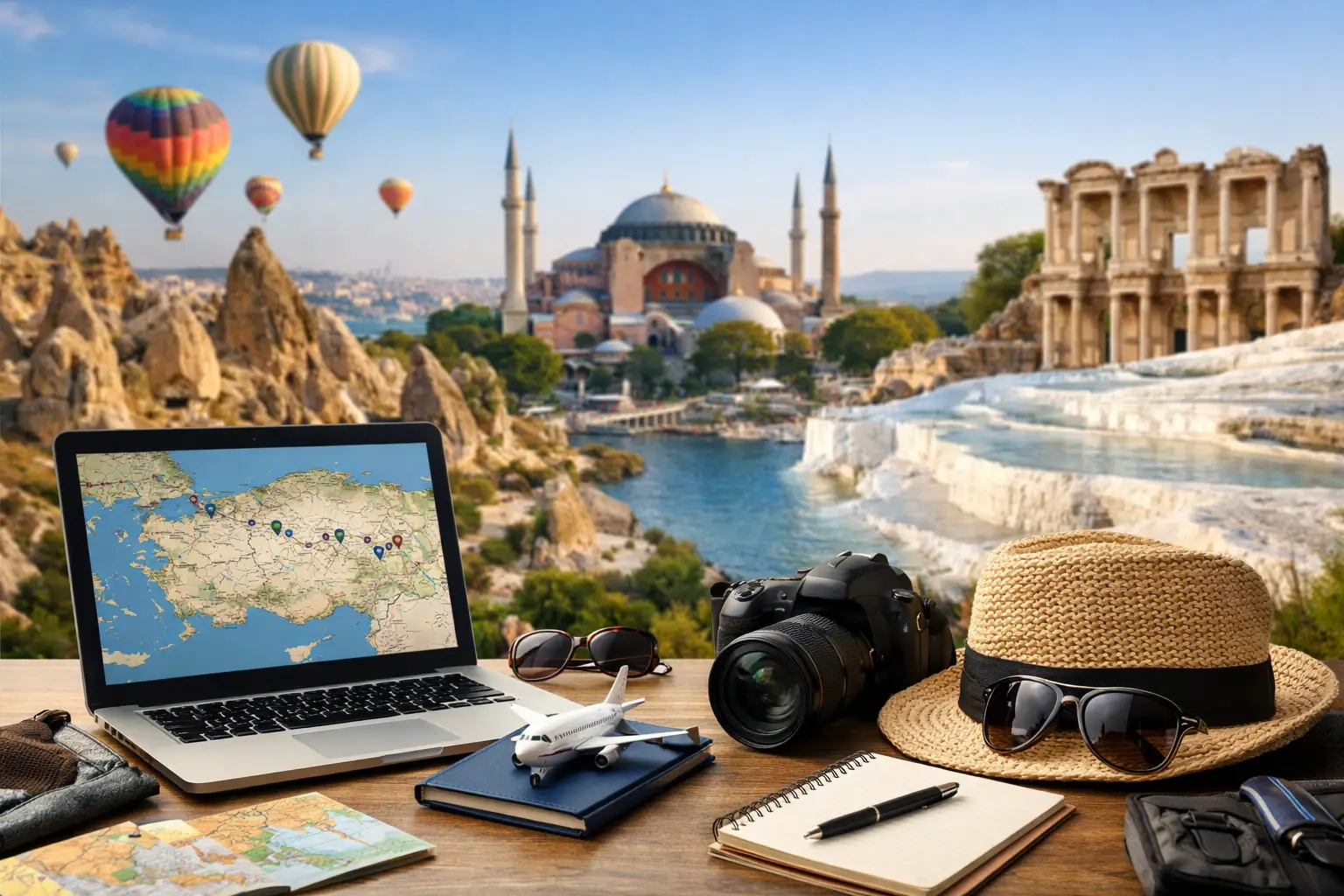
Turkey (Türkiye) trips are getting smarter, more customized, and more route-focused. The biggest Turkey travel planning trends are no longer about seeing as much as possible in the shortest time. Travelers are choosing better pacing, private services, and carefully structured itineraries that combine history, scenery, and comfort without feeling rushed.
That shift is especially clear among visitors from the US and other long-haul markets. Instead of booking one city and adding day trips later, many travelers now want a full plan before they arrive – airport transfers, domestic flights, hotels, guided touring, and realistic travel times built into the itinerary. For a destination as diverse as Turkey, that approach usually leads to a better trip.
Why Turkey travel planning trends are shifting
Turkey has always offered strong variety within one country. Istanbul, Cappadocia, Ephesus, Pamukkale, Gallipoli, Antalya, and the Turquoise Coast all deliver very different experiences. What has changed is how travelers want to combine them.
A few years ago, many itineraries leaned heavily on checklist travel. Now the preference is more selective. Guests still want the headline sites – Hagia Sophia area highlights, Cappadocia valleys, Ephesus, and Pamukkale – but they also want room for a sunset cruise, a cave hotel stay, a slower morning in Sultanahmet, or a few days on a gulet along the coast. In practice, that means fewer one-size-fits-all packages and more tailor-made tours shaped around pace, interests, and travel style.
This is also why private and small group travel continues to grow. Turkey is easy to enjoy in many ways, but logistics matter when you are moving between regions. A well-planned route saves time and makes the trip feel calm rather than complicated.
The move toward private and tailor-made itineraries
One of the clearest Turkey travel planning trends is the rise of customized touring. Travelers want expert structure, but they do not want every hour fixed. They are looking for a trip that feels organized without feeling rigid.
For many couples, families, and small groups, private touring solves that balance. It allows more control over start times, pacing, and hotel category, while keeping the benefits of local guides and pre-arranged transport. A family interested in Roman history may spend longer in Ephesus and add Troy or Gallipoli. A couple focused on scenery may combine Istanbul with Cappadocia and a blue cruise from Bodrum, Marmaris, or Fethiye.
This flexibility matters in Turkey because interests vary so much. Some guests want a strong cultural route with museums, archaeological sites, and Ottoman landmarks. Others want a split itinerary with city touring followed by coastal time in Antalya or along the Turquoise Coast. The best results usually come from matching destinations to the traveler rather than forcing the traveler into a fixed template.
Multi-city routes are replacing single-base trips
International visitors are increasingly planning Turkey as a connected journey rather than a single-stop vacation. That makes sense. Turkey rewards movement, but only when the route is sensible.
The most requested combinations often start with Istanbul and Cappadocia, then extend to Ephesus and Pamukkale. For travelers with more time, Gallipoli and Troy can fit naturally into a western Turkey route, while Antalya offers a comfortable transition into the coast. If the goal is a more relaxed finish, a blue cruise or seaside hotel stay creates a strong final chapter after several days of cultural touring.
The trade-off is time. A seven-day trip can cover Istanbul and Cappadocia well, or Istanbul, Ephesus, and Pamukkale efficiently. Trying to do all major regions in one week usually reduces the quality of the experience. This is where itinerary design becomes especially valuable. A good route is not just about what fits on paper. It is about how the trip feels day by day.
Domestic flights and pre-arranged transfers matter more than ever
As travelers build more ambitious routes, transportation planning becomes part of the overall experience. One major trend is the preference for pre-booked domestic flights and coordinated ground services instead of making each segment separately.
In Turkey, this can make a meaningful difference. Flying between Istanbul and Cappadocia or İzmir region saves time and allows travelers to cover more ground comfortably. Private airport transfers and hotel coordination also remove the friction that often comes with multi-city travel.
For premium travelers, convenience is not a small detail. It shapes the entire tone of the trip. When flights, pickups, hotel check-ins, and touring schedules work together, the journey feels smooth and efficient. When they do not, even a beautiful itinerary can feel tiring.
Coastal extensions and blue cruises are growing fast
Another notable shift is the growth of mixed itineraries that combine inland culture with coastal relaxation. Travelers are no longer treating a Turkey trip as either historical or beach-focused. Increasingly, they want both.
That is why blue cruises and gulet holidays are attracting more interest, especially after a route through Istanbul, Cappadocia, Ephesus, or Pamukkale. A few days at sea offers a different side of Turkey – quiet bays, scenic coastal towns, relaxed dining, and a slower rhythm after museum visits and overland touring.
For some travelers, a hotel stay in Bodrum or Antalya works better than a cruise. It depends on pace, privacy preferences, and how much moving around they want near the end of the trip. A gulet itinerary feels immersive and special, while a luxury coastal hotel offers more fixed comfort and easier access to spa and resort facilities. Neither is better in every case. The right choice depends on whether the traveler wants gentle movement or a stable base.
Seasonal planning is getting more strategic
Travelers are paying closer attention to timing, and for good reason. Turkey can be enjoyed across multiple seasons, but the best month depends on the route.
Spring and fall remain the strongest choices for classic multi-city itineraries. Istanbul, Cappadocia, Ephesus, and Pamukkale are especially pleasant when temperatures are moderate. Summer is excellent for the coast, blue cruises, and resort stays in places like Bodrum, Marmaris, Fethiye, and Antalya, but inland sightseeing can feel more intense in the afternoon heat.
This has led to more split-season thinking. Some travelers focus on cultural circuits in April, May, September, or October. Others prioritize coastal routes in June through September and keep inland touring lighter. The trend is not simply avoiding heat. It is matching the destination mix to the season.
Practical travel tips for planning Turkey well
For most first-time visitors, 8 to 12 days is the sweet spot. That is usually enough time for Istanbul and Cappadocia plus one or two western sites such as Ephesus and Pamukkale. If you want Gallipoli, Troy, Antalya, or a blue cruise as well, 12 to 14 days allows a more comfortable pace.
A strong first route for many travelers is Istanbul, Cappadocia, Ephesus, and Pamukkale. If coastal time is a priority, consider Istanbul, Cappadocia, then Antalya or a Bodrum, Marmaris, or Fethiye extension. If your interests lean toward military history and archaeology, Istanbul with Gallipoli, Troy, and Ephesus can work very well.
The best time to visit depends on your route. April to June and September to October are ideal for broad touring. July and August are best if the coast is central to your trip. Winter can suit travelers focused mainly on Istanbul and Cappadocia, especially if they prefer fewer crowds and a different atmosphere.
If you are comparing private touring with a small group program, think about how much flexibility you want. Private travel usually works best for families, milestone trips, and travelers combining several destinations with specific hotel or pacing preferences. Small groups can be a good fit for travelers who want a structured framework with less decision-making.
What these travel planning trends mean for your trip
The wider pattern is simple. Travelers want Turkey to feel curated, not crowded. They want the major landmarks, but they also want smart routing, comfortable hotels, reliable transportation, and enough flexibility to enjoy each place properly.
That is why well-designed Turkey tour packages are moving toward modular planning – Istanbul tours paired with Cappadocia stays, western Turkey archaeology routes, and optional coastal or blue cruise extensions. It gives travelers a clear starting point while still allowing room for a tailor-made version.
For a destination with this much range, expert local planning has real value. Travel Store Turkey LTD and other experienced inbound specialists understand how to connect cities, flights, hotels, and touring days into one coherent trip. That matters whether you are planning a private cultural journey, a small group program, or a more relaxed coast-and-city combination.
The best Turkey itineraries now feel less like a race and more like a well-paced series of highlights. If you plan with that in mind, you are far more likely to leave feeling that you truly saw the country, rather than simply passed through it.
0 Comment