
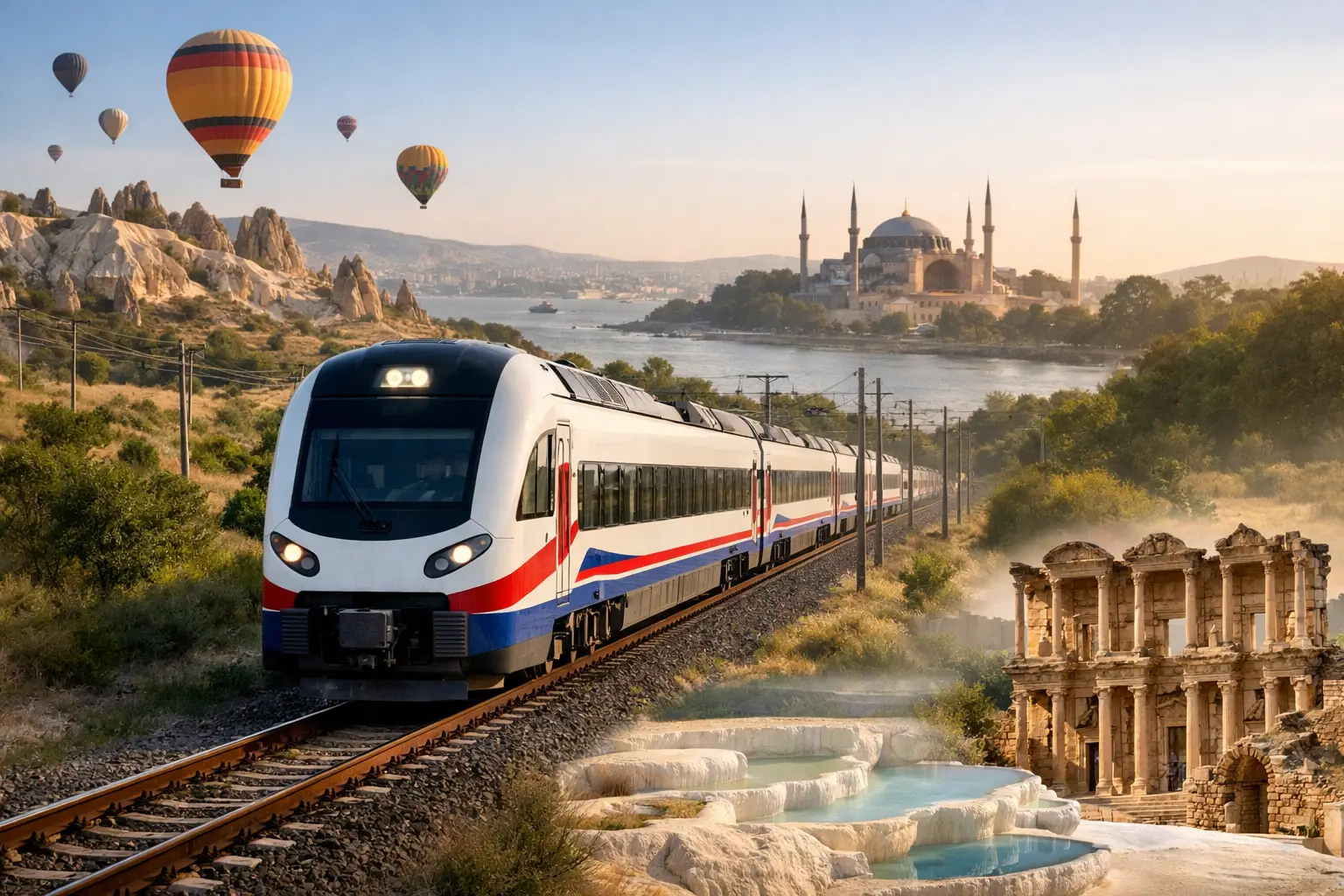
A fast train from Istanbul to Ankara can feel surprisingly calm after a long-haul flight – wide seats, city-to-city convenience, and a window into daily life in Turkey (Türkiye). That is why a Turkey train travel guide is most useful when it goes beyond romance and gets practical: where rail works well, where it does not, and how to build a smooth itinerary around it.
Train travel in Turkey suits travelers who want comfort, scenery, and a more measured pace between major cities. It is especially appealing for couples, families, and cultural travelers who prefer to see the country in stages rather than rushing through airports at every stop. At the same time, the rail network is selective. If your trip includes Cappadocia, Ephesus, Pamukkale, Antalya, or the Turquoise Coast, trains can be part of the journey, but usually not the whole plan.
Turkey train travel guide: where trains work best
The strongest part of Turkey’s rail network is the high-speed corridor linking Istanbul, Izmit, Eskisehir, Ankara, and Konya. For visitors, this matters because it connects several worthwhile stops with relatively easy rail travel.
Istanbul to Ankara is one of the most practical train segments in the country. It saves you from airport transfers and delivers you close to the city center. Ankara itself is often treated as a transit city, but it can reward a short stay if you are interested in modern Turkish history, museums, and a more local urban atmosphere.
Ankara to Konya is another good rail connection. Konya offers a very different side of Turkey – elegant Seljuk architecture, a slower rhythm, and one of the country’s most important cultural centers. If you are building a heritage-focused itinerary, pairing Istanbul, Ankara, and Konya by train makes sense.
Eskisehir is an often-overlooked stop that works well as a break in a longer route. It is compact, attractive, and easy to enjoy for one night. Travelers who appreciate seeing more than the headline destinations often find it a pleasant surprise.
Where train travel is less practical in Turkey
This is where expectations matter. If your dream trip centers on Cappadocia, Ephesus, Pamukkale, Bodrum, Fethiye, or Antalya, rail alone will not be the simplest answer. There is no direct high-speed train to Cappadocia’s main visitor areas, and the Aegean and Mediterranean resort regions are often easier to reach by private transfer or domestic flight.
That does not make trains irrelevant. It just means the best itineraries are usually mixed-mode. You might travel by high-speed train from Istanbul to Ankara or Konya, then continue by private vehicle, flight, or a tailor-made tour arrangement. For many international visitors, this is the sweet spot – enjoy rail where it is efficient, then switch to more direct transport for the destinations where timing and comfort matter more.
A common example is combining Istanbul with Cappadocia. Rail can be part of a broader route, but if your priority is maximizing time in the valleys, cave hotels, and sightseeing areas, a flight or organized overland transfer is generally more practical. The same logic applies if you want to continue from cultural inland destinations to coastal stays or a blue cruise.
Best routes for first-time visitors
For a first trip, the smartest rail-based itinerary is usually not the longest one. It is the one with the fewest awkward connections.
One strong option is Istanbul, Eskisehir, Ankara, and Konya. This route gives you a balanced introduction to Turkey (Türkiye): imperial history in Istanbul, a polished provincial city in Eskisehir, the capital’s museums and civic identity in Ankara, and spiritual and architectural depth in Konya. It works particularly well over seven to nine days.
Another option is Istanbul and Ankara by train, then onward to Cappadocia by private arrangement. This combination suits travelers who want both a comfortable rail segment and a high-value destination finish. Once in Cappadocia, structured touring makes a noticeable difference because the region is spread across valleys, underground cities, panoramic viewpoints, and village centers.
If your broader vacation includes Ephesus or Pamukkale, it is often wiser to treat rail as one chapter of the trip rather than the whole framework. A tailor-made itinerary can connect the train-friendly central corridor with western archaeological sites and then continue to the coast.
What the onboard experience is really like
Turkey’s modern high-speed trains are comfortable and straightforward. Seats are generally spacious, stations are functional, and the overall experience feels efficient rather than ornate. This is not classic luxury rail in the nostalgic sense, but it is a good standard for travelers who value ease and reliability.
The main appeal is not glamour. It is convenience. You avoid some of the friction that comes with short domestic flights, and you gain a gentler transition between cities. Looking out across central Anatolia also gives you a sense of scale that air travel skips entirely.
That said, the experience depends on your route. High-speed services are the easiest to recommend. Conventional long-distance trains can be more variable and are less suitable for visitors trying to cover a lot of ground within a limited vacation window. For most premium travelers, the best approach is to choose the efficient rail sections and leave the rest to well-planned transfers.
How to plan a smooth Turkey train itinerary
The biggest mistake is trying to force every destination into one transport style. Turkey is a large country, and its top highlights are spread out. A better strategy is to organize your trip around logical clusters.
Start with your must-see destinations. If they include Istanbul, Ankara, or Konya, train travel deserves serious consideration. If they include Cappadocia, Ephesus, Pamukkale, Antalya, or Bodrum, think in terms of combinations. Rail may cover one leg beautifully, while a private transfer or domestic flight handles the next.
This is where organized planning adds real value. A tailor-made itinerary can align train departures, station transfers, hotel stays, and guided touring so the trip feels coordinated rather than pieced together. That matters even more if you are arriving from the US or Australia and want each stop to run on time without guesswork.
For travelers interested in cultural depth, it often works well to begin with Istanbul tours, continue by train into the interior, then reconnect with a driver-guide or regional package for destinations beyond the rail line. If your schedule allows, adding a coastal finish in Bodrum, Marmaris, or Fethiye creates a particularly satisfying contrast after the inland cities.
Practical travel tips for rail trips in Turkey
The best time for a train-based trip is spring or fall, when city touring is more comfortable and moving between regions feels easier. April to June and September to October are especially pleasant for combining rail journeys with archaeological touring and boutique hotel stays.
For a rail-focused introduction, plan at least seven days. If you want to combine trains with Cappadocia, Ephesus, Pamukkale, or the coast, 10 to 14 days is a far better fit. Turkey rewards travelers who give each region enough time rather than treating the country like a checklist.
A good route for one week is Istanbul, Eskisehir, Ankara, and Konya. For 10 to 12 days, Istanbul and Ankara by train, then Cappadocia by private arrangement, works especially well. For a longer trip, you can continue with western Turkey’s classical sites or a relaxing blue cruise segment after your inland travel.
Pack lightly enough to move comfortably through stations, but not so lightly that you compromise your overall trip. Most travelers on a well-organized Turkey itinerary are balancing rail with quality hotels, airport transfers, and guided visits, so practical luggage and clear logistics matter more than minimalist packing for its own sake.
Is train travel right for your Turkey trip?
If you enjoy watching the landscape change, prefer city-center arrivals, and like a journey with a little breathing room, trains are an excellent fit for part of your Turkey itinerary. If your time is short and your priorities are spread between Cappadocia, the Aegean ruins, and the Mediterranean coast, rail is better used selectively.
The most successful trips are not built around a rule that every leg must be by train. They are built around the right transport for each region. In Turkey (Türkiye), that often means combining high-speed rail with private touring, carefully timed transfers, and a few strategic flights.
Travel Store Turkey often helps visitors shape exactly this kind of route – one that keeps the romance of rail where it makes sense and removes the friction where it does not. If you want to include train travel without compromising comfort, timing, or destination choice, a customized plan usually delivers the best result.
A train window can show you a quieter, more grounded side of Turkey – but the smartest itineraries know when to stay on the rails and when to move beyond them.
0 Comment