

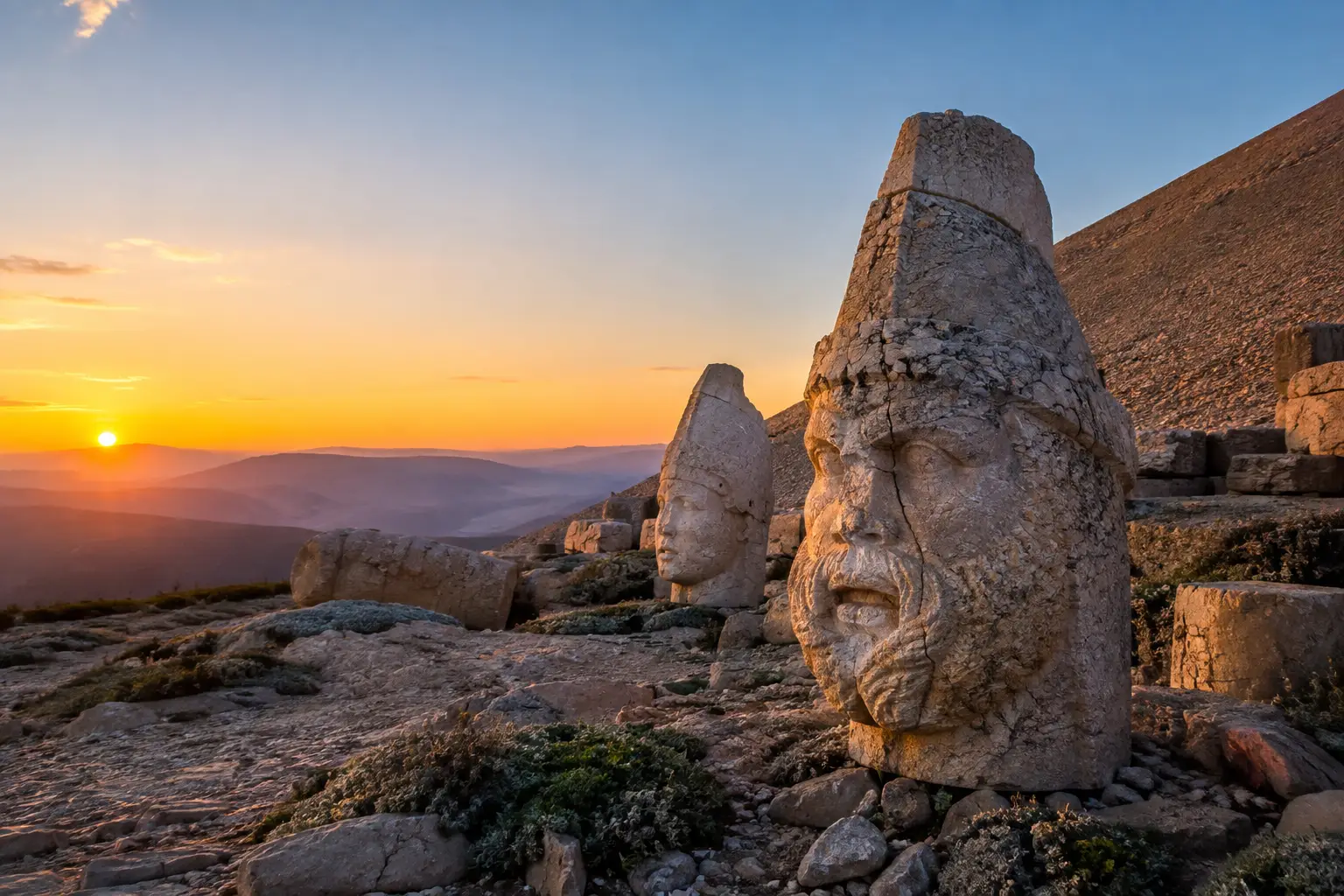
The first sight of Mount Nemrut is not a distant mountain view but a row of colossal carved stone heads standing high above southeastern Anatolia. For travelers deciding is Mount Nemrut worth visiting, the answer is generally yes – provided you value archaeological sites, dramatic landscapes, and a journey that feels distinctly different from Turkey’s better-known stops.
This is not a destination to add casually between Istanbul and Cappadocia. Mount Nemrut requires planning, usually a domestic flight, road transfers, and an early start or late finish for the summit. In return, it offers one of Turkey’s most memorable historic settings: an ancient royal monument at roughly 7,000 feet, with broad views across the surrounding mountains and plains.
What makes Mount Nemrut special?
Mount Nemrut, also called Nemrut Dağı, is home to a UNESCO-listed monumental complex commissioned by King Antiochus I of the ancient Kingdom of Commagene in the first century BC. Its most striking feature is the collection of immense seated statues and detached stone heads arranged on terraces near the summit.
The scale is what stays with visitors. The heads are several feet high, their features softened by centuries of wind, frost, and changing light. They are not displayed behind glass or placed in a city museum. They sit in a remote mountain landscape, reached by a final walk from the parking area. That setting makes the experience feel more immediate and more rewarding than a standard archaeological visit.
The East and West Terraces each have their own character. The East Terrace is the classic sunrise viewpoint, while the West Terrace is especially attractive toward sunset, when the light warms the stone and the distant ridges become more defined. A knowledgeable licensed guide adds real value here, explaining the monument’s layout, the symbolism of its sculptures, and how the site was created on such a challenging summit.
Is Mount Nemrut worth visiting for your travel style?
Mount Nemrut is an excellent fit for travelers who enjoy major historical landmarks but prefer places beyond the usual circuit. It works particularly well in a private Turkey tour, where flights, transfers, hotel arrangements, and timing can be coordinated around the summit visit rather than left to chance.
It is especially worthwhile if you have already included Istanbul, Cappadocia, Ephesus, and Pamukkale in a longer itinerary and want to add a less-visited cultural highlight. Cappadocia delivers surreal valleys and cave hotels; Ephesus offers a remarkably complete classical city; Mount Nemrut provides a quieter, more remote encounter with Turkey’s ancient heritage. These experiences complement rather than duplicate one another.
The visit may be less suitable for travelers with very limited time or those who strongly dislike early mornings, steep terrain, or cooler mountain conditions. The final approach is manageable for many visitors, but it is uneven and exposed. This is not a site where comfort comes from luxury facilities at the summit. Comfort comes from good planning, suitable clothing, a well-paced schedule, and a reliable vehicle waiting below.
For families, the site can be compelling for older children and teenagers who are interested in history or unusual landscapes. Younger children may find the early departure and mountain walk demanding. A tailor-made itinerary allows families to choose a more relaxed sunset visit and to build in adequate rest time afterward.
Sunrise or sunset: which is better?
Sunrise is the iconic Mount Nemrut experience. Visitors leave their hotel well before dawn, walk to the terrace in darkness, and watch the first light spread over the statues and distant landscape. The atmosphere is exceptional, and photographers often prefer the changing colors of the sky.
There are trade-offs. Sunrise can be cold even in the warmer months, and it requires a very early wake-up. During the most popular travel periods, more visitors gather on the East Terrace. Sunset offers a gentler schedule, excellent light on the West Terrace, and a calmer rhythm for those arriving after a day of regional sightseeing.
If Mount Nemrut is a central reason for your trip, sunrise is usually worth the effort. If it is part of a broader cultural route and you want to preserve energy, sunset can be equally satisfying. A private guide can help select the best timing according to your hotel location, season, and overall itinerary.
How to include Mount Nemrut in a Turkey itinerary
Mount Nemrut is best approached via the Adıyaman and Kahta area. Most international travelers connect through Istanbul using a domestic flight, then continue by private vehicle to a comfortable regional hotel. Depending on flight schedules and the chosen hotel, the summit is often visited on the evening of arrival, the following sunrise, or the following sunset.
Allow at least one overnight stay in the region. Two nights is the more comfortable choice, particularly if you want time for nearby cultural sites, a relaxed meal after the summit, and flexibility in case flight timings are not ideal. Trying to arrive, visit the summit, and depart on the same day can turn a remarkable experience into a rushed logistical exercise.
A well-balanced route could begin with several days of Istanbul tours, continue to Cappadocia for its valleys, underground cities, and cave hotel stays, then fly onward for Mount Nemrut. From there, a tailor-made program can return to Istanbul or continue toward the Mediterranean coast, depending on available flights and travel pace.
Travelers with two weeks or more can also combine Mount Nemrut with a broader Turkey itinerary featuring Cappadocia, Pamukkale, and Ephesus. Domestic flights and private road transfers make these multi-city journeys far more efficient than attempting long overland connections. The key is to protect enough time in each destination rather than treating the country as a checklist.
Practical travel tips for Mount Nemrut
The most comfortable months are generally late spring and early fall, when daytime travel is pleasant and summit conditions are less severe. May, June, September, and October are often excellent choices. July and August can be hot at lower elevations, while the summit may still feel cool around sunrise or after sunset.
Bring layers regardless of season. A warm jacket, hat, closed-toe walking shoes, water, sunglasses, and a small flashlight for a dawn visit are sensible. The route is outdoors and exposed, so lightweight clothing alone is rarely enough for the summit.
Plan for one night as a minimum and two nights for a more relaxed experience. Travelers who prioritize photography should consider a schedule that allows both sunset and sunrise, since the terraces and statues look very different in each light.
For transportation, a private driver-guide arrangement is the most efficient option. The roads and site access are straightforward when professionally planned, but the destination’s remote setting means that coordinating transfers, flight arrival times, and hotel check-in independently can consume valuable vacation time.
The value of a private, planned visit
Mount Nemrut rewards travelers who arrive prepared. A licensed local guide can turn a collection of weathered stones into a meaningful story of ambition, artistry, and place. A carefully selected hotel ensures that a predawn departure remains practical, while private transport gives you the freedom to pause for views, adjust the pace, and travel without unnecessary detours.
Travel Store Turkey can incorporate Mount Nemrut into a customized private or small-group Turkey journey, arranging domestic flights, regional hotels, airport transfers, guiding, and connections with Istanbul, Cappadocia, Ephesus, Pamukkale, or the Turkish Riviera. It is an ideal addition for travelers who want a distinctive historical experience without sacrificing the comfort and organization of a professionally managed itinerary.
Mount Nemrut is not the quickest stop in Turkey, but that is exactly part of its appeal. Give it the time and planning it deserves, and the quiet walk toward those immense stone faces can become one of the defining moments of your trip.
0 Comment