

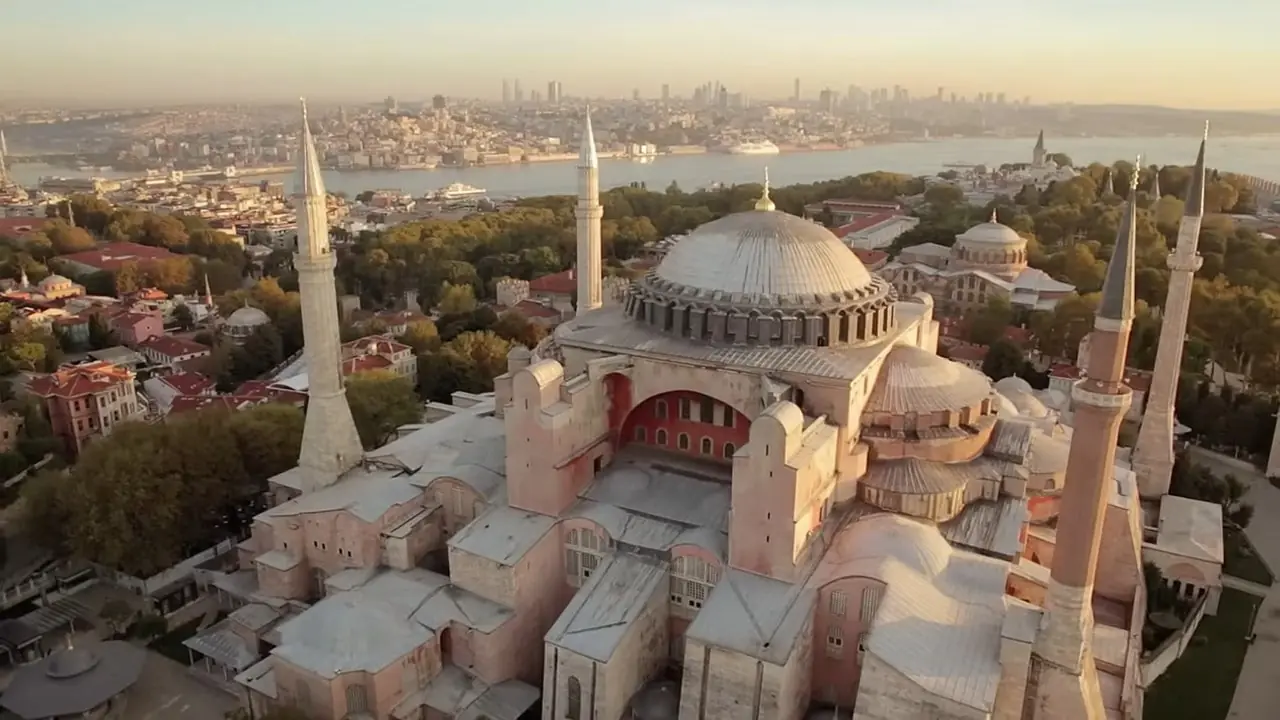
Hagia Sophia Grand Mosque (Ayasofya-i Kebir Cami-i Şerifi) stands as the undisputed crown jewel of Istanbul, a breathtaking monument that has served as an Orthodox cathedral, a mosque, a museum, and now, once again, an active mosque with a dedicated visitor gallery. Attracting millions of visitors annually, strategic timing is not just a suggestion—it’s the key to an intimate and awe-inspiring experience. Understanding the daily rhythm is crucial for finding the best time to Hagia Sophia.
As Turkey travel experts, we cut through the general advice to give you the precise window for the perfect visit.
The Short Answer: To truly experience the peace and grandeur of this UNESCO World Heritage Site, the best time to Hagia Sophia is an early weekday morning arrival between 9:00 AM and 10:30 AM during the shoulder seasons of Spring (April-May) or Autumn (September-October).
The Best Time of Day to Visit Hagia Sophia
Avoiding the dense, queue-forming crowds is paramount for a relaxed visit. Since the introduction of the tourist entrance and the separate €25 ticket for the upper gallery, the visitor flow has changed, making planning the best time to Hagia Sophia by the hour even more critical.
The Essential Early Bird Strategy (9:00 AM – 10:30 AM)
This is the golden hour for Hagia Sophia. The upper gallery tourist entrance generally opens at 9:00 AM.
-
The Experience: Arriving 15 minutes before the door opens allows you to be ahead of the first wave of large group tours, which typically begin arriving after 10:30 AM.
-
The Benefit: You get a relatively clear path to admire the magnificent scale of the interior and the impressive Byzantine mosaics from the upper gallery. This is consistently the Hagia Sophia least crowded time of the entire day.
The Late Afternoon Magic (After 5:00 PM)
If you can’t manage the early start, the late afternoon offers your second-best time to Hagia Sophia before the Hagia Sophia closing time (usually around 7:00 PM to 7:30 PM for the upper gallery).
-
The Experience: Crowds thin out considerably as tour groups depart for dinner.
-
The Benefit: The soft, late-day light enhances the mosaics and marble work, giving the interior a golden, tranquil glow—perfect for a final, reflective view.
Choosing the Best Day to Visit Hagia Sophia
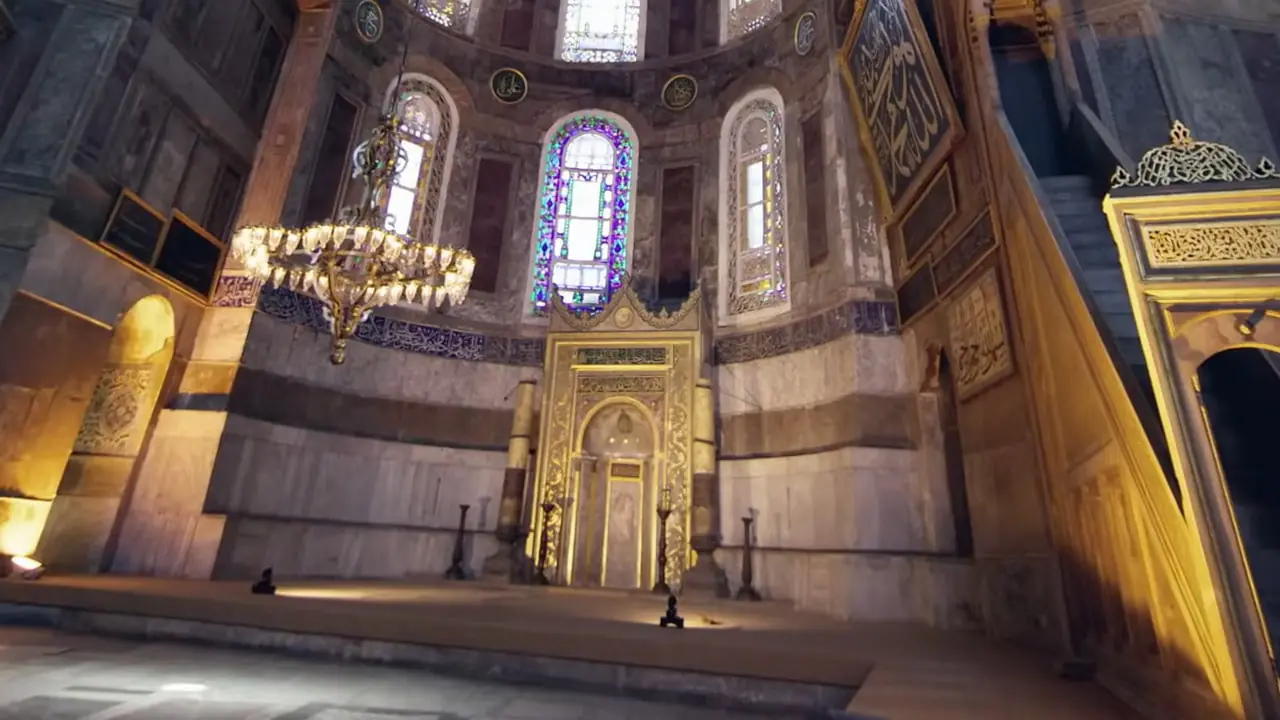
The day of the week can drastically impact your visit due to local tourist habits and the mosque’s active worship schedule.
-
Tuesday & Wednesday: These consistently offer the quietest time to visit Hagia Sophia and are the best day to visit Hagia Sophia for tourists seeking minimal disruption.
-
Thursday: An excellent choice in the morning, but crowds often begin to build ahead of the weekend.
-
Monday: Often busier than mid-week due to nearby major sites like Topkapı Palace being closed, pushing visitors to Hagia Sophia.
-
Friday (The Day to Plan Around): This is often the busiest day. Crucially, AVOID the window of approximately 12:00 PM to 2:30 PM. Tourist access to the upper gallery is often heavily restricted or closed entirely for the weekly Cuma Namazı (midday prayer). Plan your Friday visit for the early morning or late afternoon only.
-
Saturday & Sunday: These are the peak days, attracting both international tourists and local residents. Your only option to successfully avoid crowds Hagia Sophia on a weekend is to arrive precisely at 9:00 AM.
Seasonal Secrets
For the ultimate experience, plan your entire Istanbul trip around the seasons.
-
The Best Season: Spring & Autumn (April-May and September-October)
-
These shoulder seasons are optimal and provide the overall best time to Hagia Sophia.
-
Reason: The balance is perfect, with comfortable highs of 18°C-25°C and manageable crowd levels. The light is fantastic for photography.
-
-
The Peak Season: Summer (June-August)
-
Challenge: This is the most crowded and hottest time. Expect significant queues even with a ticket, and heat often exceeds 30°C in Sultanahmet Square. Pre-booking a guided tour is essential here.
-
-
The Quiet Season: Winter (November-March)
-
Benefit: If your priority is seeing the interior with virtually no crowds, this is the most intimate option. Lines are minimal, and you’ll easily find the most peace and tranquility inside.
-
Trade-off: Colder weather (around 5°C-10°C) and less daylight for late afternoon viewing.
-
Essential Logistics & Visitor Tips
To make the most of your carefully chosen best time to Hagia Sophia, remember these crucial logistical details:
-
Tourist Entrance Fee: Tourist access to the spectacular upper gallery museum area requires a separate ticket, which is typically €25 (or the Turkish Lira equivalent). This ticket is purchased at the dedicated tourist entrance, located near the Sultan Ahmet III Fountain, not the main worshipper’s entrance.
-
Dress Code: Hagia Sophia is an active mosque. Modest dress is mandatory for all visitors to the upper gallery. Shoulders and knees must be covered. Women must also cover their hair with a scarf (available for purchase or loan at the entrance).
-
The Route: Since 2024/2025, tourists primarily visit the spectacular upper gallery, which provides a breathtaking view of the main dome and allows you to view the famous Byzantine mosaics, such as the Deësis Mosaic. The ground floor is reserved for worship.
-
Combine Your Visit: Maximize your day by pairing your visit with other nearby sites like the Blue Mosque (right across Sultanahmet Square) and the Basilica Cistern.
By combining the early weekday morning with a shoulder season trip, you ensure the best time to Hagia Sophia for a truly memorable, non-rushed, and reflective visit.
0 Comment