
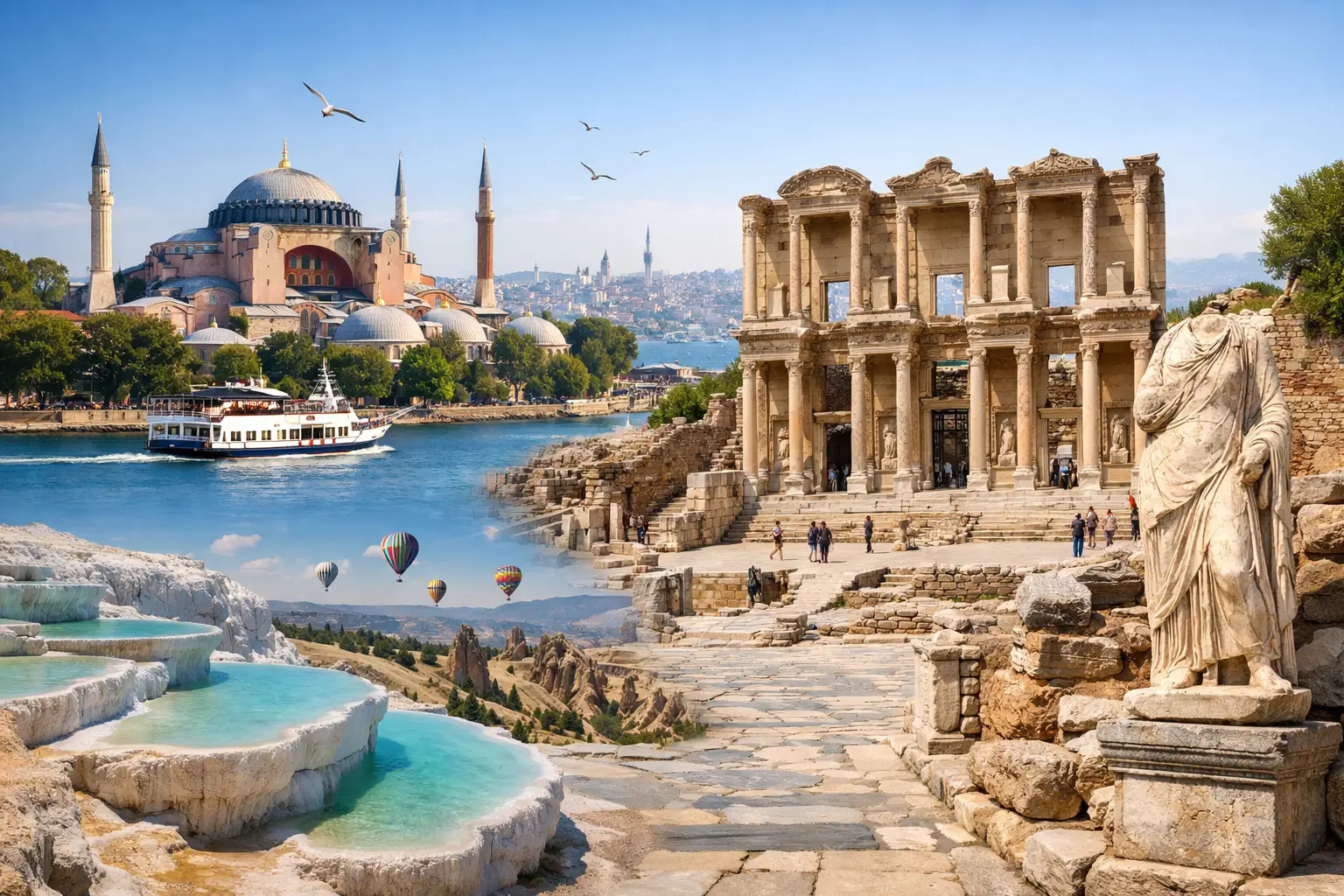
Two cities, two very different moods – that is what makes an Istanbul to Ephesus travel guide so useful. In Istanbul, your days are shaped by imperial mosques, Bosphorus views, and fast-moving neighborhoods. In Ephesus, the pace slows and history takes over, with marble streets, Roman libraries, and one of the most impressive archaeological sites in Turkey (Türkiye). The challenge is not whether to visit both. It is how to connect them well, without losing time or comfort along the way.
For most international travelers, this is one of the smartest classic routes in Turkey. It combines the energy of Istanbul with the ancient world of western Anatolia, and it works equally well as a short cultural trip or as part of a longer itinerary that includes Cappadocia, Pamukkale, or the coast. If you want a journey that feels well-paced rather than rushed, planning the transportation, overnight stops, and touring sequence matters.
How to plan an Istanbul to Ephesus trip
The first decision is simple: do you want the fastest route, the most scenic route, or the most comfortable route? For most visitors, flying is the most efficient option. A domestic flight from Istanbul to Izmir saves significant time, especially if you are working with a 5- to 8-day Turkey itinerary. From Izmir, Ephesus is reached by road in about an hour, depending on traffic and your hotel location.
If you prefer a more layered journey, you can travel overland and add stops such as Bursa, Pergamon, or even Pamukkale before reaching Selcuk, the town closest to Ephesus. This works best for travelers who want a private driver-guide or a tailor-made itinerary, because connections are easier and your travel days remain organized rather than fragmented.
The least practical option for most premium travelers is trying to build the route entirely around public transport schedules. It can be done, but it often turns a smooth cultural trip into a logistics exercise. If your time in Turkey is limited, private transfers, domestic flights, and coordinated hotel stays make a noticeable difference.
Best ways to travel from Istanbul to Ephesus
By flight
This is the preferred option for comfort and efficiency. You fly from Istanbul to Izmir Adnan Menderes Airport, then continue by private transfer to Selcuk, Kusadasi, or your chosen hotel. If you want to maximize sightseeing time, an early morning flight allows for an afternoon visit to Ephesus or nearby sites such as the House of the Virgin Mary and the Temple of Artemis.
This route is especially useful for travelers pairing Istanbul tours with western Turkey highlights. It reduces transit fatigue and leaves more time for guided visits, quality hotels, and relaxed dinners rather than long station waits.
By private road transfer or tailor-made overland tour
A private overland journey suits travelers who want flexibility and more context between destinations. Rather than treating Ephesus as a single stop, you can turn the route into a richer western Turkey experience. This is ideal for couples, families, or small groups who value a door-to-door plan with selected hotels and a professionally arranged schedule.
The trade-off is time. Driving from Istanbul toward the Ephesus region is not a short hop, so this option works best when broken into at least one overnight stop. Done well, though, it becomes part of the trip rather than just transportation.
By train and connecting transport
Train travel appeals to some travelers, but on this route it is usually not the most straightforward choice. It may suit those with a particular interest in rail travel and a flexible schedule, yet it rarely matches the ease of a flight-plus-transfer arrangement. If comfort, timing, and predictability are priorities, organized transport is the better fit.
Where to stay for Ephesus
When people say they are “staying in Ephesus,” they usually mean Selcuk or Kusadasi. Each has advantages, and your choice depends on what kind of trip you want.
Selcuk is the best base for travelers focused on history and easy access. It is close to the archaeological site and has a more relaxed, local atmosphere. If your main goal is to visit Ephesus early, avoid crowds, and include nearby landmarks, Selcuk is the practical choice.
Kusadasi works well if you prefer a coastal resort feel, larger hotels, and a broader selection of upscale accommodations. It is slightly farther from the site, but many travelers enjoy combining Ephesus with a few nights by the Aegean. This is especially appealing in warmer months or when Ephesus is part of a longer Turkey vacation that also includes coastal relaxation.
A well-planned itinerary often pairs two or three nights in Istanbul with one or two nights in the Ephesus area. If you are adding Pamukkale, Bodrum, or a blue cruise, your hotel strategy may shift toward Kusadasi or another coastal base.
What to see beyond the ruins
Ephesus is the headline, but the surrounding area deserves proper time. The ancient city itself includes the Library of Celsus, the Great Theatre, marble streets, terraces, temples, and baths. A guided visit adds real value here because the site is visually striking on its own, yet the meaning of what you are seeing comes through much better with expert interpretation.
Nearby, the House of the Virgin Mary is often included on half-day or full-day itineraries, as is the Temple of Artemis, one of the ancient wonders of the world. The Ephesus Museum in Selcuk is also worth considering if you enjoy artifacts and historical context rather than ruins alone.
If you stay an extra night, Sirince is an easy addition. This hillside village offers a softer contrast to the archaeological focus of Ephesus, with stone houses, village lanes, and a slower rhythm. It is not a substitute for the ruins, but it rounds out the experience nicely.
Istanbul and Ephesus in one itinerary
A good 4-day version
If your schedule is tight, spend two nights in Istanbul and one night in the Ephesus region. Start with the major Istanbul highlights such as the Hagia Sophia, Blue Mosque, Topkapi Palace, and a Bosphorus cruise or private city tour. Then take a morning flight to Izmir, transfer to your hotel, and visit Ephesus that afternoon or the next morning.
This version is efficient but fast. It suits travelers on a broader Europe or Mediterranean trip who still want two of Turkey’s most important cultural destinations.
h2>Which Istanbul to Ephesus Tour Should You Choose?
The best Istanbul to Ephesus route depends mostly on how many days you have. If you only have one free day in Istanbul, the most practical option is an Ephesus Day Tour from Istanbul. This option is designed for travelers who want to see the ancient city of Ephesus with round-trip domestic flights, airport transfers, and guided sightseeing without changing hotels.
If you have two days available, the better choice is usually the 2 Day Ephesus and Pamukkale Tour from Istanbul. This route combines Ephesus with Pamukkale and Hierapolis, making it ideal for travelers who want both ancient history and one of Turkey’s most famous natural landscapes in a short itinerary.
For travelers with four days, a compact multi-city route such as the 4 Day Turkey Tour makes more sense. This type of program usually combines Cappadocia, Ephesus, and Pamukkale, giving first-time visitors a stronger overview of Turkey beyond Istanbul.
If you have six or seven days, you can choose a more balanced classic route. Our 6 Day Best of Turkey Tour and 7 Day Turkey Tour Package are better suited for travelers who want to combine Istanbul, Cappadocia, Ephesus, and Pamukkale with better pacing, domestic flights, hotels, transfers, and guided tours included.
For travelers who want the most complete cultural itinerary, the 10 Day Turkey Tour is the strongest option. This longer route allows more time for Istanbul, Cappadocia, Ephesus, Pamukkale, Gallipoli, Troy, and Pergamon, making it ideal for guests who want a deeper Turkey experience without rushing between destinations.
Practical travel tips for this route
The best time to travel is spring and fall, especially April to June and September to October. These months offer pleasant temperatures for both city touring in Istanbul and walking through the open-air site at Ephesus. Summer is popular, but midday heat around the ruins can be intense, so early entry and a thoughtful schedule become more important.
For length of stay, allow at least three nights total if you are only combining Istanbul and Ephesus in a short trip. Five to seven nights is much more comfortable, especially if you want private touring, quality hotels, and time to enjoy each place properly.
A strong route is Istanbul to Izmir by flight, then transfer to Selcuk or Kusadasi for Ephesus. If you want to continue, Ephesus pairs naturally with Pamukkale, Bodrum, or a tailor-made Aegean itinerary. Travelers building a broader Turkey (Türkiye) journey often connect Istanbul, Cappadocia, and Ephesus for a balanced mix of city, landscape, and history.
One practical note: visit Ephesus early in the day if possible. The light is better, the site is quieter, and the experience feels more refined. This matters even more in high season.
Is a private or tailor-made plan worth it?
For this route, often yes. Istanbul and Ephesus are both straightforward destinations on their own, but combining flights, transfers, hotel timing, site visits, and onward travel can become surprisingly fragmented. A private or tailor-made arrangement keeps the journey connected, especially if you are adding more than one destination.
This is not about overcomplicating the trip. It is about making sure your time in Turkey is spent in the places you came to see, not troubleshooting connections between them. Travel Store Turkey, for example, often arranges these routes as part of wider private Turkey itineraries, combining domestic flights, guided touring, hotels, and intercity transportation in a way that feels orderly and relaxed.
The right Istanbul to Ephesus journey should feel like one trip, not two separate bookings stitched together. When the timing works, the hotels fit your style, and the transfers are handled well, the route becomes one of the most rewarding cultural combinations in Turkey – and an easy starting point for going farther.
0 Comment