
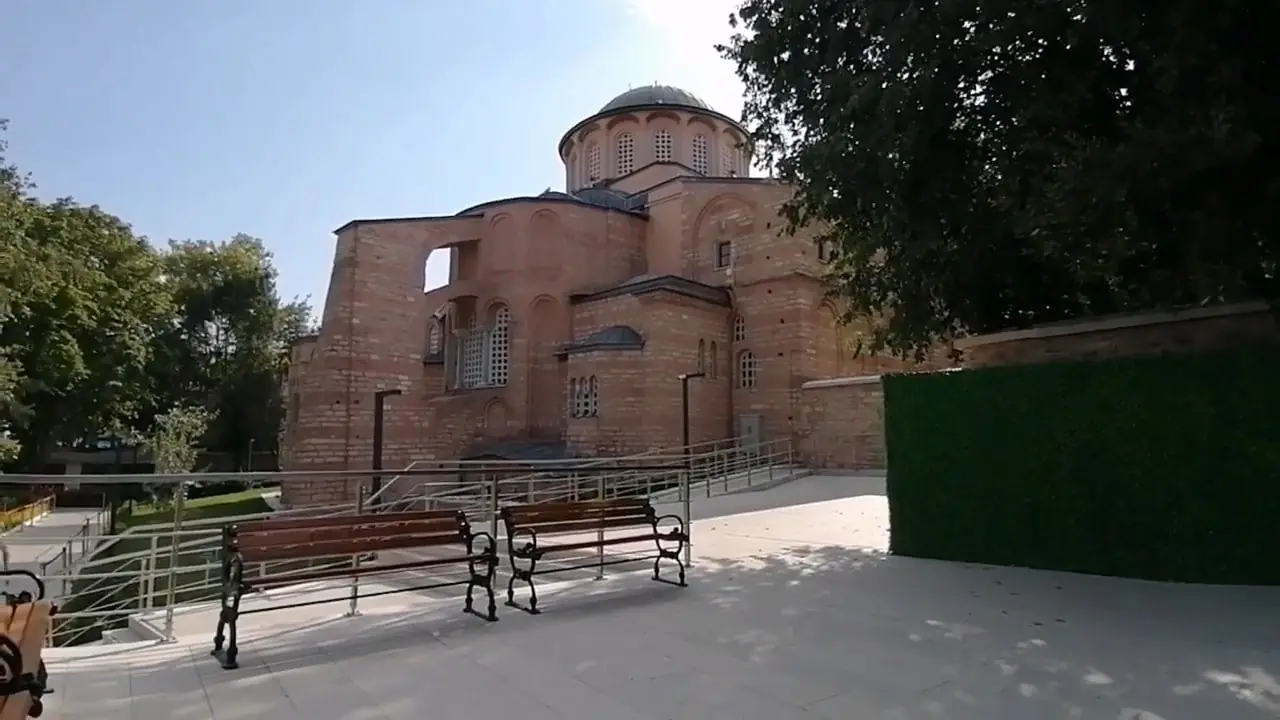
Hidden away in Istanbul’s Edirnekapı district, a short distance from the well-trodden tourist path, lies one of the world’s most exquisite treasures of Byzantine art: the Kariye Museum Istanbul. This extraordinary site, originally known as the Church of the Holy Saviour in Chora (Kariye Müzesi), offers an unparalleled journey into the spiritual and artistic zenith of the late Byzantine Empire. Far from the crowds of Sultanahmet, it presents a more intimate, profound encounter with history, where every surface tells a sacred story in glittering mosaic and fresco.
This guide will help you plan your visit to this masterpiece, covering everything from the Kariye Museum Istanbul entrance fee and its breathtaking art to its complex history and practical tips for your journey.
From Church to Mosque to Museum
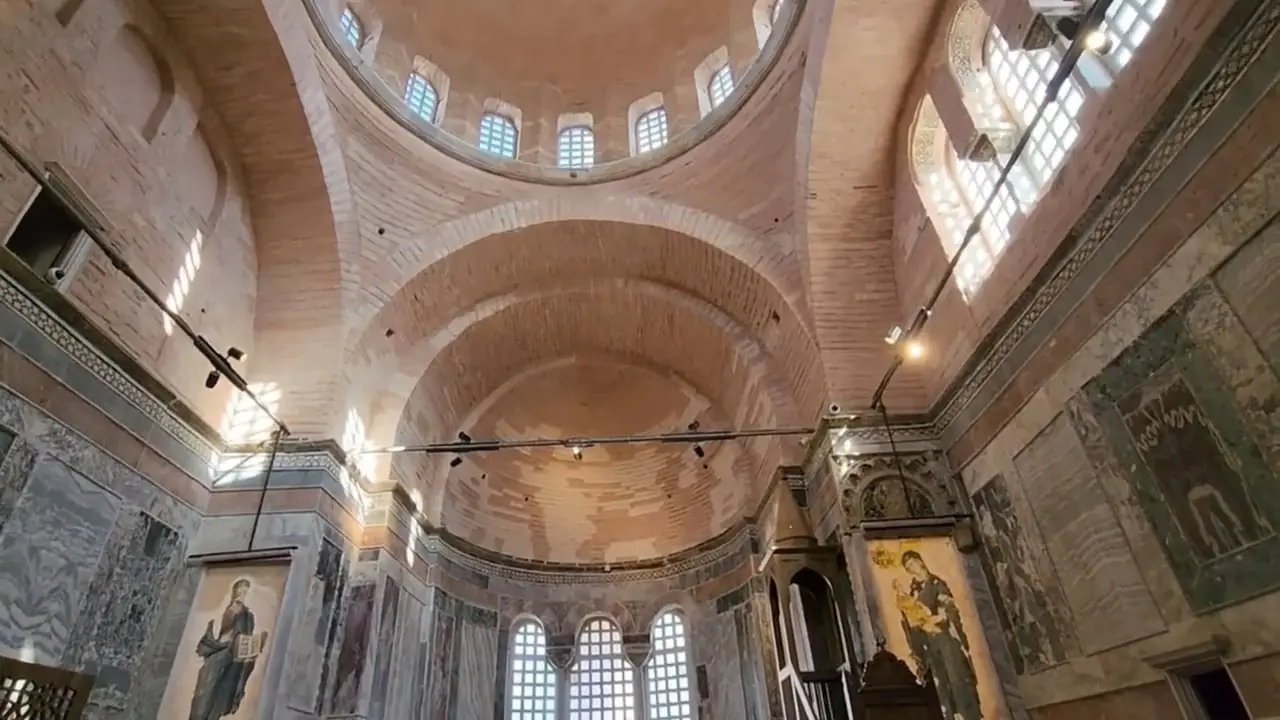
The history of the Kariye Museum is a microcosm of Istanbul’s own layered past. The name “Chora,” meaning “in the country” in Greek, indicates it was originally built in the 4th century outside the walls of Constantinople. The current structure dates primarily to the 11th and 12th centuries, with its most glorious period arriving in the early 14th century.
This renaissance was the work of the scholar and poet Theodore Metochites, who served as chief minister to Emperor Andronikos II. Around 1315-1321, he funded a complete and lavish reconstruction of the church’s interior, commissioning the cycle of mosaics and frescoes that have made it famous. After the Ottoman conquest in 1453, the church was converted into a mosque (Kariye Camii). In a move that preserved the art, the magnificent Christian imagery was covered with plaster rather than destroyed. In 1945, it was secularized and opened as a public museum, and a meticulous restoration began, carefully uncovering the hidden masterpieces. In a significant recent development, in 2020, the site was reconverted into a mosque (Kariye Camii). While it remains open to all visitors, it is now a functioning place of worship, and viewing conditions (such as scaffolding, lighting, and covering of certain figures) may be adjusted accordingly.
The Artistic Masterpiece: Mosaics and Frescoes of the Chora
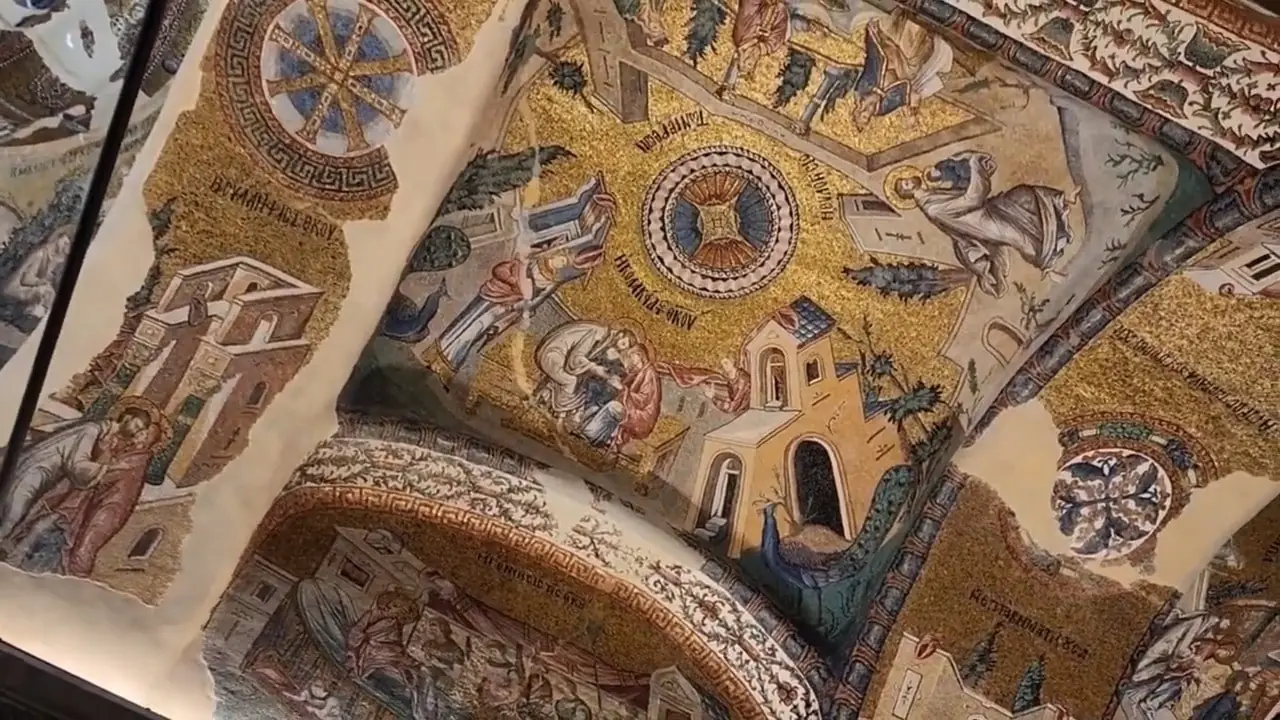
The supreme reason to visit is to witness its Byzantine mosaics and frescoes, considered the finest surviving examples of the Palaeologian Renaissance.
-
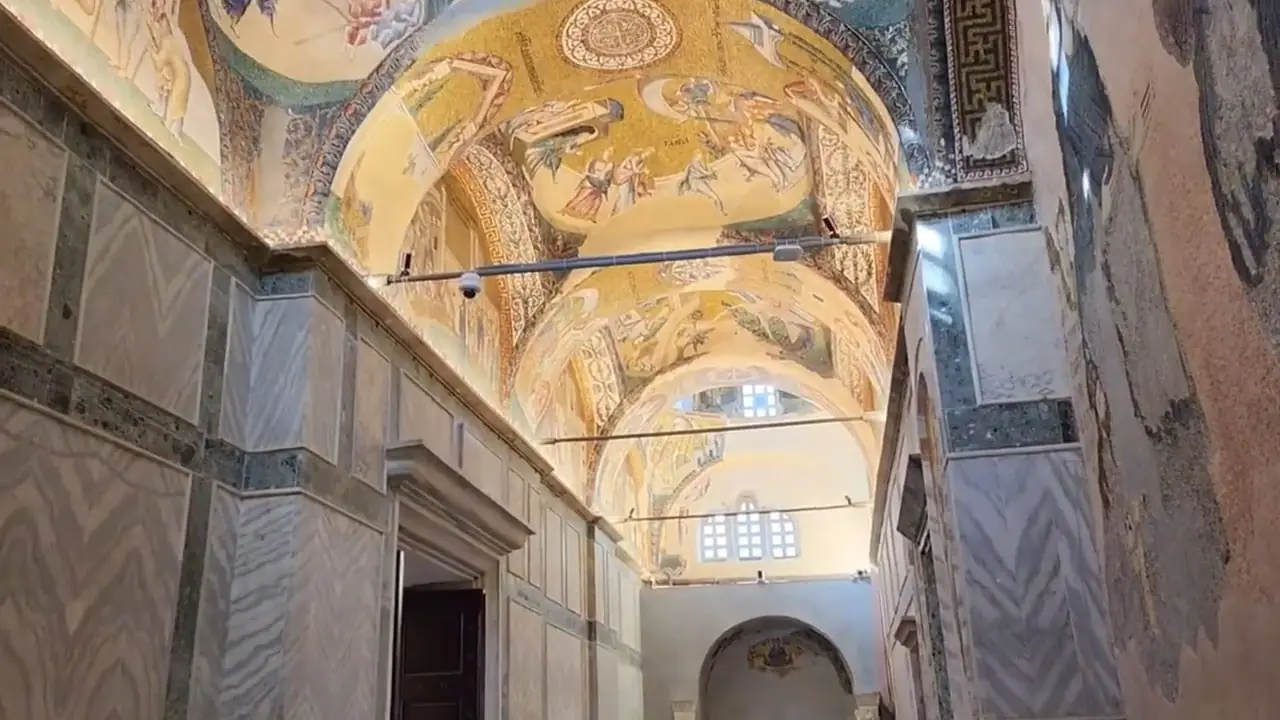
The Narthex Mosaics: The outer and inner narthex (entrance hall) are entirely covered with mosaic scenes depicting the life of Christ and the Virgin Mary. Look for the exquisite detail in The Enrollment for Taxation, the tenderness of The Journey to Bethlehem, and the dynamic Massacre of the Innocents.
-
The Dazzling Dome Mosaics: In the inner narthex, a dome mosaic features Christ Pantocrator (“Ruler of All”) at the center, surrounded by his ancestors.
-
The Parecclesion Frescoes: This side chapel, built as a mortuary, is adorned with breathtaking frescoes focused on the theme of resurrection. The stunning Anastasis (Harrowing of Hell) fresco in the apse shows a powerful, dynamic Christ breaking down the gates of hell to pull Adam and Eve from their tombs. The Last Judgment on the ceiling is equally impressive.
-
The Detail: The artistry lies in the subtlety—the expressive faces, the flow of garments, the use of gold tesserae to create divine light, and the profound theological narratives conveyed through image.
Practical Visitor Information: Fee, Hours & Location
-
Kariye Museum Istanbul Entrance Fee: Since its reconversion into a mosque, entrance is free for all visitors. There is no longer a ticket purchase required to enter the building.
-
Opening Hours: As a functioning mosque, it is open daily but closes for the five daily Muslim prayer times, typically for about 30-45 minutes each. Visiting hours for tourists generally fall between 9:00 AM and 6:00 PM, but these can vary, especially during Ramadan. It is closed for longer during the Friday midday prayer.
-
Location & Transportation: The museum is located in the Edirnekapı neighborhood, within the old city walls.
-
By Bus: From Sultanahmet or Eminönü, take buses marked for Edirnekapı (e.g., 28, 38, 87). Get off at the Edirnekapı stop and walk a few minutes.
-
By Taxi: A direct taxi from Sultanahmet takes about 15-20 minutes and is a convenient, relatively inexpensive option for small groups.
-
Tips for an Enriching Visit
-
Visit Early: Arrive right at opening time to enjoy the art with fewer visitors and better light, especially before potential midday prayer closures.
-
Dress Modestly: As it is an active mosque, modest dress is required. Women must cover their hair with a scarf. Shoulders and knees must be covered for everyone. Scarves are often available at the entrance.
-
Check the Prayer Schedule: Be mindful that your visit will be interrupted by prayer calls. Use this time to explore the quiet neighborhood or have a tea at a local café.
-
Bring a Guide (Physical or Digital): The art is narrative-heavy. A detailed guidebook, an audio guide app, or a licensed tour guide is invaluable to understand the biblical stories and symbolism in each scene. Simply looking is not enough—you must read the images.
-
Combine with Other Sites: The area is home to other lesser-visited Byzantine wonders. The ancient City Walls are a short walk away, and the Fethiye Museum (Pammakaristos Church), with its own beautiful mosaics, is nearby.
The Kariye Museum Istanbul stands as a testament to a brilliant, final flowering of Byzantine culture. While its status has changed, its artistic power remains undimmed. Navigating its new reality as the Chora Church mosque requires a little extra planning regarding timing and dress, but the reward—standing beneath some of the most moving and beautiful medieval art on earth—is worth every effort. It remains an essential, soul-stirring destination for anyone seeking to understand the full depth of Istanbul’s heritage.
0 Comment