

Turkey in November rewards travelers who prefer unhurried sightseeing, comfortable cultural touring, and a more personal pace in major destinations. The intense summer heat has passed, popular landmarks are generally quieter, and the country’s variety becomes especially useful: enjoy atmospheric Istanbul, volcanic Cappadocia, and the ancient Aegean coast in one well-planned trip rather than choosing between them.
November is not a single-weather month across Turkey. It can bring crisp sunshine to Cappadocia, mild afternoons around Ephesus, changeable days in Istanbul, and lingering warmth on the Mediterranean coast. For travelers from the US, Canada, the UK, Australia, and Europe, that makes it an excellent time for a private or small-group itinerary built around history, food, scenery, and well-located hotels.
Why Turkey in November works so well
The greatest advantage of Turkey in November is breathing room. In Istanbul, it is easier to appreciate the scale and detail of the historic peninsula when there is time to pause between sites, enjoy a proper lunch, and walk through neighborhoods without the pressure of peak-season crowds. A licensed local guide can shape an Istanbul tour around your interests, whether that means imperial landmarks, museum collections, lively markets, Bosphorus views, or culinary stops.
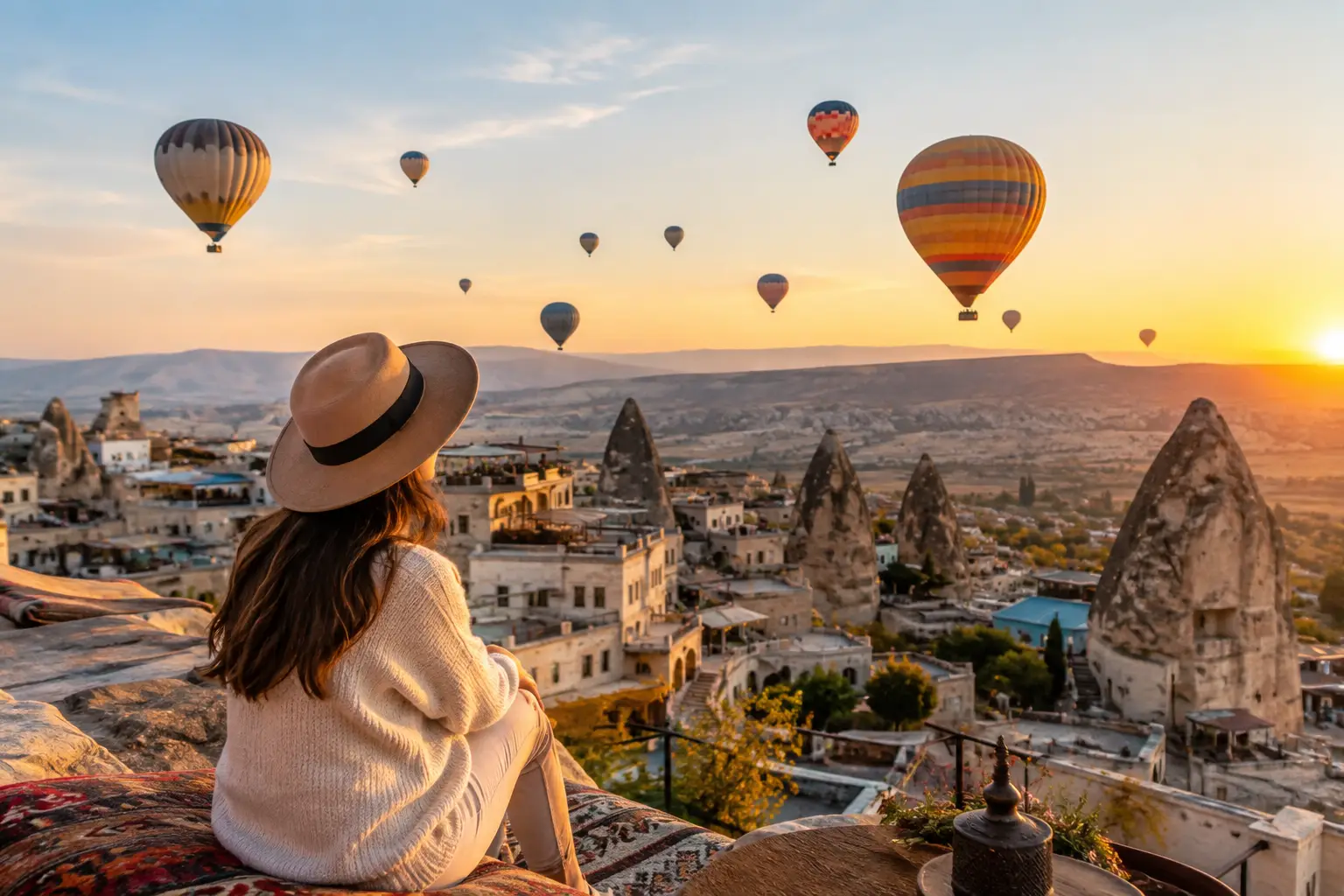
Cappadocia is equally compelling in late fall. The valleys and rock formations take on rich gold, rust, and rose tones under lower seasonal light, while cave hotels offer a particularly cozy base after a day outdoors. Balloon flights operate year-round when conditions allow, but they are weather-dependent. Travelers should plan at least two or three mornings in Cappadocia rather than arranging a single overnight stay, giving the itinerary flexibility if a flight is postponed.
Along the Aegean, sites such as Ephesus, Pergamon, Aphrodisias, and Hierapolis are far more comfortable to explore without summer temperatures. November suits travelers who want to understand the places they visit instead of rushing through them. A private Ephesus tour can also combine archaeological areas with regional villages, local food experiences, and a relaxed overnight stay near the coast.
What weather to expect by region
November weather in Turkey varies considerably by route, so packing and hotel choices should follow the itinerary rather than a national forecast.
Istanbul and the northwest
Istanbul is cool and occasionally rainy, with temperatures often comfortable for full-day touring when dressed in layers. A waterproof outer layer, comfortable walking shoes, and a compact umbrella are practical additions. Rainy intervals can be used well for palace interiors, museums, covered markets, and a long Turkish breakfast, while clearer periods are ideal for the Bosphorus and historic neighborhoods.
Gallipoli and Troy also become quieter and more reflective at this time of year. They fit naturally into a route from Istanbul toward the Aegean, particularly for guests interested in historical landscapes and an organized overland journey.
Cappadocia and central Turkey
Cappadocia is noticeably colder, especially early in the morning and after sunset. Daytime can still be bright and pleasant for valley walks, open-air museums, and private sightseeing, but a warm jacket, scarf, and shoes with good grip are wise. Cave hotels are an appealing November choice because they combine character with comfort, often with fireplaces, terraces, and intimate dining spaces.
Ephesus, Pamukkale, and the Aegean
The Aegean region is generally mild, although showers are possible. Ephesus is particularly enjoyable in this season because its marble streets and wide archaeological zones can be explored without the harsh sun. Pamukkale’s white terraces and the ruins of Hierapolis are also suitable for a November visit, especially when paired with an overnight hotel stay rather than a rushed day trip.
Antalya and the Turquoise Coast
Antalya often has the mildest conditions among Turkey’s major touring regions. It is a sensible choice for travelers who want cultural visits combined with coastal scenery, resort hotels, and a slower final few days. Swimming is possible on warmer days but should not be the main reason to visit in November. Blue cruises and gulet charters can be arranged selectively, though sea conditions and seasonal availability mean a land-based coastal itinerary is usually the more dependable choice.
The best November itineraries
For a first visit, seven to nine days gives enough time to see Turkey’s defining highlights without excessive hotel changes. A well-paced route begins with three nights in Istanbul, continues with two or three nights in Cappadocia by domestic flight, then moves to the Aegean for Ephesus and Pamukkale. Domestic flights and pre-arranged airport transfers make this multi-city structure efficient, especially in a month when daylight hours are shorter.
Travelers with 10 to 12 days can add Gallipoli and Troy after Istanbul, or extend south to Antalya for the Mediterranean coast. This longer format works well for couples, families, and friends who want private touring but do not want every day filled from morning to evening. The right itinerary leaves room for a scenic drive, a memorable lunch, and an unplanned stop recommended by your guide.
A five- or six-day trip can still be rewarding, but it is best to focus. Istanbul and Cappadocia are the strongest combination for a first short visit, while Istanbul and Ephesus suit travelers whose priority is urban culture and ancient heritage. Trying to include Istanbul, Cappadocia, Ephesus, Pamukkale, and Antalya in less than a week usually creates more transit time than meaningful exploration.
Hotels and touring style matter more in November
With occasional rain and earlier sunsets, the details of trip design matter. A centrally located Istanbul hotel reduces unnecessary driving and makes it easy to return for a rest before dinner. In Cappadocia, choosing a quality cave hotel in a convenient village adds warmth and atmosphere to the experience. In the Aegean, an overnight near Kusadasi, Selcuk, or Pamukkale allows cultural sites to be visited at calmer times of day.
Private tours are especially useful in November because they allow sensible adjustments. If rain is expected in Istanbul, an itinerary can prioritize indoor monuments and museums. If the Cappadocia balloon flight is rescheduled, valley touring can be moved around it. If a mild day arrives on the coast, it can be used for outdoor ruins and sea views. Small-group departures offer value and companionship, while a tailor-made private Turkey tour provides the greatest control over pacing, hotels, flights, and experiences.
Practical tips for a November trip to Turkey
Plan for layers rather than heavy winter clothing alone. You may need a light shirt in Antalya at midday, then a warm jacket in Cappadocia before breakfast. Bring a rain-resistant layer, comfortable shoes suitable for uneven historic surfaces, and a small day bag for changing conditions.
Allow at least two nights in every major destination, and three nights in Cappadocia if a balloon flight is important. Book domestic flights, hotel rooms, and airport transfers as part of one coordinated itinerary so arrival times, luggage handling, and touring days work together. November has fewer visitors than summer, but desirable boutique hotels and cave hotel rooms can still be limited on weekends and holiday periods.
For families, private vehicle touring makes the route easier to manage, with flexible stops and realistic sightseeing hours. For couples, November is well suited to boutique stays, local dining, and a less crowded view of Turkey’s most celebrated landscapes. For groups of friends, combining Istanbul’s energy with Cappadocia’s scenery and the Aegean’s archaeological heritage creates a balanced trip without relying on beach weather.
Travel Store Turkey can arrange a customized November program with licensed guides, selected hotels, domestic flights, private transfers, and a route shaped around your priorities. The best November itinerary is not the one that checks off the most destinations. It is the one that gives each place enough time to feel memorable, comfortable, and distinctly Turkish.
0 Comment