

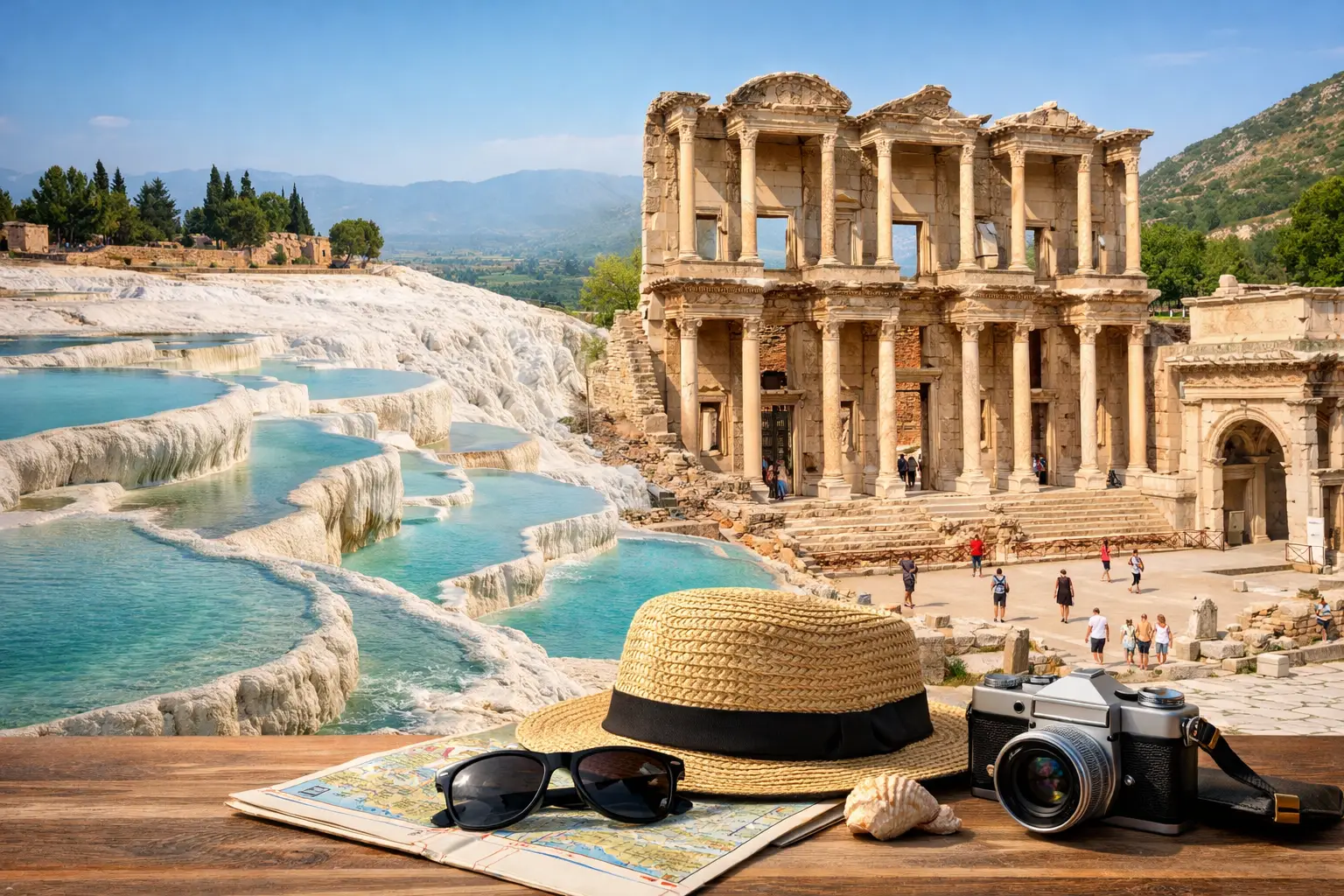
The white terraces of Pamukkale and the marble avenues of Ephesus create one of Turkey’s most rewarding two-destination journeys. This Pamukkale and Ephesus travel guide is designed for travelers who want to see both places at a comfortable pace, with the transport, hotel planning, and local guidance organized around the experience rather than rushed sightseeing.
These destinations are often paired because they sit within a manageable overland route in western Turkey, yet they offer very different rewards. Pamukkale is known for its mineral-rich thermal pools and the ancient city of Hierapolis above them. Ephesus offers one of the Mediterranean’s most complete ancient urban landscapes, where streets, temples, public buildings, and houses reveal the scale of Roman-era life.
Why Visit Pamukkale and Ephesus Together?
Pamukkale and Ephesus complement each other naturally. Ephesus is a detailed archaeological visit that benefits from an experienced licensed guide who can place each structure in context. Pamukkale is more open and scenic, combining a historic site, thermal water, and wide views across the Denizli plain.
Travelers based in Istanbul can reach the region efficiently by domestic flight, usually arriving through Izmir for Ephesus or Denizli for Pamukkale. A private driver and guide make the connection between the two destinations straightforward, especially for guests carrying luggage or traveling with family members. For many visitors, this is more comfortable than changing buses and hotels while trying to fit major sites into limited vacation time.
For travelers who want both destinations organized in one short trip, our 2-Day Ephesus and Pamukkale Tour from Istanbul combines flights, transfers and guided sightseeing in one itinerary.
The order depends on your wider Turkey itinerary. If you are arriving from Istanbul or continuing toward the Aegean coast, Ephesus is often the logical first stop. If your route includes Antalya, Pamukkale can work well before traveling west toward Ephesus and Izmir. Tailor-made Turkey itineraries can also combine these sites with Cappadocia, Istanbul, Gallipoli, Troy, or a relaxing stay along the Turquoise Coast.
Ephesus: Allow Time for the Details
Ephesus is best visited in the morning, when temperatures are cooler and the site is quieter. The main archaeological area is extensive, and a well-paced visit usually takes two to three hours. It is not a place to hurry through. Its broad Curetes Street, monumental library facade, grand theater, baths, fountains, and residential areas become far more meaningful when viewed as parts of a living city rather than isolated ruins.
A guided Ephesus tour provides the context that turns stonework into a story. Your guide can explain how the city functioned, where people gathered, how water was managed, and why Ephesus became an important trading center. Travelers with a special interest in architecture, archaeology, or ancient daily life may wish to include the Terrace Houses, where preserved interiors offer a more intimate look at urban living.
If you are coming directly from Istanbul, our Istanbul to Ephesus Travel Guide explains the most practical ways to organize flights, overnight stays and transfers between the two destinations.
Nearby Selcuk makes a practical base for an Ephesus visit. It has a relaxed local atmosphere and convenient access to the archaeological site. Kusadasi is another good option, particularly for travelers who prefer larger resort-style hotels, sea views, and a wider choice of evening dining. The best hotel base depends on whether you prioritize proximity, boutique character, or coastal comfort.
Pamukkale: Terraces, Thermal Water, and Hierapolis
Pamukkale is visually striking from the moment you arrive. White mineral formations cascade down the hillside, formed over centuries by calcium-rich thermal water. Visitors can walk barefoot along designated sections of the terraces, where shallow pools and changing light create memorable views.
Above the terraces lies Hierapolis, an ancient spa city with a broad necropolis, theater, public buildings, and thermal bath complex. This combination is what makes Pamukkale more than a scenic stop. A guided visit helps guests understand the relationship between the natural springs and the settlement that grew around them.
Plan to spend at least half a day here, although a full day allows for a more relaxed experience. Some travelers enjoy time in the antique pool area, where warm mineral water and submerged columns offer an unusual setting for a swim. Swimming is optional and has a separate admission charge, so it is best treated as an addition rather than the centerpiece of the visit.
Pamukkale village offers convenient hotels near the terraces, including smaller properties suited to an overnight stay. Denizli has larger city hotels and can be useful for flight schedules, but staying close to Pamukkale usually creates a more enjoyable evening and allows for an early site visit the following day.
A Comfortable 3-Day Pamukkale and Ephesus Itinerary
A three-day program is the most balanced choice for travelers who do not want to reduce these destinations to quick photo stops. It provides time for flights or road transfers, guided sightseeing, hotel check-in, and unhurried meals.
Day 1: Arrive in Izmir and Transfer to Ephesus
Fly from Istanbul to Izmir, where a pre-arranged airport transfer can meet you on arrival. Continue to Selcuk or Kusadasi, check into your hotel, and enjoy a quiet afternoon. Depending on your flight time, a short visit to a local village, a wine-tasting experience, or free time by the coast can be added.
Day 2: Private Ephesus Tour and Drive to Pamukkale
Begin early with a private Ephesus tour led by a licensed local guide. After exploring the ancient city, continue inland toward Pamukkale. The drive typically takes around three hours, depending on traffic and stops. A private vehicle allows flexibility for lunch and rest breaks along the way, then you can settle into a Pamukkale hotel for the evening.
Day 3: Pamukkale and Hierapolis, Then Onward Travel
Visit the terraces and Hierapolis in the morning, when the site feels more comfortable and the light is especially attractive for photographs. After lunch, continue to Denizli Airport for a domestic flight, return toward Izmir, or travel onward by private vehicle. This route works particularly well for travelers continuing to Antalya or returning to Istanbul.
Two days can work if your schedule is tight, but it requires early starts and careful transfer planning. Four days is ideal for guests who would like a slower pace, additional time in Kusadasi, or a night in each destination without a long touring day between them.
Practical Travel Tips for Pamukkale and Ephesus
The best time to visit is April through May or September through October. These months generally offer pleasant temperatures for outdoor archaeological sites and walking. Summer is still popular, but Ephesus can become hot by midday and Pamukkale’s exposed white terraces reflect strong sunlight. Winter brings fewer visitors and can suit travelers who value quieter sites, although weather is less predictable.
Wear comfortable walking shoes with a good grip for Ephesus. For Pamukkale, bring footwear that is easy to remove, as shoes are not permitted on the travertine walking route. A hat, sunscreen, refillable water bottle, and light layers are useful in every season. The terrain at both sites includes uneven surfaces, so travelers with limited mobility should discuss access needs before booking. A private itinerary can adjust pacing, vehicle drop-off points, and walking time more effectively than a fixed large-group schedule.
For hotels, choose Selcuk for character and closeness to Ephesus, Kusadasi for coastal comfort, and Pamukkale village for easy terrace access. Boutique hotels are well suited to couples and culture-focused travelers, while larger hotels may be preferable for families, groups, or guests who value more facilities.
Building This Route Into a Larger Turkey Vacation
Pamukkale and Ephesus fit easily into a wider Turkey tour package. A classic route may begin with Istanbul tours, continue by flight to Cappadocia for cave hotels and valley landscapes, then move west for Ephesus and Pamukkale.
Travelers who want to combine these destinations with Cappadocia can consider a 4 Day Private Turkey Tour, with flights, transfers and guided sightseeing coordinated within one itinerary.
For a more complete first-time visit, the 8 Days Turkey Tour Package combines Istanbul, Cappadocia, Ephesus and Pamukkale at a more relaxed pace.
Travelers with additional time can continue toward Antalya, Bodrum, Fethiye, or add a Blue Cruise along the Turquoise Coast after their cultural touring.
The key is not simply fitting destinations onto a map. It is allowing enough time in each place and arranging domestic flights, airport transfers, guides, hotels, and road journeys as one coordinated plan.
Travel Store Turkey can create private and small-group itineraries around your preferred travel dates, hotel style, and pace, including Ephesus and Pamukkale as part of a wider Turkey journey.
A well-planned visit leaves room for the quiet moments: walking Ephesus before the heat builds, seeing the terraces glow in morning light, and arriving at your hotel without having to solve the next transfer. Those details are what make this western Turkey route feel genuinely memorable.
0 Comment