

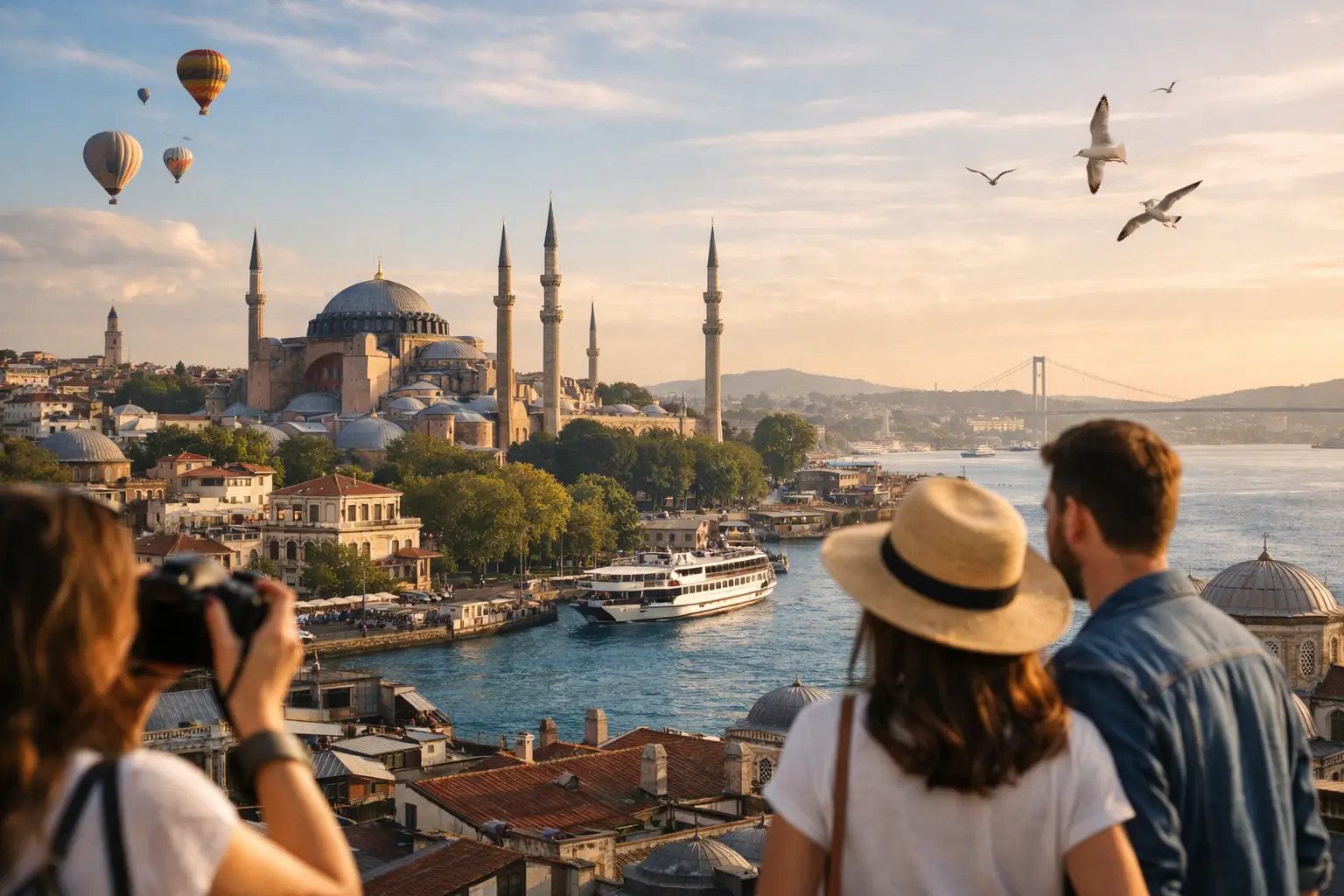
Istanbul Sightseeing Travel Guide: What to See and How to Plan Your Visit
If your first image of Istanbul is a skyline of domes and minarets above the Bosphorus, that instinct is right — but it only tells part of the story. A good Istanbul sightseeing travel guide should help you balance the city’s headline landmarks with the realities of time, traffic, neighborhood layout, and energy level. Istanbul rewards travelers who plan by district, not by a random checklist.
For most visitors, the city works best when you divide sightseeing into three layers. Start with the historic core around Sultanahmet, add the Bosphorus and waterfront districts, then leave room for neighborhoods that show Istanbul as a living modern city rather than an open-air museum.
If you are combining Istanbul with other destinations such as Cappadocia, Ephesus, or Pamukkale, it is often worth arranging a structured stay with hotels, airport transfers, and sightseeing organized in advance.
How to Use This Istanbul Sightseeing Travel Guide
The biggest mistake first-time visitors make is trying to cross the city too many times in one day. Istanbul is vast, and even short distances on a map can take time once you factor in crowds, traffic, and the simple desire to stop for tea, photos, or a proper meal.
Grouping your sightseeing by area creates a smoother trip and gives each district a chance to make sense. If you have two days, focus on the essentials. With three to four days, Istanbul becomes much more comfortable and rewarding.
Many travelers choose Private Istanbul Tours because they reduce waiting times, simplify transportation, and help visitors understand the city’s complex history more efficiently.
Day 1 – Istanbul’s Historic Core
Sultanahmet is where most classic sightseeing begins, and for good reason. This compact district holds several of the city’s most important monuments within walking distance of each other. It is the best place to understand the layers of Byzantine and Ottoman history that shaped Istanbul.
Start with Hagia Sophia, still one of the most impressive buildings anywhere in the world. Its scale, interior volume, and historical significance make it much more than a photo stop.
Nearby, the Blue Mosque offers a different atmosphere — elegant, active, and visually distinct. Seeing both on the same morning gives valuable context, especially with a licensed guide.
The Basilica Cistern is an easy addition and well worth your time. Atmospheric, compact, and visually striking, it creates a fascinating contrast to the monumental structures above ground.
From there, continue to Topkapi Palace. This is not a quick stop if you want to appreciate it properly. The courtyards, imperial collections, treasury, and views over the Bosphorus deserve several hours.
If your schedule is tight, there is always a trade-off. You can move quickly through each site and say you saw the highlights, or slow down and absorb them properly. Most visitors eventually prefer the second approach.
That is one reason why Private Istanbul Tours remain popular. They eliminate guesswork and help visitors make better use of their time.
Day 2 – Grand Bazaar, Spice Bazaar, and the Bosphorus
Your second day should shift from imperial monuments to the commercial and waterfront side of the city.
Begin with the Grand Bazaar, not simply as a shopping destination but as part of Istanbul’s urban history. It remains one of the world’s oldest and largest covered markets, filled with traditional crafts, textiles, jewelry, ceramics, and local character.
The Spice Bazaar is smaller, easier to navigate, and pairs naturally with the nearby Eminönü waterfront. Here, the city begins to open toward the Golden Horn and Bosphorus.
This is the perfect time to experience a Bosphorus cruise. Whether private or shared, seeing Istanbul from the water provides a perspective that no land-based tour can match.
Palaces, waterfront mansions, mosques, bridges, and historic neighborhoods line both shores. It is one of the best ways to understand why Istanbul feels like multiple cities connected by water.
By late afternoon, continue toward Dolmabahçe Palace if grand interiors interest you. Compared with Topkapi Palace, Dolmabahçe reflects a later Ottoman period and a more European architectural influence.
Some travelers enjoy visiting both palaces because the contrast is so dramatic. Others choose one and leave more time for neighborhood exploration.
Day 3 – Neighborhoods That Give Istanbul Its Character
A good Istanbul sightseeing travel guide should not stop at monuments. The city’s charm also comes from districts where architecture, local life, and food culture blend naturally.
Balat and Fener are among the most photogenic neighborhoods in Istanbul. Their colorful streets, historic houses, local cafés, and multicultural history make them ideal for a slower morning after two busy sightseeing days.
Galata and Karaköy offer a completely different atmosphere. Here, visitors find historic streets, boutique shops, galleries, cafés, restaurants, and excellent viewpoints over the Golden Horn and Old City.
The area surrounding Galata Tower is especially rewarding for travelers who enjoy photography and walking.
Nearby Beyoğlu and Istiklal Street showcase a more contemporary side of Istanbul. Crowded, energetic, and full of life, this district balances an itinerary that focuses too heavily on Ottoman and Byzantine monuments.
If you have additional time, Kadıköy on the Asian side provides yet another perspective. It is less touristy, more residential, and especially attractive for food lovers.
What to Prioritize if You Only Have 1 or 2 Days
If you only have one day in Istanbul, stay focused. Start with Hagia Sophia, continue to the Blue Mosque, visit the Basilica Cistern, and finish at Topkapi Palace. End the day with a short Bosphorus cruise or dinner overlooking the water.
This combination provides history, architecture, culture, and a sense of Istanbul’s unique geography without feeling rushed.
With two days, add the Grand Bazaar, Spice Bazaar, and either Dolmabahçe Palace or a neighborhood-focused experience in Galata and Karaköy.
Trying to include every major attraction often weakens the overall experience. Istanbul is best enjoyed when the itinerary is edited carefully rather than overloaded.
This is one reason why many visitors choose Private Istanbul Tours. The city is entirely manageable on your own, but guided touring saves valuable time and reduces logistical challenges.
Practical Travel Tips for Istanbul
The best times to visit Istanbul are generally spring and fall. April, May, September, and October offer comfortable temperatures, ideal walking conditions, and pleasant sightseeing weather.
Summer is lively and popular, but higher temperatures and larger crowds can slow the pace of sightseeing. Winter offers a quieter atmosphere, lower hotel demand, and a more local feel.
For most first-time visitors, three nights is the minimum stay that feels comfortable. Four nights is often ideal because it allows time for the Old City, the Bosphorus, and at least one neighborhood-focused day.
If Istanbul is part of a wider Turkey itinerary, one of the most popular combinations includes Cappadocia and Ephesus. Another excellent option combines Istanbul, Cappadocia, and Pamukkale.
Domestic flights make these routes surprisingly easy, especially when airport transfers and hotel arrangements are coordinated in advance.
Hotel location matters more than many travelers expect. Sultanahmet is ideal for visitors focused on major landmarks. Galata, Karaköy, and selected Bosphorus districts offer more dining options, nightlife, and neighborhood atmosphere.
Planning Beyond Istanbul
Istanbul is often the beginning of a Turkish journey rather than the entire trip. Once travelers realize how much there is to coordinate across the country—flights, hotel standards, transfer times, and sightseeing schedules—tailor-made planning becomes significantly more valuable.
A well-designed itinerary can move smoothly from Istanbul’s imperial landmarks to the cave hotels of Cappadocia, then continue to the ancient ruins of Ephesus or the white travertines of Pamukkale without wasting precious travel time.
This is why many travelers choose Private Turkey Tours or organized Turkey Tour Packages rather than booking every component separately.
Travel Store Turkey can coordinate licensed guides, boutique hotel stays, domestic flights, airport transfers, and customized sightseeing schedules designed around your interests and available travel time.
Travelers interested in regional experiences may also enjoy exploring our Private Cappadocia Tours, guided Ephesus Tours, or a scenic Pamukkale Tour as part of a wider Turkey itinerary.
Plan Your Istanbul Trip with Travel Store Turkey
The best way to experience Istanbul is not to conquer it. It is to give its major sights enough space, allow its neighborhoods to change the rhythm of the trip, and create an itinerary that works naturally with the rest of your Turkey journey.
Whether you are planning a city break or a multi-destination vacation across Turkey, Travel Store Turkey can help create a comfortable and well-paced itinerary with expert guides, carefully selected hotels, domestic flights, airport transfers, and personalized touring.
Explore our Turkey Tour Packages or browse our Private Turkey Tours to start planning your journey.
0 Comment