

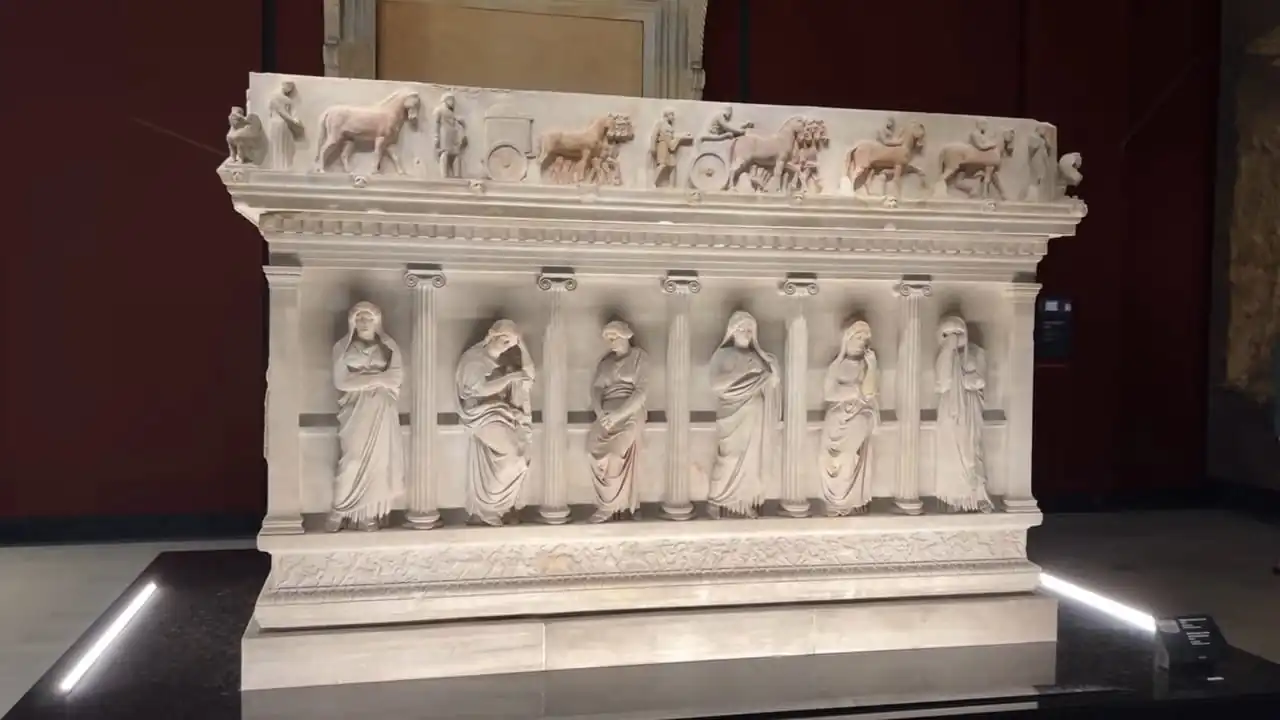
Nestled between the sprawling grounds of Topkapı Palace and the tranquil greenery of Gülhane Park lies one of the world’s most extraordinary cultural institutions. The Istanbul Archaeology Museums (İstanbul Arkeoloji Müzeleri) are not merely a collection of artifacts—they are a gateway to the cradle of civilization itself. As Turkey’s first museum complex, these halls house over one million artifacts spanning millennia and continents, from the sands of ancient Egypt to the battlefields of Mesopotamia and the marble quarries of classical Greece .
In this comprehensive 2026 guide, we will explore the three museums that make up this complex, highlight iconic artifacts, provide up-to-date visitor information, and share insider tips for navigating this world-class institution.
Turkey’s First Museum
The story of the Istanbul Archaeology Museums begins in the 19th century, when the Ottoman Empire finally recognized the need to preserve the archaeological treasures scattered across its vast territories . Initially, artifacts were stored in the Hagia Irene Church, which served as a depot for antiquities beginning in 1845 .
The turning point came in 1869 when the collection was formally established as the “Müze-i Hümayun” (Imperial Museum) . However, the true founder of the modern museum complex was Osman Hamdi Bey—a remarkable figure who was not only an archaeologist but also a renowned painter and museum director . Appointed in 1881, he transformed Ottoman museology and conducted groundbreaking excavations, most notably at the royal necropolis of Sidon in modern-day Lebanon between 1887 and 1888 .
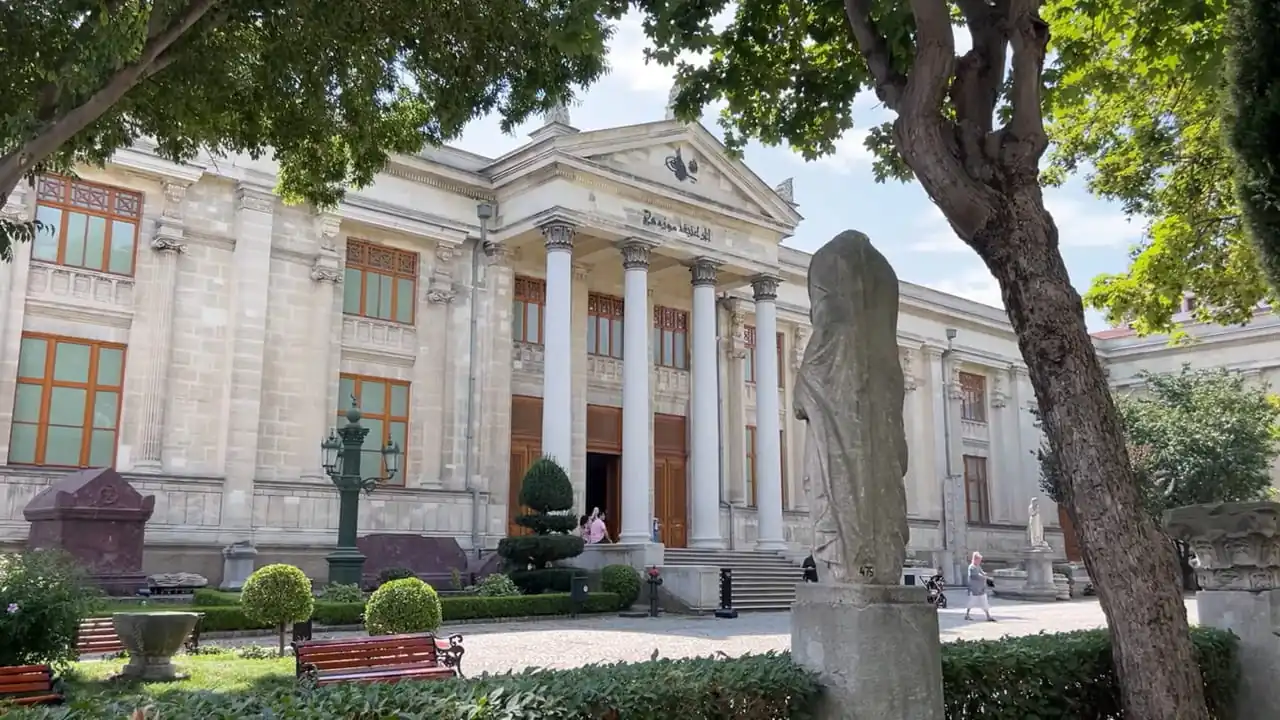
The extraordinary finds from Sidon—including the Alexander Sarcophagus and the Sarcophagus of the Mourning Women—necessitated a purpose-built museum. Construction began in 1881, and the main building officially opened on June 13, 1891 . The architect, Alexander Vallaury (who also designed Istanbul’s Pera Palace Hotel), created a neoclassical masterpiece with a facade inspired by the very sarcophagi housed within . The inscription on the entrance, “Asar-ı Atika Müzesi” (Museum of Antiquities), bears the tughra of Sultan Abdulhamid II .
Over the following decades, the complex expanded to include two additional buildings: the Museum of the Ancient Orient and the Tiled Kiosk, together forming one of the world’s great museum ensembles. In 1991, on its centenary, the museum received the European Council Museum Award .
The Three Museums: What to See
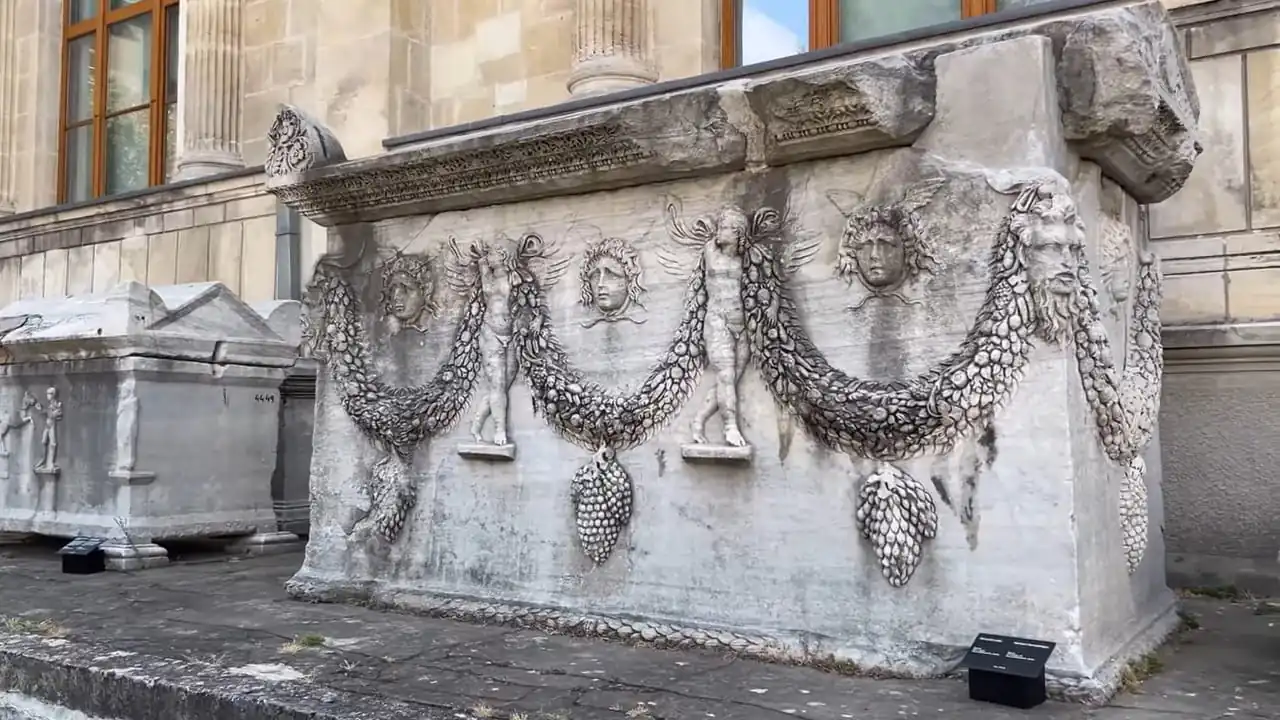
The Istanbul Archaeology Museums complex consists of three distinct buildings, each offering a unique window into the ancient world .
1. The Main Archaeological Museum
The centerpiece of the complex, this grand neoclassical building houses the core collection of classical antiquities. Its two floors showcase:
-
Ground Floor: The Hall of Statuary features magnificent marble sculptures from the Greco-Roman world, including statues from Aphrodisias, Ephesus, and Miletus . Visitors can admire the Ephebos statue, the Apollo Citharoedus from Miletus, and portrait busts of Alexander the Great and Zeus . The highlight, however, is the Alexander Sarcophagus, discovered in Sidon and widely considered one of the most important archaeological finds ever made .
-
Upper Floor: This level presents a chronological journey through Anatolian history, with artifacts from Troy, Cyprus, and Syria-Palestine. The Troy exhibit displays finds from Heinrich Schliemann’s excavations, offering tangible connections to Homer’s epic .
2. The Museum of the Ancient Orient
Housed in a separate building constructed in 1883 as a fine arts school, this museum reopened in 1935 with a focus on pre-Islamic civilizations of the Near East . Its extraordinary collections include:
-
Mesopotamian Treasures: Over 10,000 artifacts from ancient Sumerian, Babylonian, and Assyrian sites, including Nippur, Assur, and Uruk . The collection of cuneiform tablets numbers some 75,000 documents, including the oldest known law code (the laws of King Ur-Nammu) and the oldest known love poem .
-
The Treaty of Kadesh: One of the museum’s absolute treasures, this clay tablet records the peace treaty signed between Ramesses II of Egypt and Hattusili III of the Hittite Empire in 1258 BCE . It is the oldest known peace treaty in world history, and a replica hangs on the wall of the United Nations Headquarters in New York .
-
Ishtar Gate Fragments: Glazed brick reliefs from the legendary Ishtar Gate of Babylon, built by King Nebuchadnezzar II around 575 BCE, depict lions, dragons, and bulls in vibrant blue and yellow .
-
Egyptian Collection: Approximately 1,200 objects from Egypt, including artifacts from the Dra Abu el-Naga excavations near Karnak, gifts from the Khedives of Egypt, and the Tabnit Sarcophagus with its enigmatic Phoenician inscription .
3. The Tiled Kiosk (Çinili Köşk)
The oldest building in the complex, the Tiled Kiosk was commissioned by Sultan Mehmed the Conqueror in 1472 as a pleasure palace . It is the oldest non-religious Ottoman structure in Istanbul and displays exquisite Persian-influenced Seljuk and Ottoman tilework .
Highlights include:
-
Iznik ceramics from the 15th to 17th centuries
-
Seljuk tiles from the Anatolian heartland
-
Ottoman calligraphy and manuscript art
Iconic Artifacts You Cannot Miss
Beyond the hall-by-hall exploration, certain artifacts stand as the museum’s absolute masterpieces:
-
The Alexander Sarcophagus: Despite its name, this magnificent marble sarcophagus from the late 4th century BC likely belonged not to Alexander himself but to a Sidonian king. Its high-relief carvings depict Alexander in battle and hunting scenes, with traces of original paint still visible—a rare survival from antiquity .
-
The Treaty of Kadesh: This clay tablet, inscribed in Akkadian cuneiform, records the world’s first international peace treaty. Seeing it in person connects you directly to a moment of diplomacy nearly 3,300 years ago .
-
The Sarcophagus of the Mourning Women: Also from the Sidon necropolis, this stunning 4th-century BC work features 18 grieving women in various poses of sorrow, each with unique facial expressions and gestures .
-
Snake’s Head from the Serpent Column: A bronze fragment from the Hippodrome of Constantinople’s ancient Serpent Column, originally erected at Delphi in 479 BC. The rest of the column still stands in Sultanahmet Square .
-
The Siloam Inscription: A Hebrew inscription documenting the construction of Hezekiah’s Tunnel in Jerusalem in the 8th century BC. This artifact made international headlines in 2007 when Israeli authorities requested its return .
-
The Gezer Calendar: One of the oldest known Hebrew inscriptions, dating from the 10th century BC .
-
The Balawat Gates: Bronze bands from the gates of the Assyrian palace at Balawat, depicting scenes of warfare and diplomacy .
-
Golden Horn Chain Fragment: A massive iron link from the chain that Byzantine emperors stretched across the Golden Horn to block enemy ships .
Visitor Information for 2026
Current Renovation Status
Important: As of 2026, the museum complex is undergoing staged renovations . Some parts of the museums may not be accessible at any given time. Recent visitors report that the Museum of the Ancient Orient and the Tiled Pavilion have been closed for restoration, meaning treasures like the Ishtar Gate and Treaty of Kadesh may not be on view . Always check the official website or call ahead before visiting.
Opening Hours
According to the official Turkish Museums portal, current hours are :
-
Summer Hours (April 1 – October 1): 09:00 – 22:00 (Box office closes at 21:00)
-
Winter Hours (October 1 – April 1): 09:00 – 18:30 (Box office closes at 17:30)
-
Closed: Mondays
The museum participates in Turkey’s night museum program, with evening hours during summer months .
Admission Fees (2026)
As of 2026, entry fees are :
-
Foreign Visitors: 650 Turkish Lira (approximately €18-20 depending on exchange rate)
-
Turkish Citizens (0-18): Free
-
Foreign Children (0-8): Free
-
Students (art history, archaeology, museum studies): Free with valid ID
Museum Pass Istanbul
Consider purchasing the Museum Pass Istanbul (€105 / ~$118), which provides five-day access to 13 museums, including Topkapı Palace, Hagia Irene, and the Istanbul Archaeology Museums . Benefits include skip-the-line entry and potential savings if visiting multiple sites.
Location and Transportation
-
Address: Alemdar Caddesi, Osman Hamdi Bey Yokuşu, Gülhane, Fatih/İstanbul
-
Tram: Take the T1 (Kabataş-Bağcılar) line to Gülhane station, then walk approximately 5 minutes
-
Walking: From Sultanahmet Square, it is a pleasant 10-minute walk through Gülhane Park
Facilities
-
Accessibility: Most areas are wheelchair accessible
-
Restrooms: Available on site
-
Cafe: Small cafe offering refreshments
-
Gift Shop: Books, replicas, and souvenirs
-
Audio Guide: Available for rent
Tips for Your Visit
Based on recent visitor feedback, here are essential tips :
-
Allocate 2-3 hours: History lovers could easily spend half a day exploring
-
Check renovation status: Confirm which sections are open before visiting
-
Combine with Topkapı: The museum is adjacent to Topkapı Palace and Gülhane Park—ideal for a full day of sightseeing
-
Visit on weekdays: Weekends can be crowded with tour groups
-
Read the information boards: English signage is generally adequate
-
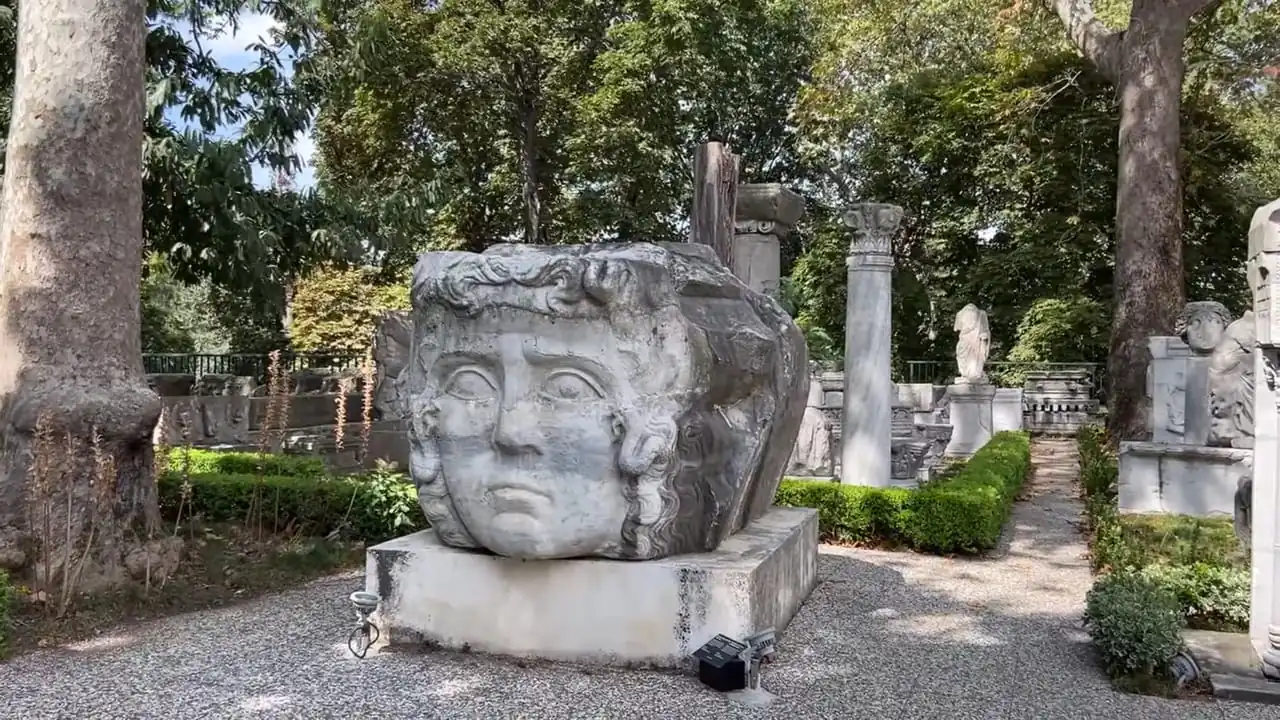
Don’t miss the gardens: The outdoor areas offer peaceful spots to rest among ancient stone artifacts
What Visitors Are Saying
Recent reviews highlight both the museum’s extraordinary collection and current renovation challenges :
“This museum boasts a number of significant finds from the Ancient World, though not all are currently on view, as the two smaller collections on the site – The Museum of the Ancient Orient and the Tiled Pavilion – are currently closed for restoration. This means that we did not get to see the Ishtar Gate or the Treaty of Kadesh. But we did see many exhibits from excavations in Sidon and Troy, including the Alexander sarcophagus, one of the outstanding archaeological finds.” – December 2023
“One cannot help but be impressed, both by the skill of craftsmen several hundred years BC in fashioning such high-quality works, and also the skill of the excavators and restorers. We particularly liked the wall that has been constructed to show the different levels of civilisation in Troy over the centuries.”
Nearby Attractions
Combine your museum visit with these nearby sites :
-
Topkapı Palace Museum: The former heart of the Ottoman Empire, housing the Imperial Treasury, Harem, and sacred relics
-
Gülhane Park: Historic park adjacent to the museum, perfect for a relaxing stroll
-
Hagia Sophia: The architectural masterpiece of the Byzantine Empire, just a 10-minute walk away
-
Blue Mosque (Sultan Ahmed Mosque): Ottoman imperial mosque with iconic blue tiles
-
Basilica Cistern: Ancient underground water reservoir
-
Museum of the History of Science and Technology in Islam: Fascinating collection near Gülhane Park
Now is the time to experience this extraordinary museum complex for yourself. Imagine standing before the Alexander Sarcophagus, its intricate carvings still bearing traces of ancient paint, and contemplating the hands that crafted it over 2,300 years ago. Picture yourself reading the world’s oldest peace treaty, inscribed on clay by scribes who served pharaohs and kings. These are not merely artifacts—they are direct connections to the people, events, and civilizations that shaped our world.
0 Comment