

Gallipoli and Troy Tour from Istanbul
WWI History Meets Ancient Legends
Imagine standing on the same beaches where one of World War I’s most significant battles unfolded, then traveling back another 3,000 years to walk the legendary city where the Trojan War took place. A combined tour of Gallipoli and Troy offers American travelers an extraordinary journey through both documented history and ancient mythology—all accessible as a day trip or overnight tour from Istanbul.
The Gallipoli Peninsula witnessed one of WWI’s most devastating campaigns, where Allied forces—including tens of thousands of ANZACs (Australian and New Zealand Army Corps)—fought Ottoman troops in 1915. Today, beautifully maintained war memorials, cemeteries, and preserved trenches honor the 130,000+ soldiers who lost their lives in this eight-month battle.
Just across the Dardanelles Strait lies Troy (Truva), the legendary city immortalized in Homer’s Iliad. While the Trojan War may blend myth and history, the archaeological site reveals 4,000 years of civilization, with nine distinct layers of settlements including the famous Troy VII—believed to be the city of King Priam, Helen, and the wooden horse.
This comprehensive guide covers everything you need to know about visiting Gallipoli and Troy from Istanbul, including tour options, what to see, when to go, ANZAC Day pilgrimages, and insider tips for making the most of this historically rich journey.
Why Visit Gallipoli and Troy?
Gallipoli: A Defining WWI Campaign
Historical Significance: The Gallipoli Campaign (April 1915 – January 1916) was a pivotal WWI battle that:
- Involved over 500,000 Allied troops (British, French, ANZAC, Indian, Newfoundland)
- Resulted in approximately 250,000 casualties on both sides
- Marked Turkey’s successful defense under Mustafa Kemal (later Atatürk)
- Became the foundation of modern Turkish national identity
- Created the ANZAC legend—a defining moment in Australian and New Zealand history
What Makes Gallipoli Special: Unlike many WWI battlefields in Europe, Gallipoli remains remarkably preserved and peaceful. The Turkish government maintains the peninsula as a national park with beautifully landscaped memorials, well-preserved trenches, and moving cemeteries where you can still read individual soldiers’ names and ages (many were teenagers).
The ANZAC Connection: For Australians and New Zealanders, Gallipoli is sacred ground—their national “coming of age” moment. ANZAC Day (April 25) commemorates the first landings and draws thousands of pilgrims annually. American travelers find the site equally moving, as it represents the human cost of war and the respect former enemies now show each other.
Atatürk’s Famous Words: Turkish founder Mustafa Kemal Atatürk’s 1934 tribute to fallen ANZACs is inscribed at memorials:
“Those heroes that shed their blood and lost their lives… You are now lying in the soil of a friendly country. Therefore rest in peace. There is no difference between the Johnnies and the Mehmets to us where they lie side by side here in this country of ours… You, the mothers who sent their sons from faraway countries, wipe away your tears; your sons are now lying in our bosom and are in peace. After having lost their lives on this land they have become our sons as well.”
Troy: Where Mythology Meets Archaeology
Legendary History: Troy is famous as the setting of Homer’s Iliad—the epic tale of the Trojan War, fought over the beautiful Helen, featuring heroes like Achilles, Hector, and Odysseus, and ending with the famous Trojan Horse stratagem.
Archaeological Reality: German archaeologist Heinrich Schliemann discovered Troy in 1870, revealing not one city but nine successive settlements spanning 4,000 years (3000 BCE – 500 CE). Troy VII, dated to around 1200 BCE, shows evidence of warfare and destruction consistent with the timeframe of the legendary Trojan War.
UNESCO World Heritage Site: Troy earned UNESCO status in 1998 for its exceptional testimony to ancient Anatolian civilizations and its profound influence on Western literature and culture.
What Makes Troy Special:
- Walk through 4,000 years of history in layers
- See the famous reconstructed Trojan Horse
- Explore walls, temples, and houses from multiple eras
- Connect ancient mythology to archaeological evidence
- Visit one of literature’s most famous settings
Modern Museum: The Troy Museum (opened 2018) showcases artifacts from excavations and uses multimedia displays to bring the ancient city to life, explaining both the historical facts and mythological stories.
How to Get to Gallipoli and Troy from Istanbul
Both sites are located in the Çanakkale region, about 320 km (200 miles) southwest of Istanbul on opposite sides of the Dardanelles Strait.
Tour Options from Istanbul
1. Day Trip (Most Popular)
Duration: 14-16 hours (very long day) Cost: $80-150 per person Included: Transportation, guide, lunch, entrance fees Departure: 6:00-7:00 AM from Istanbul Return: 10:00-11:00 PM to Istanbul
Typical Itinerary:
- 6:30 AM: Depart Istanbul
- 9:00 AM: Ferry across Dardanelles
- 9:30 AM – 1:00 PM: Gallipoli sites (ANZAC Cove, Lone Pine, Chunuk Bair, etc.)
- 1:00 PM: Lunch in Çanakkale
- 2:30 PM – 5:00 PM: Troy archaeological site
- 5:30 PM: Begin return to Istanbul
- 10:00 PM: Arrive back in Istanbul
Pros:
- Budget-friendly
- No overnight stay needed
- Comprehensive coverage of major sites
- Expert commentary throughout
Cons:
- Extremely long day (exhausting)
- Rushed at each location
- Early departure, late return
- Less time for reflection at memorial sites
Best For: Travelers with limited time or budget
2. Two-Day Tour (Recommended)
Duration: 2 days / 1 night Cost: $180-300 per person (including accommodation) Included: Transportation, guide, meals, overnight in Çanakkale, entrance fees
Day 1:
- Morning: Depart Istanbul (more relaxed timing)
- Afternoon: Gallipoli Peninsula extensive tour
- Evening: Arrive Çanakkale, dinner, overnight
Day 2:
- Morning: Troy archaeological site and museum
- Afternoon: Return to Istanbul
- Evening: Arrive Istanbul
Pros:
- More time at each location
- Better pacing (not rushed)
- Experience Çanakkale town
- More meaningful reflection time
- Fresh for Troy visit
Cons:
- Requires overnight stay
- More expensive
- Need to pack overnight bag
Best For: History enthusiasts, photographers, those wanting deeper experience
3. ANZAC Day Tour (April 24-25)
Special dawn service tour for ANZAC Day commemoration
Duration: 2 days / 1 night (some 3-day packages) Cost: $250-400 per person Booking: Must book months in advance (sells out)
Includes:
- Overnight at Gallipoli (camping or budget accommodation)
- Transportation to Dawn Service site
- Attendance at official ANZAC Day Dawn Service (4:30 AM, April 25)
- Guided tour of battlefield sites
- Often includes Troy on Day 2
Special Considerations:
- Books out 6-12 months ahead
- Crowds of 10,000+ at Dawn Service
- Cold overnight temperatures in April
- Emotional and moving experience
- Strict security and access control
Best For: Australians, New Zealanders, history buffs, those seeking profound experience
4. Private Tour
Duration: Flexible (1-3 days) Cost: $400-800 for private vehicle and guide (1-6 people) Customizable: Your pace, interests, timing
Pros:
- Complete flexibility
- Personal guide
- Go at your own pace
- Add extra sites
- Ideal for families or special interests
Cons:
- Most expensive option
- Need to coordinate details
Best For: Families, groups, travelers with specific interests, photography enthusiasts
Independent Travel (Budget Option)
How to Do It:
- Bus from Istanbul to Çanakkale (6 hours, $15-20)
- Stay overnight in Çanakkale
- Local tours or rental car for Gallipoli
- Bus or tour to Troy
- Return bus to Istanbul
Total Cost: $60-100 per person (not including meals/accommodation)
Pros:
- Most budget-friendly
- Maximum flexibility
- Experience local travel
Cons:
- Requires planning
- Language barriers
- Less historical context without guide
- Time-consuming logistics
Recommended For: Budget backpackers, experienced travelers, Turkish speakers
What to See at Gallipoli
The Gallipoli Peninsula National Historic Park covers a large area. Most tours focus on ANZAC sites on the western coast, though there are also British, French, and Turkish memorials throughout.
ANZAC Cove (Anzak Koyu)
The iconic beach where ANZAC forces landed on April 25, 1915, at dawn.
Historical Significance:
- First ANZAC landing point
- Site of the Dawn Service every ANZAC Day
- Smaller beach than expected (wrong landing spot)
- Starting point of the campaign
What You’ll See:
- ANZAC Commemorative Site with plaques and Atatürk’s words
- The actual beach (now peaceful)
- North Beach cemetery
- Information panels explaining the landing
Experience: Standing on this beach, imagining soldiers landing under fire, is profoundly moving. The beauty of the location contrasts sharply with the violence it witnessed.
Time Needed: 30-45 minutes
Lone Pine Cemetery and Memorial (Kanlı Sırt)
The most visited site in Gallipoli and centerpiece of ANZAC Day commemorations.
Historical Significance:
- Site of fierce August 1915 battle
- Named after a solitary Turkish pine tree that stood here
- Over 5,000 Australian casualties in this battle alone
- Today contains 1,167 burials
What You’ll See:
- Beautifully maintained cemetery with white headstones
- Memorial walls with names of 4,900+ missing soldiers
- Preserved trenches
- Original Lone Pine descendant tree (from a seed sent to Australia)
- Turkish and Australian flags flying together
Emotional Impact: Reading individual headstones—many soldiers were 18-21 years old—is deeply affecting. The peaceful beauty of the well-kept grounds honors their sacrifice.
ANZAC Day: Main afternoon service held here (3:00 PM, April 25)
Time Needed: 45-60 minutes
Chunuk Bair (Conkbayırı)
The highest point of the Gallipoli Peninsula and site of intense fighting.
Historical Significance:
- Strategic high ground
- New Zealand troops briefly captured it in August 1915
- Fierce Turkish counter-attack led by Mustafa Kemal
- Turning point of the campaign
What You’ll See:
- New Zealand Memorial and cemetery
- Mustafa Kemal Atatürk statue and memorial
- Turkish memorial with soldier statues
- Preserved trenches (Turkish and ANZAC just meters apart)
- Panoramic views over battlefield
Historical Note: This is where Mustafa Kemal famously ordered: “I am not ordering you to attack, I am ordering you to die. In the time it takes us to die, other troops and commanders will arrive to take our places.”
Time Needed: 45 minutes
Johnston’s Jolly and Turkish Memorial
What’s Special:
- Turkish 57th Regiment Memorial (entire regiment wiped out)
- Preserved trenches and tunnels
- Turkish and ANZAC trenches only 5-8 meters apart
- Shows the proximity of opposing forces
Experience: Walking through these trenches gives a visceral sense of trench warfare—how close enemies were, how terrifying combat must have been.
Time Needed: 30 minutes
The Nek
A narrow ridge between two hills, site of an Australian assault.
Historical Significance:
- Scene of tragic Australian light horsemen charge (August 1915)
- Entire waves cut down by Turkish machine guns
- Featured in the film “Gallipoli” (1981)
- Memorial to Australian 3rd Light Horse Brigade
What You’ll See:
- Small memorial and information panel
- The narrow ridge (you can see how exposed attackers were)
- Connecting trenches
Time Needed: 20 minutes
Other Notable Sites
Baby 700 Cemetery: Small cemetery at a strategic position, named for its elevation (700 feet).
Beach Cemetery: Seaside cemetery at ANZAC Cove, one of three original cemeteries.
Quinn’s Post: Frontline position with preserved trenches.
Cape Helles: British sector with V Beach cemetery and memorial to 21,000+ missing.
French Cemetery and Memorial: Honors French troops who fought at Gallipoli.
Turkish Memorials: Multiple Turkish memorials throughout, including Çanakkale Martyrs’ Memorial.
What to See at Troy
Troy is less visually dramatic than sites like Ephesus, but what it represents is profound. Nine cities built one atop another create a complex archaeological site.
Troy Museum (Start Here)
Opened: 2018 Location: Just before the archaeological site
Why Visit First: The museum provides essential context that makes exploring the ruins much more meaningful.
What You’ll See:
- Artifacts from all Troy periods
- Gold jewelry from “Priam’s Treasure”
- Detailed models of each Troy layer
- Multimedia displays of the Trojan War legend
- Explanation of Schliemann’s discoveries and controversies
- Troy in literature and art throughout history
Highlights:
- 3D reconstructions of ancient Troy
- Interactive displays
- Bronze Age weapons and pottery
- Roman-era statues
- Timeline of 4,000 years
Time Needed: 1-1.5 hours Entrance: 150 TL (often included in tours)
The Archaeological Site
Troy’s Nine Layers:
- Troy I-V: Early Bronze Age (3000-1750 BCE)
- Troy VI: Late Bronze Age (1750-1300 BCE)
- Troy VII: Troy of the Trojan War era (1300-950 BCE)
- Troy VIII-IX: Greek and Roman periods (950 BCE – 500 CE)
What You’ll See:
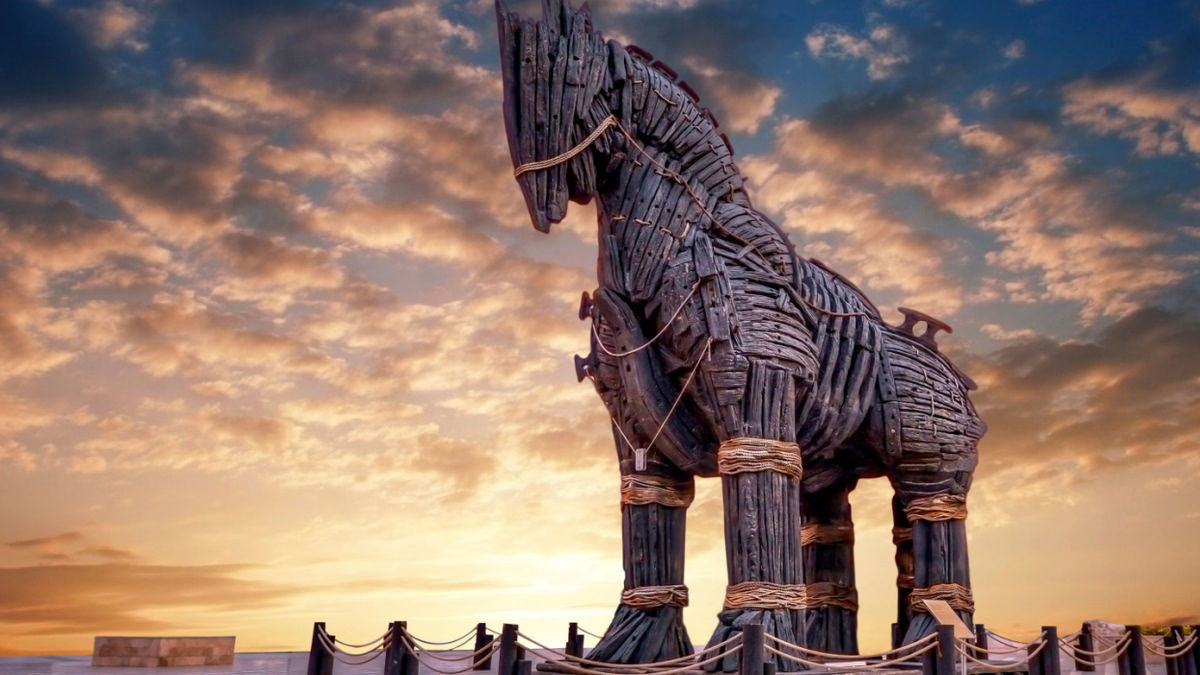
1. Trojan Horse Replica:
- Massive wooden horse you can climb inside
- Photo opportunity
- Located at site entrance
- Represents the famous legend
2. Troy VI/VII City Walls:
- Impressive limestone walls (still standing 5+ meters high)
- Gateway ramp
- These walls would have protected the city during Trojan War era
- Show sophisticated Bronze Age construction
3. Sanctuary Area:
- Religious center of ancient Troy
- Multiple temple foundations
- Altar remains
- Troy VIII-IX (Greek/Roman period)
4. Odeon (Small Theater):
- Roman-era performance space
- Well-preserved seating rows
- Capacity: about 6,000
- View over the plain toward the Aegean
5. Bouleuterion (Council House):
- Roman senate building
- Where city decisions were made
- Column foundations remain
6. Schliemann’s Trench:
- The controversial excavation that damaged layers
- Cut through multiple Troy periods
- Shows the stratification of cities
- Where “Priam’s Treasure” was (controversially) found
7. East Wall and Tower:
- Massive defensive wall
- Well-preserved corner tower
- Give sense of city’s fortifications
8. Houses and Streets:
- Remains of Bronze Age houses
- Roman-era streets
- Storage jars (pithoi)
- Shows daily life across millennia
Viewing Platform:
- Overlooks entire site
- Understand layout of multiple cities
- Explains what you’re seeing
Trojan Plain: From the site, look toward the sea—this is the plain where the legendary battles of the Iliad supposedly took place. The coastline has changed (silted in), but you can still imagine Greek ships beached and armies clashing.
Time Needed: 1.5-2 hours Entrance: 350 TL (approximately $12 USD)
Understanding What You’re Seeing
Troy can be confusing because:
- Multiple cities overlay each other
- Walls from different periods intersect
- Roman-era buildings sit atop Bronze Age ruins
- Heavy imagination required
Tips:
- Hire guide or use audio guide (essential)
- Visit museum first for context
- Bring site map
- Allow time to absorb the history
Best Time to Visit Gallipoli and Troy
By Season
Spring (April-May):
- Perfect weather (60-70°F / 15-21°C)
- Wildflowers bloom at Gallipoli
- Green landscape
- April 25: ANZAC Day (special but crowded)
- Ideal for walking and reflection
Summer (June-August):
- Hot (80-95°F / 27-35°C)
- Peak tourist season
- Little shade at both sites
- Long days mean more touring time
- Can be uncomfortable midday
Fall (September-October):
- Excellent weather (65-75°F / 18-24°C)
- Fewer crowds
- Golden light for photography
- Comfortable for walking
Winter (November-March):
- Cool to cold (40-60°F / 5-15°C)
- Fewest tourists
- Fewer tour options
- Can be rainy/windy at Gallipoli
- Budget rates
- Contemplative atmosphere
Best Overall: April-May or September-October
Special Dates
ANZAC Day (April 25):
- Dawn Service at ANZAC Cove (4:30 AM)
- Commemorative services throughout the day
- 10,000+ pilgrims attend
- Must book tours 6-12 months ahead
- Deeply moving experience
- Cold overnight camping
- Strict security and access control
Turkish Victory Day (August 30):
- Turkish national holiday
- Commemorations at Turkish memorials
- Crowded but interesting cultural experience
Other WWI Centenary Events: Various commemorations on specific battle anniversaries.
Time of Day
Morning:
- Best light for Gallipoli memorials
- Cooler temperatures
- Fresh for touring
Afternoon:
- Harsh light (challenging for photos)
- Hotter temperatures
- Troy visits often scheduled after Gallipoli
Evening:
- Golden hour light (beautiful)
- Reflective atmosphere at Gallipoli
- Cooler temperatures
Practical Tips
What to Wear
Gallipoli:
- Comfortable walking shoes
- Respectful clothing (memorial sites)
- Hat and sunglasses
- Layers (weather can change)
- Modest dress recommended
Troy:
- Comfortable shoes (uneven ground)
- Sun protection
- Casual clothing fine
- Walking shoes essential
What to Bring
Essential:
- Water (at least 1 liter per person)
- Snacks
- Camera
- Sunscreen (SPF 30+)
- Cash for souvenirs/small purchases
Recommended:
- Guidebook on Gallipoli/WWI history
- Homer’s Iliad (enhances Troy visit)
- Binoculars (viewing distant memorials)
- Notebook for reflections
Photography:
- Both sites are very photogenic
- Respectful photography at Gallipoli (memorial sites)
- Golden hour especially beautiful
- Drone restrictions at Gallipoli
Physical Considerations
Fitness Level:
- Moderate walking required (3-5 km total)
- Some uneven terrain
- Hills at Gallipoli sites
- Generally manageable for most fitness levels
Accessibility:
- Limited wheelchair access (rough terrain)
- Main memorials somewhat accessible
- Troy has some paved paths
- Inform tour operator of mobility needs
Respectful Visiting
At Gallipoli:
- Quiet reflection at cemeteries
- Don’t touch monuments or headstones
- No eating/drinking in cemetery areas
- Respectful photos only
- Remember this is sacred ground for many
At Troy:
- Don’t climb on ancient walls
- Stay on marked paths
- Don’t remove any stones or artifacts
- Follow all posted guidelines
Where to Stay: Çanakkale
For two-day trips, you’ll stay in Çanakkale, a pleasant waterfront city on the Dardanelles.
Budget ($25-50/night):
- Anzac House Hostel – Popular with backpackers, social atmosphere
- Yellow Rose Pension – Family-run, clean, basic
- Efes Hotel – Budget hotel, harbor views
Mid-Range ($50-100/night):
- Hotel Limani – Waterfront location, comfortable rooms
- Kolin Hotel – Modern, central, good breakfast
- Iris Hotel – Boutique style, renovated mansion
Upscale ($100-150/night):
- Parion Hotel – Best in town, waterfront, spa
- Kervansaray Hotel – Historic building, excellent restaurant
Çanakkale Highlights:
- Waterfront promenade
- Clock tower landmark
- Archaeological museum
- Restaurants with Dardanelles views
- Ferry to Gallipoli Peninsula
- Traditional Turkish atmosphere
Sample Itineraries
One-Day Tour from Istanbul
6:30 AM – Depart Istanbul 9:00 AM – Ferry across Dardanelles 9:30 AM – ANZAC Cove briefing 10:00 AM – Lone Pine Cemetery 11:00 AM – Johnston’s Jolly and trenches 12:00 PM – Chunuk Bair 1:00 PM – Lunch in Çanakkale 2:30 PM – Troy Museum 3:30 PM – Troy archaeological site 5:00 PM – Depart for Istanbul 10:00 PM – Arrive Istanbul
Two-Day Tour (Recommended)
Day 1: 8:00 AM – Depart Istanbul (more relaxed) 11:00 AM – Arrive Gallipoli 11:30 AM – ANZAC Cove 12:30 PM – Lone Pine Cemetery (extended time) 2:00 PM – Lunch 3:00 PM – Chunuk Bair 4:00 PM – The Nek and trenches 5:00 PM – Additional sites (Baby 700, Beach Cemetery) 6:30 PM – Arrive Çanakkale 7:30 PM – Dinner on waterfront
Day 2: 9:00 AM – Breakfast 10:00 AM – Troy Museum 11:30 AM – Troy archaeological site (extended exploration) 1:30 PM – Lunch 2:30 PM – Begin return to Istanbul 7:00 PM – Arrive Istanbul
Three-Day Extended Tour
Day 1: Istanbul to Gallipoli (ANZAC sites) Day 2: Gallipoli (British/French sites) + Troy Day 3: Alexandria Troas (ancient city) + return Istanbul
Frequently Asked Questions
Q: Can I visit Gallipoli and Troy in one day from Istanbul? A: Yes, but it’s a very long day (14-16 hours). You’ll be rushed at both sites. Two days is recommended.
Q: Do I need a guide for Gallipoli and Troy? A: Highly recommended for Gallipoli (history brings sites to life). Troy also benefits from expert explanation. Self-guiding possible but you’ll miss context.
Q: Is Gallipoli appropriate for children? A: Yes, educational and moving, though heavy subject matter. Best for older children (10+) who can appreciate the history.
Q: How do I attend ANZAC Day Dawn Service? A: Book official tour 6-12 months ahead. Arrive night before April 25. Expect cold overnight temperatures, crowds, security. Moving experience.
Q: Can I visit independently without a tour? A: Yes, but requires planning. Bus to Çanakkale, rental car for Gallipoli, local tours available. Most visitors prefer organized tours for convenience and expert commentary.
Q: How much walking is involved? A: Moderate. Total 3-5 km across the day. Uneven terrain at both sites. Good walking shoes essential.
Q: Is Troy disappointing compared to other ancient sites? A: Troy requires imagination (nine cities overlapping). The museum helps immensely. It’s about the legend and literature as much as visible ruins.
Q: Can I see both British/French and ANZAC sites at Gallipoli? A: Most tours focus on ANZAC sites (western side). British/French sites (Cape Helles, southern tip) require more time or separate visit.
Q: What’s the story behind the Trojan Horse? A: According to Homer’s Odyssey, Greeks built a giant wooden horse, hid soldiers inside, left it at Troy’s gates, and pretended to sail away. Trojans brought it into the city as a trophy. At night, Greek soldiers emerged and opened the gates for the returning army, destroying Troy. This ended the 10-year Trojan War.
Q: Was the Trojan War real? A: Debated. Troy VII shows evidence of warfare and destruction around 1200 BCE—consistent with the legendary war’s timeframe. Homer’s account (written 400-500 years later) likely blends historical events with mythology.
Q: Are there good restaurants in Çanakkale? A: Yes! Waterfront restaurants serve excellent fish, meze, and Turkish specialties. It’s a real city, not just a tourist stop.
Combining Gallipoli-Troy with Other Sites
Popular Multi-Day Combinations:
3-Day: Gallipoli + Troy + Pergamon Add the ancient hilltop city of Pergamon (Bergama)
4-Day: Gallipoli + Troy + Ephesus + Pamukkale Major Turkey circuit of ancient and WWI sites
5-Day: Istanbul + Gallipoli + Troy + Assos + Ephesus Aegean coast ancient cities tour
Final Tips for Your Visit
- Book Two Days If Possible – One day is exhausting and rushed
- Visit Museum First at Troy – Essential context for understanding ruins
- Hire a Guide – History brings sites to life, especially at Gallipoli
- Bring Tissues – Gallipoli is deeply moving; expect emotions
- Read Before You Go – Homer’s Iliad, WWI history, or “Gallipoli” by Peter FitzSimons
- Wear Good Shoes – Uneven ground, moderate walking
- Respectful Photography – Especially at Gallipoli cemeteries
- Allow Reflection Time – These are profound historical sites
- Book ANZAC Day Early – 6-12 months ahead essential
- Stay in Çanakkale – Charming city worth exploring
Gallipoli and Troy Tour from Istanbul
Ready to Explore History and Legend?
Standing at ANZAC Cove where thousands of young soldiers landed in 1915, reading their names on white headstones at Lone Pine, then traveling back 3,000 years to walk the legendary city of Troy—this journey through history and mythology is one of Turkey’s most profound experiences.
Whether you’re drawn by WWI history, fascinated by ancient legends, or simply seeking meaningful travel experiences, Gallipoli and Troy deliver powerful moments you’ll never forget. The respect and peace that now characterize these former battlefields remind us that even the fiercest enemies can become friends.
Planning your Turkey historical journey?
Combine Gallipoli and Troy with other incredible destinations like Ephesus’ Roman ruins, Istanbul’s Byzantine treasures, or Cappadocia’s fairy chimneys. Let us help you create the perfect Turkey itinerary.
[Book Your Gallipoli & Troy Tour] | [Explore More Turkey Guides] | [Plan Your Turkey Itinerary]
Walk in the footsteps of WWI heroes and legendary warriors. Experience where history and mythology intersect. Start planning your Gallipoli and Troy adventure today!
Related Articles:
- Istanbul in 3 Days: Perfect First-Time Itinerary
- How to Visit Ephesus Ruins in Turkey
- Most Visited Cities in Turkey 2024
- Best Time to Visit Turkey: Month-by-Month Guide
- Pamukkale Travertines: Turkey’s Cotton Castle
Click here to learn more about our other tours.To read news about us in the press, please click here.
0 Comment