

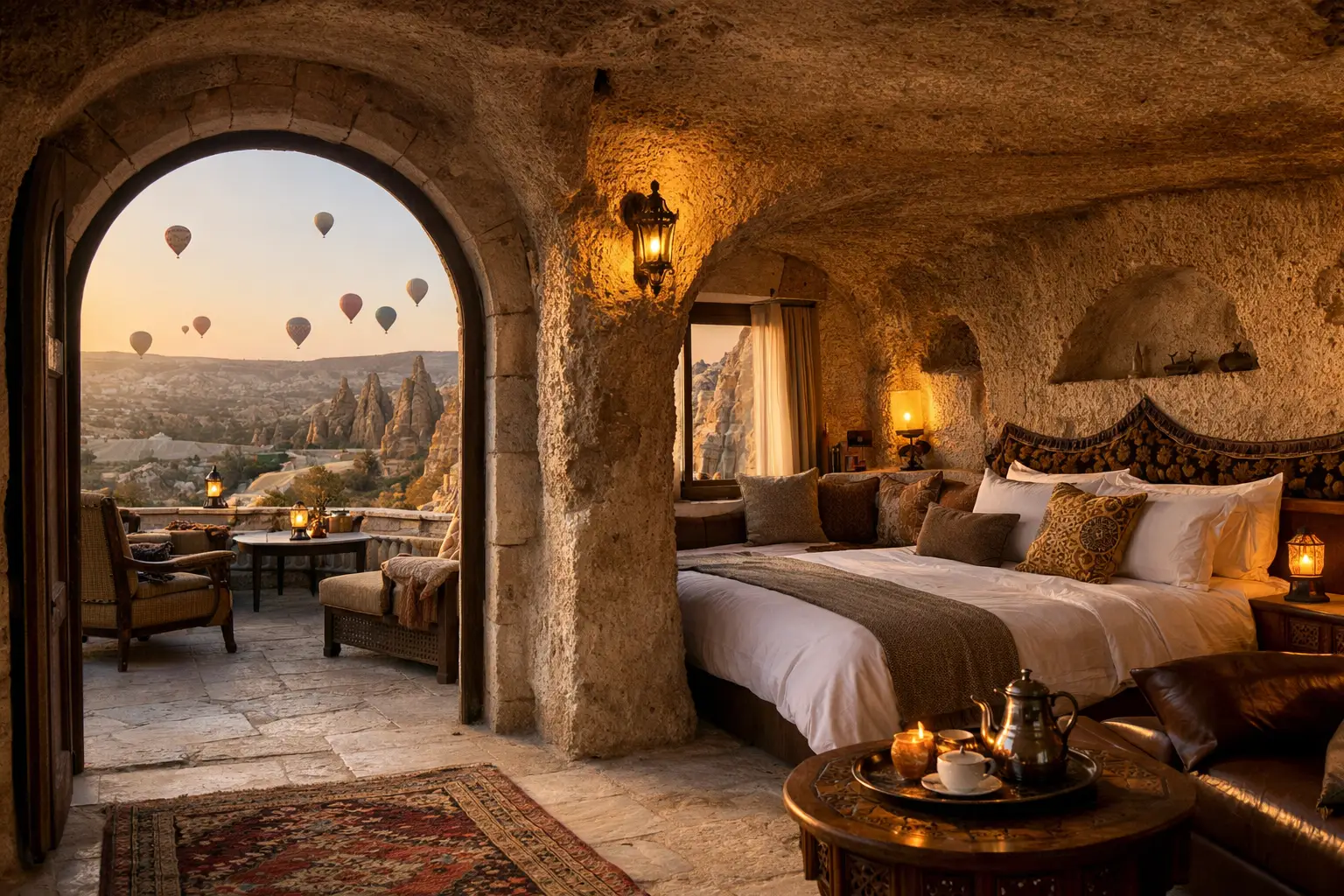
A Cappadocia cave suite review should begin with one clear point: a genuine cave stay is not simply a hotel room with stone walls. It is an experience shaped by the region’s volcanic rock, hillside villages, morning balloon views, and the quiet atmosphere that follows once day visitors leave. For travelers planning Cappadocia as part of a wider Turkey itinerary, choosing the right cave suite can turn two or three nights into a memorable centerpiece of the trip.
Cave hotels range from intimate boutique properties with a handful of rooms to larger, full-service hotels with terraces, pools, restaurants, and broad valley views. The best choice depends less on a star rating than on where you want to wake up, how much walking you are comfortable with, and whether your priority is privacy, space, or scenery. You can also compare the
best Cappadocia cave hotel areas
before deciding where to stay.
Cappadocia Cave Suite Review: What the Stay Feels Like
The appeal starts with the setting. Many suites are carved into soft tuff stone or built around historic stone rooms, often with arched ceilings, textured walls, and details that retain the character of the original structure. A well-designed cave suite feels warm and calm rather than dark or rustic. Expect carefully placed lighting, modern bathrooms, comfortable bedding, heating and air conditioning, and, in higher categories, fireplaces, private terraces, or indoor soaking tubs.
The strongest feature is the sense of place. From a terrace in Göreme, Uçhisar, Ortahisar, or Ürgüp, sunrise can bring balloons drifting over valleys and fairy chimneys. At night, the landscape becomes quieter and more intimate than a conventional resort setting. This is particularly rewarding for couples, families seeking a distinctive experience, and travelers who have included Cappadocia after several busy sightseeing days in Istanbul.
There is, however, a practical trade-off. Cave rooms have individual layouts, so suites can vary greatly even within the same hotel. One may have a dramatic vaulted ceiling and valley-facing windows; another may be larger but sit lower in the property with less natural light. A room described as a cave suite may also be a stone-built room inspired by cave architecture rather than fully carved from rock. Both can be comfortable, but travelers who care about the authentic cave experience should ask for clear room details before confirming.
Location Matters More Than Many Travelers Expect
Göreme is often the most convenient base for first-time visitors. It puts travelers close to major valleys, open-air sites, restaurants, and common balloon departure areas. It is a practical choice for a two-night stay with a
guided Cappadocia tour
,
especially for guests who value easy access and a lively village setting.
Uçhisar generally offers a more elevated, refined atmosphere and some of the region’s most impressive panoramic views. Boutique cave suites here can feel especially private, making the area well suited to honeymooners, celebratory trips, and travelers looking for a quieter base. The trade-off is that dining and evening walks can be less immediate than in central Göreme, depending on the hotel’s position.
Ürgüp and Ortahisar offer a different pace. They suit travelers who prefer traditional streets, larger cave-style properties, and a location that works well for broader regional exploration. These areas can be excellent for longer stays, though the balloon-filled sunrise views may not be as directly visible from every hotel terrace.
A scenic view should never be the only decision point. Hillside properties may involve steep paths, steps, and uneven surfaces. For travelers with limited mobility, young children, or heavy luggage, a room near reception and a hotel with easy vehicle access may be more valuable than the highest possible terrace. A
tailor-made Turkey itinerary
can match the hotel location to your touring schedule, airport transfers, and preferred pace.
Comfort, Bathrooms, and Seasonal Details
Modern cave suites are generally very comfortable, but their architecture creates a few differences from standard hotels. Stone naturally helps maintain a stable indoor temperature, yet room warmth in winter and cooling in summer still depend on the property’s systems. Better hotels manage this well, while older or simpler rooms can feel cooler and more enclosed.
Bathrooms are another area worth reviewing carefully. Many suites have spacious, updated bathrooms with walk-in showers, while premium rooms may include a Jacuzzi or soaking tub. Because each room is distinctive, the bathroom layout can differ significantly. Guests who prefer a separate shower, generous counter space, or easy step-free access should specify these priorities in advance.
Wi-Fi is commonly available, though stone walls can sometimes affect the signal inside the deepest cave rooms. This is usually a minor issue for leisure travelers, but it matters if you plan to work during your stay. It is also wise to request a non-smoking room if that is important to you, as historic stone interiors can retain odors more than conventional rooms.
Breakfast and Hotel Service
Breakfast is often one of the most enjoyable parts of a cave hotel stay. Many properties serve a generous Turkish breakfast with cheeses, olives, eggs, pastries, fruit, preserves, and hot tea or coffee, frequently on a terrace overlooking the valleys. In cooler months, breakfast may be served indoors, but the same regional hospitality remains.
Service standards vary by property size. A smaller boutique hotel may offer highly personal assistance with restaurant reservations, balloon bookings, and local recommendations. A larger hotel may provide a broader range of facilities, a more extensive front desk operation, and easier access for groups. Neither is automatically better. Couples may value the character of a small cave hotel, while multigenerational families may prefer larger rooms, on-site dining, and more straightforward logistics.
For a smooth arrival, especially after a domestic flight from Istanbul, arrange airport transfers directly with your travel planner. Cappadocia is served by two airports, and the right transfer depends on your hotel location and flight schedule. Coordinated transfers also reduce the need to navigate narrow village roads after dark.
Is a Cave Suite Worth the Higher Rate?
For most visitors, yes, provided the hotel is selected with care. A cave suite offers more than accommodation: it creates an immediate connection to Cappadocia’s landscape and traditional architecture. The premium is most worthwhile when the room has meaningful features such as a private terrace, generous living space, a quality bathroom, a fireplace, or a commanding view.
That said, not every traveler needs the most expensive suite. If your days will be filled with a
sunrise balloon flight
,
the Göreme Open-Air Museum, Pasabag, Avanos, underground cities, and valley walks, a well-located standard cave room may be the smarter allocation of your travel budget. Investing instead in a
private guide
and vehicle can provide a more flexible, rewarding experience across the region.
A balanced approach is to reserve a distinctive cave suite for two nights, then build the itinerary around it. This gives you time to settle in, enjoy at least one unhurried morning, and avoid treating Cappadocia as a one-night stop between flights.
Practical Planning Tips for a Cave Hotel Stay
The best periods for a cave suite stay are generally April through June and September through October, when daytime conditions are pleasant for outdoor touring and valley views are especially inviting. Summer offers long, bright days but can be warmer and busier. Winter brings a peaceful, dramatic atmosphere, occasional snow, and lower visitor numbers, although balloon operations remain weather dependent.
Plan at least two nights in Cappadocia, with three nights ideal for travelers who want a relaxed schedule. If you are unsure how much time to allow, see our guide on
how many days to spend in Cappadocia
.
A practical route is Istanbul to Cappadocia by domestic flight, followed by two or three nights in a cave hotel and guided touring.
From there, many travelers continue to Pamukkale and Ephesus for a classic cultural itinerary, or return to Istanbul before adding a coastal stay in Antalya, Bodrum, or Fethiye. For inspiration, see our
Istanbul, Ephesus and Cappadocia itinerary guide
or explore our
Turkey tour packages
.
Book balloon flights and sought-after cave suites early, particularly for spring and fall travel. When choosing a room, ask about its exact location, number of steps, terrace access, view direction, heating or cooling, and whether it is a true carved cave room or a stone suite. These details are more useful than relying on room names alone.
Travel Store Turkey
can arrange cave hotel options alongside
private Cappadocia tours
,
domestic flights, airport transfers, and a
tailor-made Turkey itinerary
.
With the right suite and a well-paced touring plan, Cappadocia gives you something rare: a hotel stay that feels inseparable from the destination itself.
0 Comment