

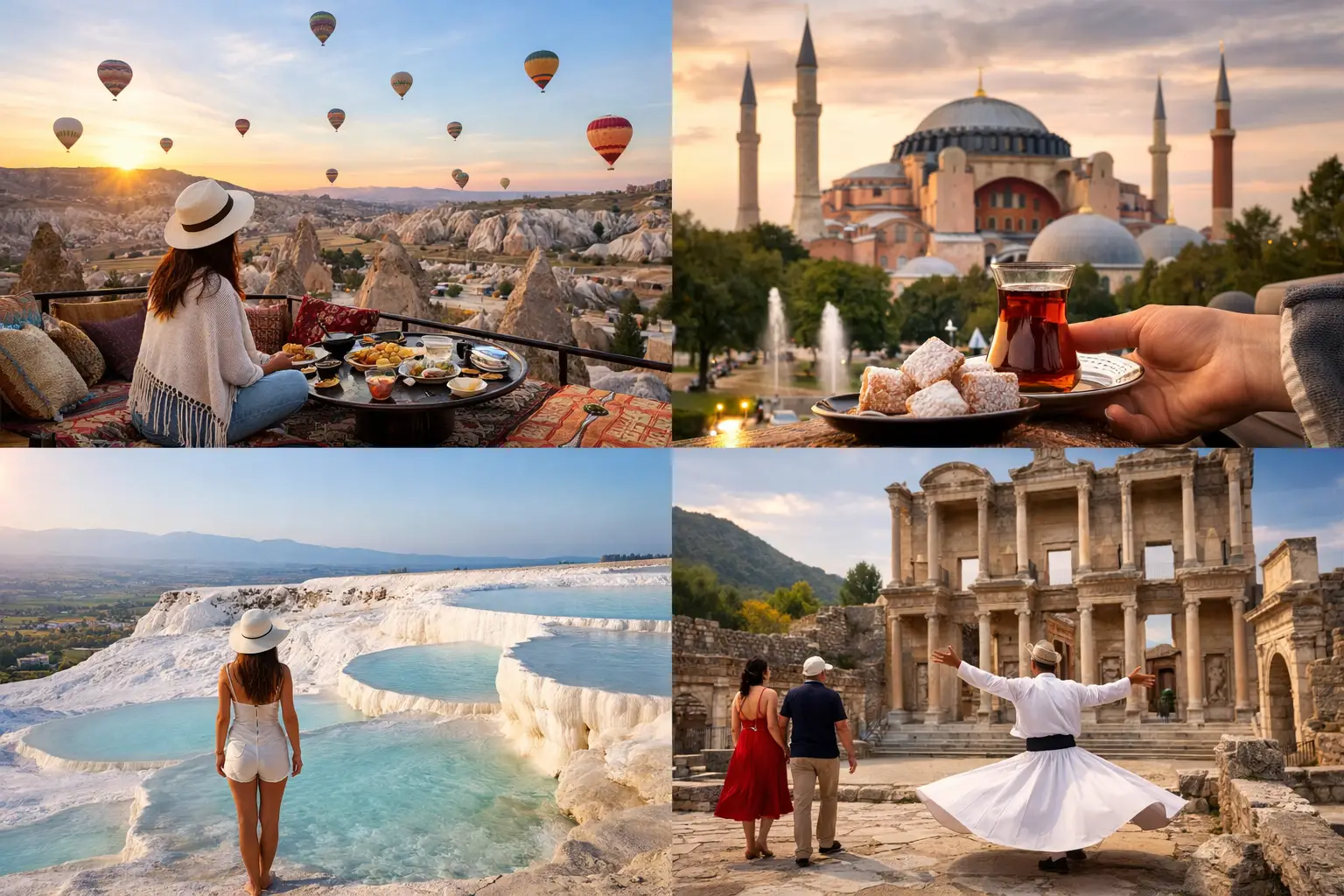
The best Turkey cultural experiences are not limited to a single museum, landmark, or meal. They come from seeing how Istanbul’s imperial sites, Cappadocia’s carved valleys, the ancient cities of the Aegean, and the coastal traditions of the Mediterranean fit into one well-planned journey. For travelers covering several regions, private guides, timed domestic flights, comfortable hotels, and reliable transfers make the difference between simply visiting and truly understanding each destination.
1. Walk Istanbul’s Historic Peninsula With a Licensed Guide
Istanbul is often the natural starting point for a Turkey itinerary because it places major layers of the country’s history within a compact, walkable area. The Historic Peninsula brings together grand public squares, former imperial residences, mosques, bazaars, and waterfront views that reveal why this city has remained central for centuries.
A private Istanbul tour is especially valuable here. A licensed local guide can arrange the day around opening times, your preferred pace, and the sites that interest you most. Some travelers want to spend more time in palace collections and architectural details, while others prefer the atmosphere of the Grand Bazaar, Spice Bazaar, and neighborhoods along the Bosphorus.
Allow at least two full days in Istanbul. A third day creates room for a Bosphorus cruise, a food-focused visit to local markets, or a more relaxed exploration of districts beyond the main monuments.
2. Experience the Bosphorus From the Water
The Bosphorus is more than a scenic waterway. It is one of the clearest ways to understand Istanbul’s geography, with Europe on one shore and Asia on the other. From the water, waterfront palaces, Ottoman-era mansions, neighborhood mosques, and hillside residences create a changing panorama that is difficult to appreciate from the road.
A privately arranged cruise can be paired with an Istanbul sightseeing day or scheduled near sunset for a quieter finish to the afternoon. It works particularly well for couples, families, and small groups who want a comfortable experience without trying to coordinate ferry times and transfers on their own.
3. Stay in a Cappadocia Cave Hotel
Cappadocia is one of Turkey’s most distinctive cultural landscapes because people have shaped its soft volcanic rock for generations. Cave dwellings, underground spaces, churches, pigeon houses, and hillside villages are part of a landscape that still feels lived in rather than staged.
Staying in a cave hotel adds context to a Cappadocia visit. The best properties balance authentic stone architecture with modern comforts, and location matters. Some are close to village restaurants and viewpoints, while others offer a quieter setting with broad valley views.
A well-designed Cappadocia tour should include the Göreme Open-Air Museum, one or two valleys, pottery workshops in Avanos, and time in villages such as Uçhisar or Ortahisar. The region deserves at least two nights, although three nights is better for travelers who want a hot air balloon flight, a relaxed hiking morning, and time to explore without rushing.
4. Watch the Balloons Rise Over Cappadocia
A sunrise balloon flight is a visual experience, but it is also one of the best ways to understand Cappadocia’s scale. From above, the valleys, rock formations, cultivated fields, and cave-cut settlements form a landscape that cannot be seen from a single viewpoint.
Weather determines whether flights operate, so it is wise to schedule the balloon experience for your first available morning in Cappadocia. If conditions are unsuitable, later mornings may offer another opportunity. Travelers who do not wish to fly can still enjoy the spectacle from a panoramic viewpoint or the terrace of their hotel.
5. See Ancient Ephesus Beyond the Postcard View
Ephesus is among the most impressive ancient cities in the Mediterranean, but its value is not only in its scale. Walking its marble streets with a knowledgeable guide helps bring its public buildings, homes, commercial areas, and harbor connections into focus. Details such as inscriptions, water systems, and street planning become far more meaningful when explained in context.
A private Ephesus tour allows time for the places many visitors rush past, including the Terrace Houses and the archaeological museum in nearby Selçuk. This is the right choice for travelers who enjoy history and want to avoid a one-size-fits-all schedule.
Ephesus combines smoothly with a stay in the Izmir or Kuşadası area. One night is possible, but two nights provide a more comfortable pace and make room for local villages, regional cuisine, and nearby archaeological sites.
6. Visit a Turkish Pottery or Carpet Workshop
Turkey’s cultural heritage is also found in working crafts. In Cappadocia, Avanos has a long tradition of pottery shaped by the clay of the Kızılırmak River. Watching a master potter at the wheel gives visitors a practical view of a craft that connects local materials, family knowledge, and artistic skill.
Carpet and textile workshops offer another perspective, especially when the visit focuses on techniques, natural dyes, regional patterns, and the time required to produce a handwoven piece. The strongest workshop visits are educational rather than pressured shopping stops. A tailor-made itinerary can select artisans and demonstrations that suit your interests.
7. Float and Explore at Pamukkale
Pamukkale’s white mineral terraces are immediately recognizable, yet the cultural experience becomes much richer when paired with the ancient city of Hierapolis above them. The ruins include a theater, monumental gateways, streets, and a vast necropolis that demonstrate the importance of this thermal settlement in antiquity.
A Pamukkale tour is best planned as an unhurried half-day or overnight stop, particularly for travelers arriving from Ephesus or continuing toward Antalya. The terraces are visually striking in bright daylight, while the archaeological site benefits from a guide who can explain the relationship between the springs and the city’s development.
The trade-off is timing. Pamukkale can be visited on a long day from the coast, but an overnight stay nearby is more comfortable and avoids turning an exceptional site into a quick photo stop.
8. Taste Regional Turkish Cuisine in Its Proper Setting
One of the best Turkey cultural experiences is eating dishes where they make the most sense. Istanbul offers market snacks, grilled fish, meze, and refined Ottoman-influenced cooking. Cappadocia is known for pottery-cooked dishes and wines from local vineyards. Along the Aegean coast, olive oil, herbs, seafood, and seasonal vegetables define many menus.
Rather than trying to sample every famous dish, build meals into the rhythm of the itinerary. Ask your guide for a neighborhood restaurant after a museum visit, a traditional breakfast near your hotel, or a family-run lunch between sightseeing stops. Dietary requirements can be planned in advance so that meals remain enjoyable and uncomplicated.
9. Travel the Turquoise Coast by Gulet
A blue cruise adds a different cultural dimension to a Turkey itinerary. A traditional wooden gulet provides access to quiet bays, small coastal towns, and ruins that are harder to reach by road. The experience is less about checking off landmarks and more about the pace of life on the water: swimming before breakfast, sharing freshly prepared meals on deck, and anchoring near a new shoreline each evening.
Routes around Bodrum, Marmaris, Fethiye, and Göcek can be adapted to the number of days available and the type of vessel preferred. A private gulet suits families and groups seeking flexibility, while a small-group departure can be a good choice for couples who prefer a social atmosphere. Three to four nights is a practical minimum; a week allows the route to feel genuinely relaxed.
10. Build the Journey Around Your Interests
The best Turkey cultural experiences differ by traveler. Families may prioritize easy travel days, spacious hotels, and hands-on workshops. History-focused travelers may want more time at Ephesus, Troy, Gallipoli, or the museums of Istanbul. Couples often prefer boutique hotels, a Cappadocia cave stay, and a few nights on the coast.
For most first-time visitors, a balanced route of Istanbul, Cappadocia, Ephesus, and Pamukkale takes around 8 to 10 days. Add Antalya or a blue cruise for a 12- to 14-day itinerary. Domestic flights reduce long road journeys, while private drivers and airport transfers keep connections straightforward between regions.
Practical Planning Tips for Cultural Travel in Turkey
Spring, from April through May, and fall, from September through October, are often the most comfortable seasons for a multi-region trip. The weather is generally pleasant for sightseeing, although Cappadocia mornings can be cool and coastal areas remain warm. Summer works well for a blue cruise and beach time, but major heritage sites are best visited early in the day.
Choose hotels based on more than star rating. In Istanbul, a centrally located hotel can save substantial travel time. In Cappadocia, a well-positioned cave hotel adds character and convenience. Near Ephesus and Pamukkale, an overnight stay creates a calmer itinerary than a succession of long transfers.
A tailor-made private tour is particularly helpful when combining several destinations. Travel Store Turkey can organize licensed guides, boutique or luxury hotel options, domestic flights, private transportation, and a route that gives each region the time it deserves. Start with the experiences you care about most, then let the itinerary shape a journey that feels organized, personal, and comfortably paced.
0 Comment