

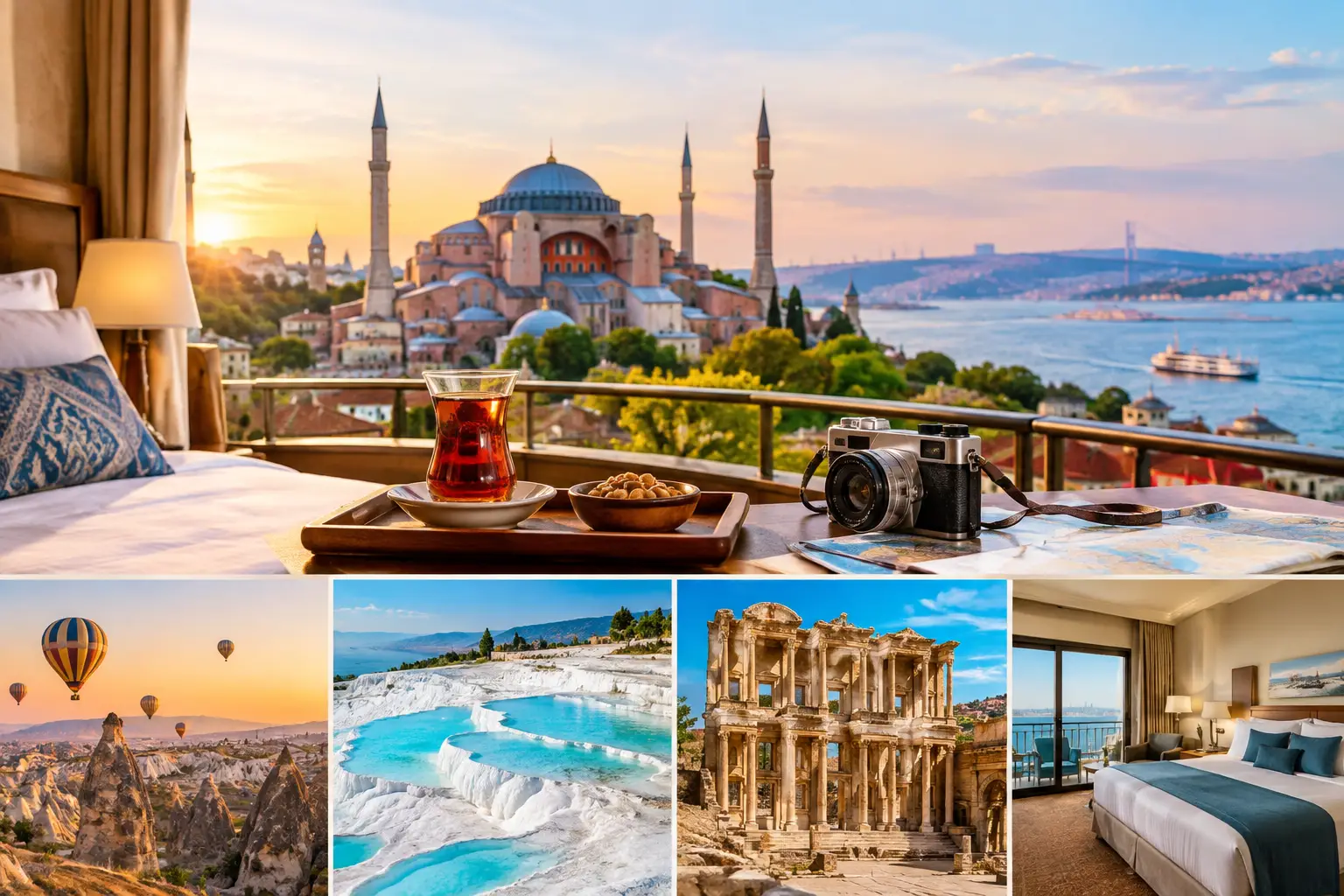
The answer to do Turkey tours include hotels is usually yes – particularly on multi-day Turkey tour packages – but the details matter as much as the inclusion itself. A well-designed itinerary should state the number of hotel nights, the cities covered, the room basis, and the hotel category before you book. That clarity is especially valuable when your trip combines Istanbul’s historic neighborhoods, Cappadocia’s valleys, and the ancient sites around Ephesus and Pamukkale.
For international travelers, having accommodations arranged as part of the trip removes one of the most time-consuming parts of planning a multi-city vacation. It also allows airport transfers, domestic flights, touring days, and hotel locations to work together rather than feeling like separate reservations.
Do Turkey Tours Include Hotels on Every Package?
Most escorted, small-group, private, and tailor-made tours lasting more than one day include hotels. A typical 7-, 10-, or 12-day itinerary may include accommodation in Istanbul, Cappadocia, Kusadasi or Izmir for Ephesus, and Pamukkale, with each overnight selected to support the next day’s route.
Day tours are different. An Istanbul city tour, a guided Ephesus visit from a cruise port, or a single Cappadocia excursion generally does not include a hotel because it has no overnight component. Some shorter packages may also list hotel accommodation as optional, allowing travelers to choose their own property. The package description should make this distinction direct and easy to understand.
When hotels are included, the rate commonly covers a standard double or twin room and daily breakfast. Single travelers usually pay a supplement for a private room. Lunches, dinners, minibar items, laundry, spa treatments, and room upgrades are often separate unless the itinerary specifically lists them.
What “Included Hotel” Should Tell You
A hotel inclusion is more useful when it comes with meaningful detail. Rather than simply seeing “4-star hotels,” look for the planned destinations, number of nights, meal plan, and whether named hotels or equivalent properties are used. Equivalent hotel wording is common in travel planning because availability can change, particularly in popular travel periods. It should still mean a comparable standard, location, and service level.
In Istanbul, location shapes the experience. A hotel in Sultanahmet places you close to major landmarks and is convenient for a first visit focused on the old city. Properties in Taksim, Galata, Karakoy, or along the Bosphorus can suit travelers who want more dining, shopping, and contemporary city life nearby. There is no single best district – it depends on how you want to spend your evenings and how much time you have in the city.
Cappadocia is equally personal. Cave hotels offer atmosphere, distinctive rooms, and easy access to the region’s character, but layouts can vary significantly because many are built into the natural rock. Boutique stone hotels are another appealing option, while larger modern properties may provide more standardized facilities. Travelers celebrating an anniversary, traveling as a family, or hoping for a terrace view at sunrise should mention those preferences when the itinerary is being created.
Along the Aegean coast, a stay in Kusadasi, Selcuk, or Izmir can be used for Ephesus touring. Kusadasi is practical for travelers who enjoy a seaside base, while Selcuk offers a smaller-town setting nearer to the archaeological area. For Pamukkale, staying in the town gives convenient access to the white travertine terraces and the ruins of Hierapolis. The right choice is not always the most luxurious hotel – it is the one that fits the route without adding unnecessary driving time.
How Hotels Fit Into a Multi-City Turkey Itinerary
Turkey is a large country, so an efficient itinerary uses accommodations as part of the travel plan. A typical route may begin with three nights in Istanbul, continue with two or three nights in Cappadocia, then move toward Ephesus and Pamukkale before ending on the coast or returning to Istanbul. Domestic flights can make this route far more comfortable than trying to cover every distance by road.
A professionally arranged package coordinates hotel check-in and check-out with flight schedules, airport transfers, luggage handling, and touring times. For example, an early morning flight from Istanbul to Cappadocia can be followed by a transfer and a guided afternoon tour, while an evening flight may call for an extra hotel night rather than a rushed departure. These details affect how relaxed the trip feels.
Private Turkey tours give you the greatest control over this structure. You may want an extra night in Istanbul to explore at an unhurried pace, a longer stay in Cappadocia for a hot-air balloon experience, or a coastal extension in Bodrum, Fethiye, Marmaris, or Antalya. Small-group tours offer a more fixed framework and often represent good value, while tailor-made travel lets the itinerary reflect your preferred hotel style, pace, and interests.
For a blue cruise, the accommodation works differently. Your cabin on the gulet is your overnight stay, usually with meals and a planned sailing route included. Travelers often combine a few hotel nights in Istanbul or on the Turkish coast with several nights aboard the vessel. Ask whether pre-cruise and post-cruise hotels are part of the package, as they may be priced separately.
Questions to Ask Before You Confirm
Before reserving a tour, ask for the hotel plan in writing. Confirm the number of included nights, room category, breakfast arrangement, and whether airport transfers are included on arrival and departure days. It is also sensible to ask whether the final hotel names will be confirmed before travel and what happens if a listed property is unavailable.
If you have preferences, share them early. This might include connecting rooms for a family, elevator access, a non-smoking room, a quiet location, a king bed, or a cave hotel in Cappadocia. Early planning provides more choice, especially for spring and fall departures when sought-after boutique properties can fill quickly.
Also check the hotel’s role within the itinerary. A beautiful property far from the day’s sightseeing may mean longer transfer times. Conversely, a centrally located hotel can give you more freedom for an independent dinner, an evening walk, or a relaxed morning before your guide arrives. A knowledgeable local operator balances hotel quality with sensible routing.
Practical Tips for Planning Your Stay
For many first-time visitors, 10 to 12 days is an excellent length for Istanbul, Cappadocia, Ephesus, and Pamukkale without moving hotels every night. Seven to eight days can work well for Istanbul and Cappadocia plus one Aegean destination, while two weeks allows time for the Turkish Riviera or a blue cruise extension.
April through May and September through October are especially comfortable for cultural touring, with pleasant conditions for walking through Istanbul, exploring Cappadocia’s open valleys, and visiting outdoor archaeological sites. Summer is ideal for adding Antalya, Bodrum, Fethiye, or Marmaris, though travelers should expect warmer sightseeing days. Winter can be rewarding for Istanbul and Cappadocia when you prefer a quieter atmosphere and select hotels with inviting indoor spaces.
Pack with hotel changes in mind. A manageable suitcase, a small day bag for flights, and comfortable walking shoes make multi-city travel easier. If you are staying in a cave hotel, remember that room designs and stairways can be part of the property’s character, so discuss mobility needs in advance.
Travel Store Turkey can arrange private and small-group itineraries with hotel options chosen around your route, comfort level, and preferred travel pace. The most useful question is not simply whether hotels are included, but whether each overnight stay helps make the whole journey more enjoyable. With the right accommodation plan, every destination feels less like a stopover and more like part of the experience.
0 Comment