

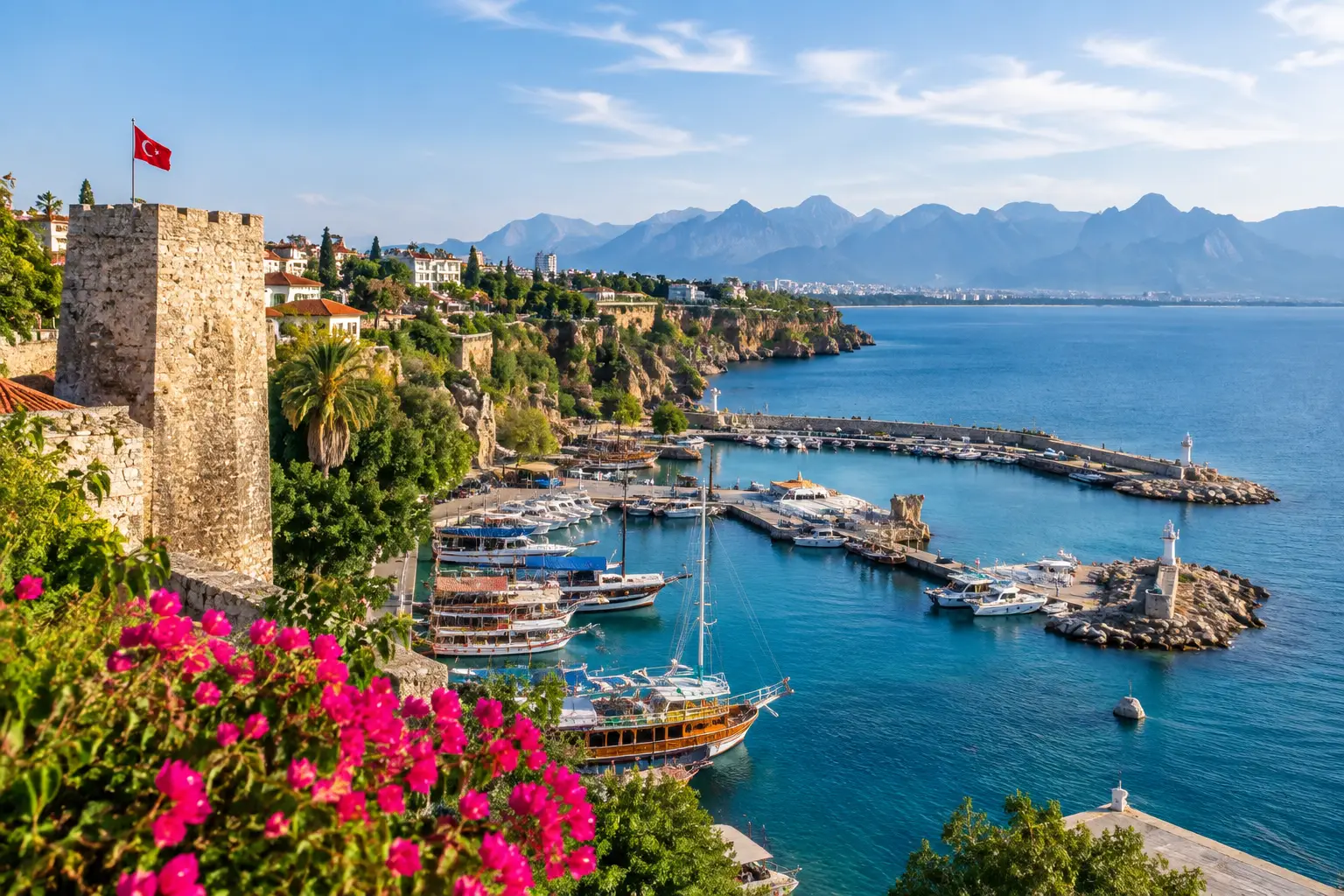
Antalya rewards travelers who want more from the Mediterranean than a hotel pool and a beach day. The city pairs a handsome historic center with Roman-era landmarks, mountain-backed coastline, and easy access to major ancient sites. So, is Antalya worth visiting? For most first-time visitors to Turkey, the answer is yes, especially when the trip includes a few days for both the city and the surrounding region.
Antalya is not the right choice for every itinerary. Travelers focused entirely on Istanbul, Cappadocia, Ephesus, and Pamukkale may prefer to keep moving rather than add another domestic flight. But for couples, families, coastal travelers, and anyone who appreciates history alongside comfort, Antalya provides an exceptionally well-rounded stop.
Is Antalya Worth Visiting? What Makes It Different
Antalya sits on Turkey’s southern coast, where the Taurus Mountains rise behind the Mediterranean. It is a large, functioning city as well as a resort gateway, which gives it more variety than a purpose-built beach destination. You can spend the morning walking through a Roman harbor, have lunch in Kaleiçi, and be swimming or visiting a classical site by afternoon.
The key is to treat Antalya as a region rather than just a single city. The old center, the beach districts, the archaeological sites east and west of town, and the mountain landscapes each offer a different experience. A well-planned private itinerary makes these pieces feel connected without turning the stay into a series of long drives.
Antalya is especially appealing after a busy stay in Istanbul or Cappadocia. Istanbul brings imperial landmarks and city energy; Cappadocia brings distinctive landscapes and cave hotels. Antalya changes the pace with open sea views, warmer evenings, and a more relaxed rhythm while still offering meaningful cultural visits.
Kaleiçi and the Old Harbor
Kaleiçi, Antalya’s Old Town, is the city’s most atmospheric district. Its narrow streets curve between restored Ottoman-era houses, small hotels, cafés, and independent shops. The historic harbor below is framed by steep walls and is particularly pleasant in the late afternoon, when the light softens over the boats and bay.
This is where Antalya feels most intimate. Start at Hadrian’s Gate, built in honor of the Roman emperor’s visit, then walk toward the fluted Yivli Minaret and the harbor. The route is compact, but it deserves an unhurried pace. A licensed local guide can add useful context to details that are easy to miss, from the city walls to the changing architectural styles of the old quarter.
For accommodations, Kaleiçi suits travelers who favor boutique character and the ability to walk to restaurants and historic sights. Guests who want broad beaches, extensive facilities, or a resort setting may prefer hotels in Lara or the Kundu area east of the city. Choosing the right base matters because Antalya can deliver two very different vacations: heritage-focused city breaks or relaxed resort stays.
Ancient Cities Are the Strongest Reason to Stay Longer
Antalya’s coast is rich in ancient cities, and this is where a two-night visit can become a three- or four-night stay. Aspendos is known for its remarkably preserved Roman theater, whose scale and condition make an immediate impression even on travelers who have visited other classical sites. The nearby aqueduct remains add perspective to the sophistication of the ancient settlement.
Perge is another standout, with a long colonnaded street, stadium, baths, gates, and extensive ruins that reveal the former shape of a prosperous Roman city. It works very well as part of a guided Antalya tour with Aspendos because the sites complement one another without requiring an overly demanding schedule.
To the west, Termessos offers a different setting. Its remains are scattered high in the mountains within a protected natural area, with a theater overlooking rugged slopes. The walk to the site is more active than visits to Perge or Aspendos, so it is best for travelers comfortable with uneven terrain. In return, it offers an unusually dramatic combination of archaeology and scenery.
Farther along the coast, Phaselis brings ancient ruins close to pine-fringed coves. It is an attractive choice for travelers who want history and time by the water in the same day. These sites are why Antalya belongs naturally in a tailor-made Turkey itinerary: they give cultural travelers much more depth than a typical beach extension.
Beaches, Water, and Coastal Time
Antalya has beach options, but they are not all alike. Konyaaltı Beach lies west of the center, with a pebble shore, clear water, and mountain views. It is convenient for guests staying in the city and has a lively promenade atmosphere. Lara Beach, east of the center, has a softer sandy feel and is closely associated with larger beach hotels and resort facilities.
The best choice depends on the vacation you want. A couple combining sightseeing with dinners in the Old Town may prefer Kaleiçi or central Antalya with a few hours at Konyaaltı. Families wanting a slower stay and on-site amenities may be better served by a carefully selected Lara or Kundu hotel. Private airport transfers and hotel planning are particularly useful here, since the most suitable property is not always in the same district as the places you plan to visit.
Travelers with more time can continue from Antalya toward the Turquoise Coast. The route toward Kaş and Fethiye introduces quieter coves, small harbor towns, and opportunities for private boat outings or a Turkey Blue Cruise. It is one of Turkey’s most rewarding coastal combinations, although it needs enough days to enjoy rather than rush.
For travelers who want more privacy and flexibility on the water, it is also possible to hire a private motor yacht or gulet in Turkey and combine a coastal cruise with a longer land itinerary.
When Antalya May Not Be the Best Fit
Antalya may be less essential if your trip is limited to six or seven days and your priority is Turkey’s headline cultural route. Istanbul, Cappadocia, Ephesus, and Pamukkale already create a full itinerary, particularly when domestic travel days are included. In that situation, adding Antalya can make the schedule feel compressed.
It may also be the wrong choice if you expect a tiny, quiet seaside village. Antalya is a major destination with urban traffic, large hotels in some districts, and a busy summer season. For a more low-key coast experience, travelers can build an itinerary around boutique stays farther west. The advantage of working with a local tour operator is that the hotel location, touring pace, and transfers can be matched to the experience you actually want.
Practical Planning Tips for Antalya
The most comfortable times to visit are April through June and September through October. Spring is excellent for archaeological touring and walking in Kaleiçi, while early fall combines warm sea temperatures with less intense heat. July and August are ideal for travelers whose priority is swimming and resort time, but sightseeing is best scheduled early in the day.
Plan at least three nights if you want to see Antalya properly. This allows one afternoon and evening in Kaleiçi, one full day for Perge and Aspendos, and one day for the beach, Phaselis, or Termessos. Four or five nights suit travelers adding a resort stay, a boat day, or a slower coastal rhythm.
For a well-balanced first Turkey trip, consider Istanbul for three nights, Cappadocia for two or three nights, Antalya for three nights, then Ephesus and Pamukkale for another two or three nights. Domestic flights can keep this route comfortable, while private transfers and knowledgeable guides reduce the friction between airports, hotels, and archaeological sites.
Combine Antalya With Cappadocia, Ephesus and Pamukkale
Antalya also works particularly well as part of a longer Turkey itinerary. Travelers can fly from Istanbul to Cappadocia, continue south toward Antalya, and then travel along the western route toward Pamukkale and Ephesus. This creates a journey that combines Turkey’s landscapes, ancient cities, Mediterranean coast, and major cultural highlights without returning repeatedly to Istanbul.
Travelers interested in the archaeological side of the journey can combine Antalya with Ephesus, one of the most important ancient cities in Turkey. Cappadocia can provide the contrasting landscape and cave-hotel experience, while Pamukkale adds the white travertine terraces and ancient Hierapolis.
Those with additional time can continue toward Fethiye and finish the trip with several days at sea. See our Blue Cruise Turkey routes, gulets and planning guide for more information about adding a coastal sailing experience to a Turkey itinerary.
A Better Way to Include Antalya in a Turkey Itinerary
Antalya works best when it has a clear role in your journey. It can be the cultural Mediterranean chapter after Cappadocia, the restorative coastal finish after a faster-paced tour, or the starting point for a longer drive toward Fethiye and a blue cruise. It should not simply be added because there is a beach on the map.
A private or small-group plan gives you the flexibility to combine an Old Town hotel with selected day tours, choose a beach resort without losing access to history, and arrange domestic flights around the pace you prefer. Travel Store Turkey can help shape an Antalya stay around your preferred hotel style, interests, and onward route through Turkey.
Give Antalya enough time to show both sides of its character: the worn stones of ancient cities in the morning and the Mediterranean at day’s end. That balance is what makes the destination memorable.
Contact Travel Store Turkey to plan your Antalya and Turkey itinerary.
0 Comment