

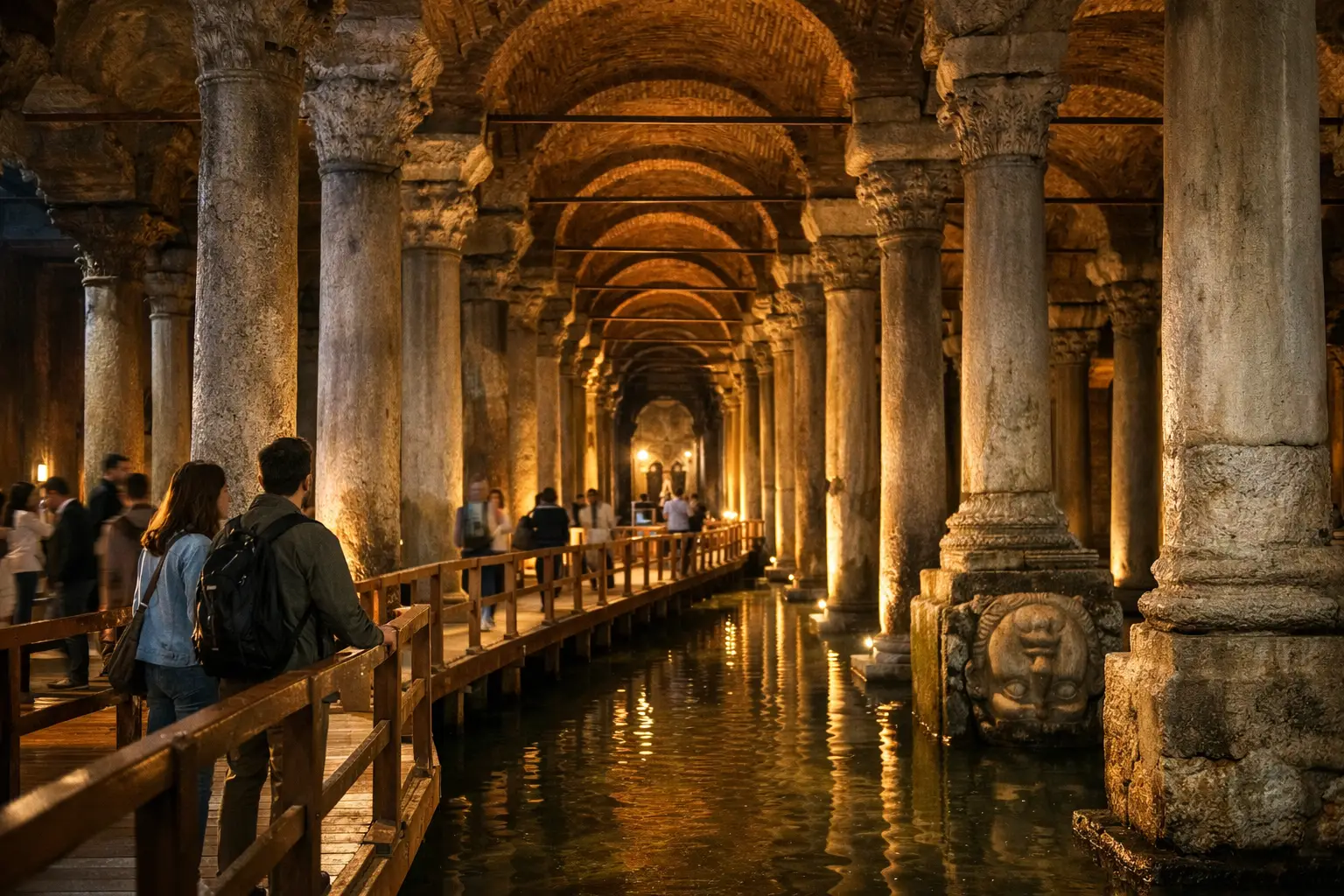
Beneath the busy streets of Sultanahmet, cool air, shallow water, and hundreds of stone columns create one of Istanbul’s most memorable contrasts. The Istanbul underground cistern is a short walk from many headline landmarks, yet it feels like entering a separate, hidden city—one shaped by Roman engineering, Byzantine ambition, and careful modern preservation.
For travelers planning a well-organized Istanbul stay, the Basilica Cistern is an excellent first-day visit. It is centrally located, does not require a full morning, and adds a powerful historical layer to an itinerary that may also include palaces, museums, markets, and a Bosphorus cruise. A licensed guide can make the experience especially rewarding by explaining what the space was built to do, how its materials arrived here, and why its details continue to fascinate visitors.
What Is the Istanbul Underground Cistern?
Known locally as Yerebatan Sarnıcı, the Basilica Cistern is the largest surviving covered water reservoir from the Byzantine period in Istanbul. It was constructed in the sixth century during the reign of Emperor Justinian I to store water for the city and serve important buildings in the historic center.
The scale is the first surprise. Inside, 336 marble columns rise from the water in orderly rows, supporting a vaulted brick ceiling. Soft lighting reflects across the floor and columns, giving the chamber a theatrical atmosphere without disguising its original practical purpose: this was essential urban infrastructure, designed to help supply a major imperial capital.
Much of the cistern’s character comes from its reused architectural pieces. Columns and bases were brought from earlier structures, which explains why their styles are not identical. This practical reuse is a valuable reminder that historic Istanbul was never a static museum city. It was continually built, repaired, adapted, and expanded.
Why the Basilica Cistern Is Worth Your Time
The Basilica Cistern is not simply a photogenic stop. It gives travelers a clearer understanding of Istanbul’s extraordinary historical depth. Above ground, the old city is defined by courtyards, domes, streets, and monumental facades. Below ground, it reveals the hidden systems that made dense urban life possible many centuries ago.
The visit also provides a welcome change of pace. Istanbul can be full and energetic, particularly around Sultanahmet. The cistern is cooler, quieter in mood, and more compact than many major sites. Most visitors can appreciate it in about 30 to 45 minutes, though those interested in architecture, photography, or history may prefer a slower visit with a guide.
Its best-known details are the two Medusa head bases near the far end of the chamber. One is positioned sideways and the other upside down. Their exact original meaning is uncertain, and that uncertainty is part of their appeal. A knowledgeable local guide can distinguish established history from the stories that have grown around them, keeping the visit informative rather than overly scripted.
How to Include the Cistern in an Istanbul Itinerary
The Basilica Cistern works best as part of a carefully timed historic-center day. Because it is near other leading sights, it can be paired with nearby museums and architectural landmarks without spending long periods in traffic. For many travelers, this is a strong choice for the morning or late afternoon, when a shaded underground stop offers a break from walking outdoors.
A private Istanbul tour is particularly useful for guests who want an efficient route and clear context. Your guide can organize the day around opening hours, visitor flow, your preferred pace, and the sites that matter most to you. Families may want shorter stops and time for a relaxed lunch, while history-focused travelers may prefer to combine the cistern with additional Byzantine and Ottoman-era locations.
If you have only two days in Istanbul, plan the cistern within your Old City sightseeing day and reserve another day for the Bosphorus, neighborhoods on both sides of the water, and a market or food experience. With three or four days, there is more room for museums, palace visits, a private boat experience, and unhurried exploration.
A practical two-day route
On the first day, focus on Sultanahmet and include the Basilica Cistern alongside the area’s major historic attractions. On the second, explore the Bosphorus waterfront, visit a palace or museum, and enjoy time in neighborhoods known for local cafés, shopping, and views. This structure avoids unnecessary backtracking and leaves room for flexible additions.
Travelers continuing through Turkey often fly onward from Istanbul to Cappadocia, Izmir for Ephesus, or Denizli for Pamukkale. Coordinating domestic flights, airport transfers, hotels, and guided touring in advance creates a smoother multi-city trip, particularly when vacation time is limited.
Practical Tips for Visiting the Basilica Cistern
The cistern is indoors, but conditions still matter. The floor may feel damp, and the atmosphere is cooler than outside, especially during warmer months. Comfortable shoes with a stable sole are the sensible choice. The walkways are generally straightforward, but visitors should move slowly and allow space for others taking photographs.
Opening hours and ticket arrangements can change, so it is wise to confirm current details before your visit. During high season, visiting earlier in the day or including the cistern in a guided itinerary can help you use your time more effectively. A private guide also helps you avoid spending part of your limited stay working out transportation, entrances, and the best order for nearby sites.
Photography is popular inside due to the reflections, columns, and dramatic lighting. However, the low-light environment can make quick phone photos look blurred. Pause, steady your camera, and keep expectations realistic when the chamber is busy. More importantly, take a few moments without a screen. The sound of water and the repeating lines of columns are central to the experience.
For travelers with mobility considerations, it is best to discuss requirements when planning your Istanbul tour. Historic sites can involve steps, uneven surfaces, and changing conditions. A tailored itinerary allows your travel specialist to suggest the most comfortable routing and appropriate pace.
Best Time to Visit Istanbul’s Underground Cistern
Spring, from April through May, and fall, from September through October, are often the most comfortable periods for sightseeing in Istanbul. Daytime temperatures are generally pleasant for walking between sites, and the cistern offers a cool pause within a full day of exploration.
Summer can be a good choice for a wider Turkey itinerary, especially when Istanbul is combined with the Aegean coast or a blue cruise from Bodrum, Marmaris, Fethiye, or Göcek. In the city, begin major sightseeing early and use indoor attractions such as the Basilica Cistern strategically during the warmest hours.
Winter brings fewer visitors at many attractions and can suit travelers who prefer a quieter cultural trip. The cistern remains compelling in every season because its atmosphere is independent of the weather outside. It is also an easy addition to a private itinerary built around museums, dining, and comfortable boutique hotel stays.
Make the Cistern Part of a Larger Turkey Journey
The Basilica Cistern is an ideal opening chapter for a journey through Turkey’s layered history and landscapes. After Istanbul, travelers can continue to Cappadocia for cave hotels and valleys shaped by volcanic rock, travel to the Aegean for Ephesus and its remarkable ancient remains, or add Pamukkale’s white terraces to a cultural route. Those seeking a slower finish can combine inland touring with a few nights on the Turkish Riviera or a private gulet cruise.
The right itinerary depends on your available days, interests, and preferred travel style. A couple on a 10-day trip may prioritize Istanbul, Cappadocia, Ephesus, and Pamukkale with domestic flights. Families may choose a more relaxed sequence with private transfers and longer hotel stays. Travelers celebrating a special occasion may want boutique properties, private guiding, and carefully selected coastal time.
Travel Store Turkey can arrange a private or small-group journey that places the Basilica Cistern in a practical, well-paced Istanbul program, then connects it smoothly with the destinations you want to see. When your route is planned around your schedule rather than a fixed template, even a brief visit beneath Istanbul can become one of the moments that gives the entire trip its sense of place.
0 Comment