
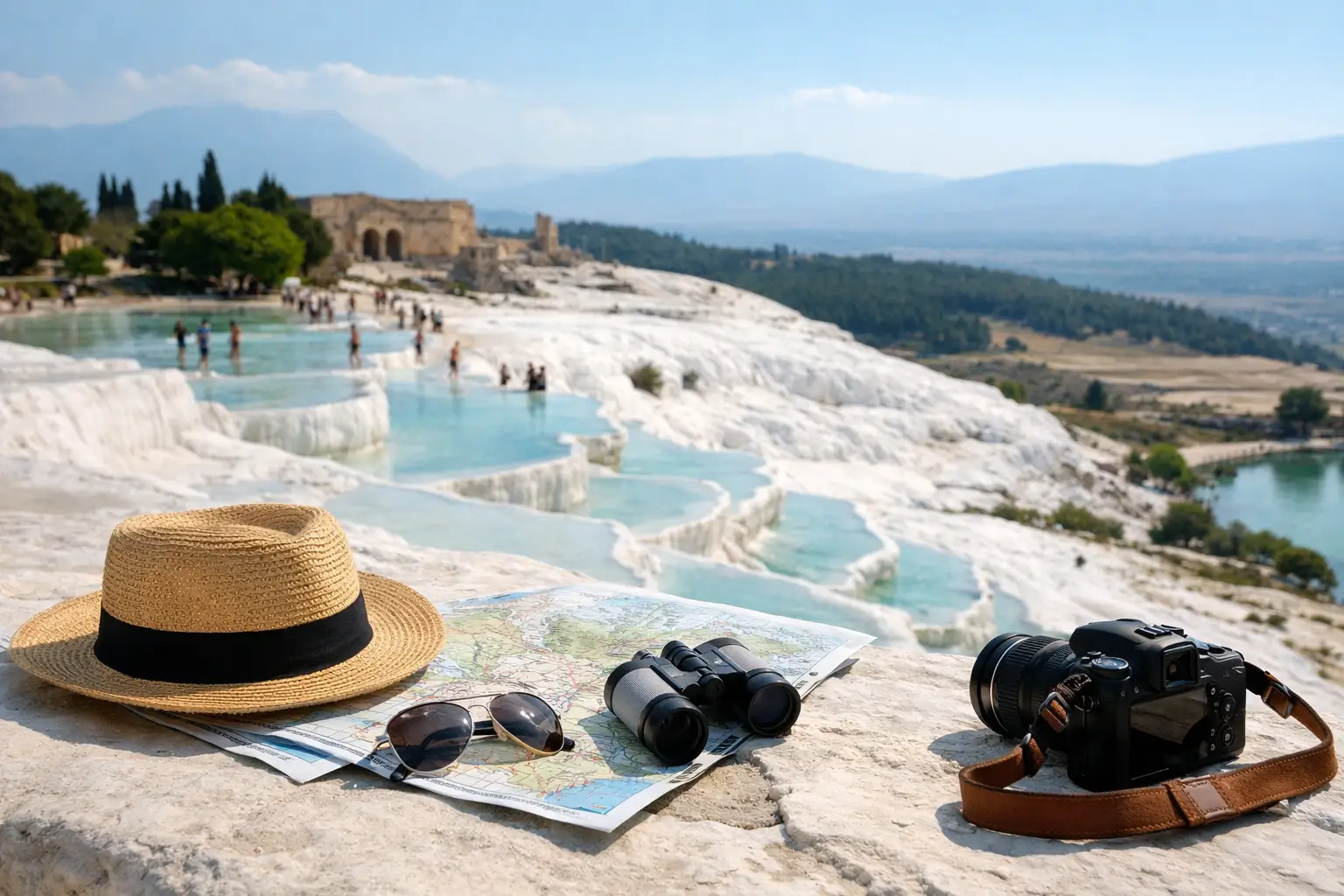
The best Pamukkale visits begin before the terraces come into view. This is not a stop to squeeze into a tight transfer between cities. The brilliant white travertines, the ruins of ancient Hierapolis, and the option of a thermal swim reward travelers who allow enough time, choose the right arrival point, and avoid the hottest part of the afternoon. Knowing how to plan a Pamukkale daytrip well turns a famous photo stop into one of the most memorable cultural and scenic days of a Turkey itinerary.
Choose the Right Base for a Pamukkale Daytrip
Pamukkale is in southwestern Turkey, close to the city of Denizli. The most convenient overnight base is Pamukkale village itself, where you can stay near the site and enter early the next morning. This option works especially well for travelers who want a relaxed visit, a boutique hotel, and time to enjoy the thermal setting without watching the clock.
Denizli is another practical base, particularly for travelers arriving by domestic flight or continuing by train. From Denizli, the drive to Pamukkale is generally around 25 to 35 minutes, depending on your hotel and traffic. Denizli Cardak Airport is farther away, so allow roughly 45 to 60 minutes for a private transfer.
A daytrip is also possible from Kusadasi, Selcuk, Izmir, Antalya, or Fethiye, but the trade-off is driving time. From the Ephesus area, expect a full day with several hours on the road in each direction. From Antalya, the journey is similarly substantial. These routes are best handled with a private vehicle and licensed guide, particularly if Pamukkale is one stop within a longer Turkey itinerary rather than a standalone excursion.
For many travelers, the most comfortable route is Istanbul to Denizli by domestic flight, followed by a private transfer to Pamukkale. Others pair Pamukkale with Ephesus as part of a two- or three-night Aegean itinerary. This gives you room for both destinations rather than reducing either one to a rushed visit.
How to Plan a Pamukkale Daytrip Around the Best Hours
Plan to arrive early, ideally close to opening time. Morning light is softer on the white mineral terraces, temperatures are more comfortable from late spring through early fall, and there is usually more space to walk and take photographs. A later afternoon visit can also be attractive for the changing light, but it leaves less time to see Hierapolis properly.
A well-paced visit needs around four to six hours inside the broader Pamukkale and Hierapolis area. That time allows you to walk selected sections of the travertines, visit the ancient city, pause for lunch, and decide whether a thermal pool experience fits your day. If your route includes a long transfer from the coast, a custom itinerary can adjust the order of sightseeing to make the most of your available time.
The terraces are formed by mineral-rich thermal waters flowing down a hillside. Visitors follow designated pathways, and shoes must be removed on many sections to protect the surface. The pools and water levels vary with conservation measures and seasonal conditions, so it is best to arrive with realistic expectations. The site is striking in every season, but it is a protected natural landscape rather than a resort-style pool complex.
Add Hierapolis, Not Just the White Terraces
Ancient Hierapolis sits directly above Pamukkale and is essential to understanding the place. Its broad streets, theater, monumental gates, baths, and necropolis show why this was once a major spa city. The setting is unusually expansive, with views across the valley that make the walk worthwhile even for travelers who are not dedicated archaeology enthusiasts.
The theater deserves unhurried time. Its restored seating and elevated position offer one of the finest viewpoints in the area. A knowledgeable local guide can bring the ruins into context, explaining how the thermal waters shaped the city’s development and helping you focus on the most meaningful areas rather than wandering without a clear route.
For travelers who prefer a gentler pace, a private Pamukkale excursion can include vehicle access where permitted, tailored walking distances, and breaks designed around your interests. Families, multigenerational groups, and travelers combining several Turkish destinations often find this flexibility more valuable than trying to fit a fixed group schedule.
Decide Whether Cleopatra’s Pool Is Worth Your Time
Cleopatra’s Pool, also known as the Antique Pool, is located within the Hierapolis area. It offers the distinctive experience of swimming in warm mineral water among submerged ancient stone fragments. It is a separate experience from walking the travertines, and admission is typically arranged separately from the main site entrance.
Whether to include it depends on your priorities. If you have an overnight in Pamukkale or a full, unhurried day, it can be a pleasant addition. If you are arriving from Kusadasi or Antalya and need to return the same evening, you may prefer to spend that time at the terraces and theater instead. Bring swimwear if you think you may want the option, but keep your schedule flexible.
A Practical Pamukkale Daytrip Itinerary
For travelers staying nearby, begin with the travertines early in the morning. Walk the designated route uphill while the sun is still low, then continue into Hierapolis for the main archaeological sites. After visiting the theater and central ruins, take a relaxed lunch break in Pamukkale village or at your hotel.
In the early afternoon, choose between more time in Hierapolis, a visit to the archaeological museum, or Cleopatra’s Pool. The museum is housed in the restored Roman baths and is a worthwhile choice for travelers interested in regional artifacts and the history of the site. If the day is especially warm, reserve more strenuous walking for the morning and use the afternoon for a slower visit.
Travelers coming from the Ephesus or Kusadasi region should generally start early and build in a lunch stop. Rather than returning immediately after sightseeing, consider staying one night in Pamukkale. This simple change creates a more balanced journey and allows you to see the terraces in quieter morning or evening light. It also makes the next leg toward Antalya or the coast much easier.
Best Time to Visit and What to Bring
April through June and September through October are often the most comfortable months for a Pamukkale daytrip. Days are usually pleasant for walking, while the summer heat of July and August can make the exposed ruins feel intense around midday. Winter brings cooler conditions and occasional rain, but the white terraces against a dramatic sky can be especially beautiful, with fewer visitors.
A few practical items make the visit more comfortable:
- Wear clothes suitable for walking on uneven archaeological paths and bring shoes that are easy to remove for the travertine route.
- Pack sunglasses, sunscreen, and a hat, as there is limited shade across much of Hierapolis.
- Carry swimwear and a small towel if Cleopatra’s Pool is a possibility.
- Bring water, especially from late spring through early fall, and allow time for a proper lunch rather than relying on a quick snack.
Safety Note: The travertine surfaces can be wet and uneven. Follow site instructions and use the marked visitor routes. If mobility is a concern, let your tour planner know in advance so the day can be organized around the most accessible viewpoints and a comfortable walking pace.
Build Pamukkale Into a Better Turkey Route
Pamukkale works particularly well between the Aegean coast and Antalya. A popular route begins with custom Istanbul tours, continues to Cappadocia tours for its valleys and cave hotels, then flies to the Izmir area for Ephesus before traveling overland to Pamukkale. From there, travelers can continue to Antalya or add time on the Turquoise Coast with a blue cruise or a stay in Fethiye, Bodrum, or Marmaris.
It can also be included in tailor-made private Turkey tours with domestic flights, airport transfers, handpicked hotels, and guided touring arranged as one connected journey. This is often the easiest choice for visitors who want the freedom to adjust pace and hotel style while leaving the logistics to a local team.
A Pamukkale daytrip should feel like a purposeful part of your route, not a long drive for one photograph. Travel Store Turkey can arrange a private or small-group Pamukkale visit with licensed guiding, comfortable transportation, hotel options, and a route that connects naturally with Ephesus, Antalya, Cappadocia, or Istanbul. Share your travel dates and preferred pace, and the day can be shaped around the experience you actually want to have.
0 Comment