

Pamukkale Travertines: Visiting Turkey’s ‘Cotton Castle’
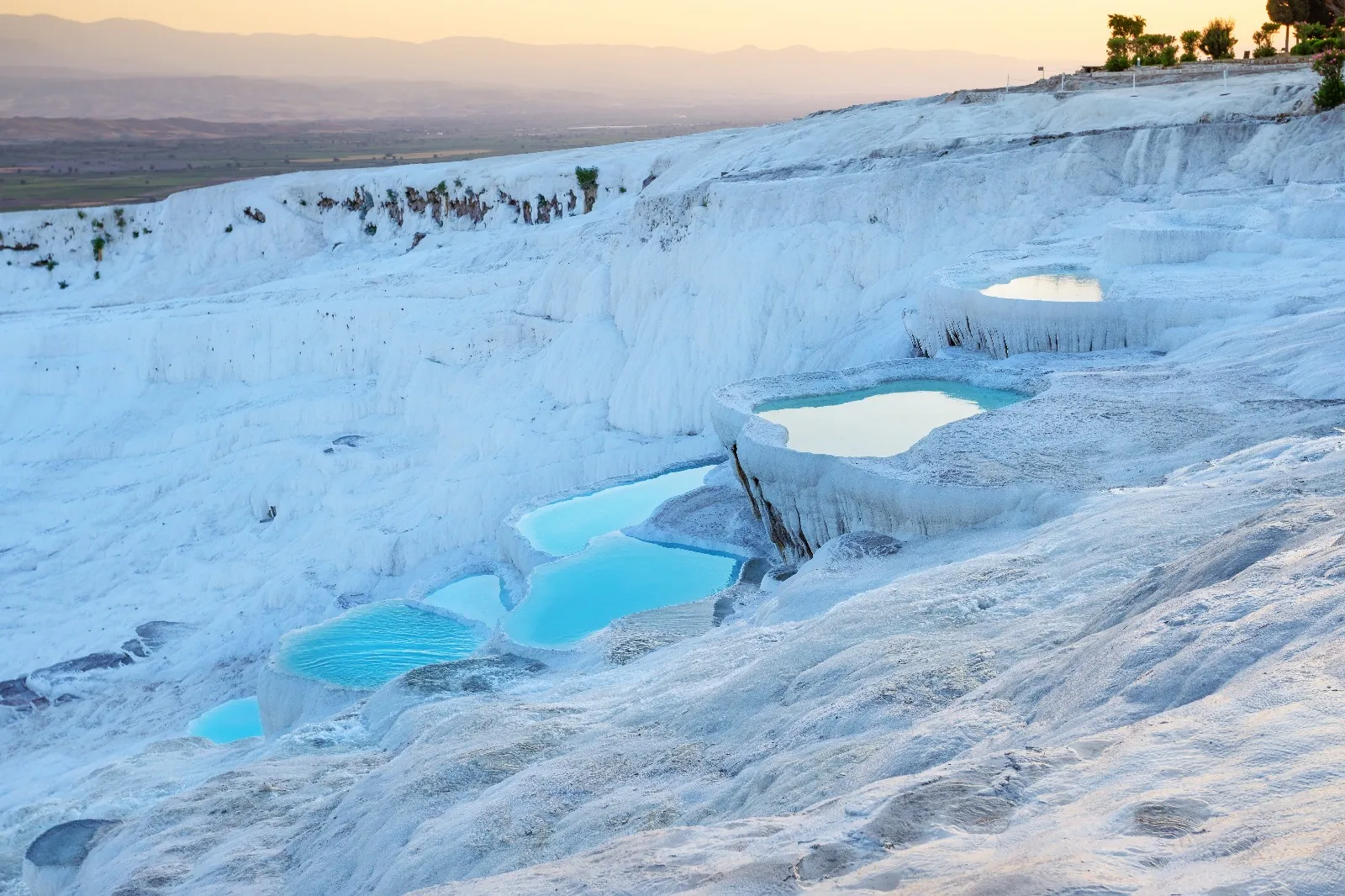
Imagine cascading pools of brilliant turquoise water flowing down pure white terraces that look like frozen waterfalls. This isn’t a dream—it’s Pamukkale, one of Turkey’s most extraordinary natural wonders and a UNESCO World Heritage Site that draws visitors from around the world.
The name “Pamukkale” literally means “Cotton Castle” in Turkish, a perfect description for this otherworldly landscape of gleaming white calcium carbonate terraces formed over thousands of years by mineral-rich thermal springs. Located in southwestern Turkey near the city of Denizli, Pamukkale offers the rare opportunity to walk barefoot through warm, ankle-deep thermal pools while taking in views that look like they belong on another planet.
But Pamukkale is more than just stunning white terraces. The site also includes the ancient city of Hierapolis, one of the best-preserved Roman spa cities, where you can swim among ancient columns in the famous Antique Pool (Cleopatra’s Pool) and explore temples, theaters, and one of the largest ancient necropolises in Turkey.
This comprehensive guide covers everything American travelers need to know about visiting Pamukkale, including how to get there, ticket prices, what to see, when to go, and insider tips for making the most of this bucket-list destination.
Why Pamukkale is Special: The Science Behind the Beauty
How the Travertines Formed
Pamukkale’s surreal landscape wasn’t created overnight. Over millennia, hot springs carrying calcium bicarbonate traveled up through fault lines in the earth, cooling when they reached the surface. As the water cooled and evaporated, calcium carbonate (limestone) precipitated out, slowly building up the brilliant white terraces you see today.
The process continues: The springs still flow at a rate of about 400 liters per second, maintaining and slowly expanding these natural formations.
The white color: The pure white appearance comes from the high concentration of calcium carbonate—essentially the same material as chalk or limestone.
The blue pools: When water fills the travertine basins, minerals in the water create that stunning turquoise-blue color that makes Pamukkale so photogenic.
Why It’s a UNESCO World Heritage Site
Pamukkale earned UNESCO World Heritage status in 1988 for two reasons:
Natural Significance:
- One of the world’s most spectacular travertine formations
- Rare geological phenomenon
- Ongoing natural process visible to visitors
- Unique ecosystem supported by thermal springs
Cultural Significance:
- Ancient city of Hierapolis built specifically to utilize these thermal waters
- Exceptionally well-preserved Roman spa city
- Important early Christian site
- Extensive necropolis with over 1,200 tombs
Current Conservation Efforts
In the 1980s, hotels built directly on the travertines, and tourists wore shoes on the terraces, causing significant damage. Today, strict conservation measures are in place:
- Hotels removed from the travertines
- Shoes prohibited on the terraces
- Water flow carefully managed to preserve formations
- Designated walking paths
- Limited access to certain areas for restoration
- Regular monitoring and maintenance
These efforts have successfully restored much of Pamukkale’s pristine appearance.
How to Get to Pamukkale
Location & Orientation
Pamukkale is located in Denizli Province in southwestern Turkey, about 19 km from Denizli city center and 3 km from the small town of Pamukkale village.
Nearest Major Cities:
- Denizli: 19 km (nearest city with bus/train station)
- Izmir: 240 km (3-hour drive)
- Antalya: 240 km (3-hour drive)
- Istanbul: 600 km (8-9 hours by bus/night train)
From Istanbul
By Plane: Fly to Denizli Çardak Airport.
- Flight duration: 1 hour 15 minutes
- Airlines: Turkish Airlines, Pegasus
- Frequency: Multiple daily flights
- Cost: $40-120 depending on season
From airport to Pamukkale:
- Shuttle bus: 30-45 minutes
- Private transfer: $30-40
- Rental car: Available at airport
By Night Bus: Comfortable overnight buses run from Istanbul to Denizli.
- Duration: 10-11 hours
- Cost: $25-40
- Companies: Metro, Pamukkale, Kamilkoç
- Departs evening, arrives morning
- Modern buses with Wi-Fi, screens, attendants
By Organized Tour: 2-3 day tours from Istanbul often combine Pamukkale with Ephesus.
- Duration: 2-3 days
- Cost: $200-400 per person
- All-inclusive with transportation, accommodation, meals, guides
From Izmir or Selçuk/Ephesus
By Bus: Direct buses from Izmir to Denizli.
- Duration: 3.5-4 hours
- Cost: $10-15
- Frequency: Hourly departures
By Organized Day Tour: Many companies offer day tours from Kusadasi/Selçuk.
- Duration: Full day (12-14 hours including travel)
- Cost: $60-100 per person
- Early morning departure (6-7 AM)
Note: Long day but doable if you’re short on time.
From Antalya
By Bus: Direct buses from Antalya to Denizli.
- Duration: 4 hours
- Cost: $12-18
- Multiple daily departures
From Denizli to Pamukkale
Once you arrive in Denizli:
By Dolmuş (Shared Minibus): Frequent minibuses run from Denizli otogar to Pamukkale.
- Duration: 30-40 minutes
- Cost: $2-3
- Runs every 20-30 minutes
By Taxi: Private taxi from Denizli.
- Duration: 25 minutes
- Cost: $15-20
- Convenient if arriving late
By Hotel Transfer: Many Pamukkale hotels offer free pickup from Denizli bus station or airport.
Pamukkale Entrance Fees & Hours
Ticket Prices (2025)
Combined Ticket (Pamukkale Travertines + Hierapolis Ancient City):
- Adult: 700 TL (approximately $22-25 USD)
- Children under 8: Free
- Turkish citizens/residents: Reduced rates
Antique Pool (Cleopatra’s Pool):
- Separate ticket: 350 TL ($11-13 USD)
- Worth it for the unique swimming experience
- Not included in main ticket
Hierapolis Archaeology Museum:
- Separate ticket: 125 TL ($4-5 USD)
- Included in Museum Pass Aegean
Museum Pass: The Museum Pass Aegean covers many sites in the region including Pamukkale, Hierapolis Museum, Aphrodisias, and Ephesus.
- 15-day pass: 1,000 TL ($30-35 USD)
- Good value if visiting multiple sites
Payment: Credit cards accepted, but carry cash for smaller purchases.
Opening Hours
Year-Round:
- Open daily: 6:30 AM – 9:00 PM (last entry 8:00 PM)
- Antique Pool: 8:00 AM – 7:00 PM
- Museum: 8:30 AM – 7:00 PM (closes earlier in winter)
Best Entry Times:
- Sunrise (6:30-8:00 AM): Magical light, few crowds
- Sunset (6:00-8:00 PM): Golden hour photography, cooler temperatures
- Avoid: 11:00 AM – 3:00 PM (peak crowds and heat)
What to See & Do at Pamukkale
1. Walk the White Travertine Terraces
The main attraction—walking barefoot through warm, mineral-rich water flowing down gleaming white calcium terraces is an unforgettable experience.
Important Rules:
- Shoes MUST be removed (no exceptions)
- Carry shoes in your hand or use provided plastic bags
- Stay on designated paths
- No lying or sitting directly on travertines
- No running (surfaces can be slippery)
What to Expect:
- Water temperature: 95-100°F (35-36°C)
- Water depth: Ankle to shin-deep
- Walking surface: Smooth but can be slippery
- Distance: About 1.6 km of terraces
- Time needed: 30-60 minutes (longer with photos)
Pro Tips:
- Bring a towel for drying feet
- Wear clothes you don’t mind getting wet (splashing inevitable)
- Bring waterproof phone case or GoPro
- Go slowly—savor the experience
- The water has a slight mineral smell (normal)
2. Swim in the Antique Pool (Cleopatra’s Pool)
One of Pamukkale’s most unique experiences—swimming in a thermal pool surrounded by ancient Roman columns submerged in crystal-clear water.
History: According to legend, Cleopatra herself swam here. The pool was created when an earthquake toppled columns from the Temple of Apollo into the thermal spring.
Experience:
- Water temperature: Constant 95°F (35°C)
- Depth: 1-4 meters (3-13 feet)
- Can swim, wade, or just soak
- Underwater columns you can swim around
- Constant bubbles from natural carbonation
Practical Info:
- Changing rooms and lockers available
- Life jackets provided (mandatory for non-swimmers)
- Can get crowded during peak season
- Allow 1-2 hours
- Bring swimsuit and towel
Health Benefits: The mineral-rich water is believed to help with:
- Rheumatism and arthritis
- Circulation problems
- Skin conditions
- Stress relief
Cost: 350 TL (separate from main entrance)
3. Explore Hierapolis Ancient City
The ruins of Hierapolis sprawl across the plateau above the travertines, offering fascinating glimpses into Roman spa culture.
Must-See Sites:
The Great Theater:
- Capacity: 12,000 spectators
- Built in 2nd century CE
- Exceptionally well-preserved
- Stunning views over Pamukkale valley
- Detailed carvings depicting Apollo and Artemis
Necropolis (Ancient Cemetery):
- One of Turkey’s largest ancient necropolises
- Over 1,200 tombs
- Various tomb types: sarcophagi, house-shaped tombs, tumuli
- Tombs from Hellenistic, Roman, and early Christian periods
- Fascinating inscriptions and reliefs
Temple of Apollo:
- Originally a major pilgrimage site
- Built over the Plutonium (gateway to the underworld)
- Columns and foundations remain
- Sacred to multiple ancient religions
St. Philip’s Martyrium:
- Octagonal church marking where St. Philip was martyred
- Built in 5th century CE
- Hilltop location with panoramic views
- 15-minute uphill walk but worth it
Roman Bath Complex (Now Archaeology Museum):
- Well-preserved bath architecture
- Houses artifacts from Hierapolis and Laodicea
- Statues, sarcophagi, pottery, jewelry
- Essential context for understanding the site
Domitian Gate:
- Northern entrance to ancient city
- Triple-arched gateway
- Built in 1st century CE
Frontinus Street:
- Main colonnade street
- Ran through heart of city
- Partially restored columns
Byzantine City Walls:
- Built in 4th-5th century CE
- Protected Christian Hierapolis
Time Needed: Allow 2-3 hours to explore Hierapolis thoroughly.
4. Visit at Sunrise or Sunset
Sunrise (6:30-8:00 AM):
- Magical soft light on white terraces
- Virtually empty
- Cool temperatures
- Steam rising from thermal waters creates mystical atmosphere
- Best for photography purists
Sunset (6:00-8:00 PM):
- Golden hour illuminates terraces
- Warm glow on white calcium
- Less crowded than midday
- Romantic atmosphere
- Still comfortable to walk barefoot
Photography: Both times offer Instagram-worthy shots. Bring:
- Wide-angle lens for landscape
- Tripod for longer exposures
- Waterproof camera for close-ups in pools
- Polarizing filter to reduce glare
5. Watch the Light Show (Seasonal)
During summer months, sometimes there are evening light and sound shows that illuminate the terraces.
Check Locally: Not always operating; ask at your hotel or ticket office.
6. Explore Nearby Attractions
Kaklik Cave (30 km away):
- Underground travertine formations
- “Underground Pamukkale”
- Admission: 50 TL
- Time: 30-45 minutes
Laodicea Ancient City (13 km away):
- One of the Seven Churches of Revelation
- Extensive Roman ruins
- Less crowded than Hierapolis
- Free entrance
- Recently restored
Denizli City:
- Authentic Turkish city life
- Shopping (textiles, particularly towels)
- Local restaurants
- Museum of Denizli
Best Time to Visit Pamukkale
By Season
Best Overall: Spring (April-May) & Fall (September-October)
- Comfortable temperatures (65-75°F / 18-24°C)
- Moderate crowds
- Green landscape in spring
- Warm enough for thermal pools
- Ideal for exploring Hierapolis
Summer (June-August):
- Very hot (85-100°F / 30-40°C)
- Peak tourist season (crowded)
- Best for thermal pool swimming
- Go very early (6:30 AM) or late (after 6 PM)
- Hierapolis can be brutally hot midday
Winter (November-March):
- Cool to cold (40-60°F / 5-15°C)
- Fewest tourists
- Thermal pools feel amazing in cool air
- Snow on distant mountains creates stunning backdrop
- Hierapolis exploration more comfortable
- Some facilities may have reduced hours
By Time of Day
Early Morning (6:30-9:00 AM):
- Best light for photography
- Fewest crowds
- Coolest summer temperatures
- Mystical steam effects
- Peaceful experience
Midday (11:00 AM – 3:00 PM):
- Avoid in summer (too hot)
- Most crowded
- Harsh photography light
- Good for swimming in pools
Late Afternoon/Evening (5:00-8:00 PM):
- Stunning sunset light
- Cooling temperatures
- Thinning crowds
- Romantic atmosphere
- Golden hour photography
Crowd Considerations
Peak Season (July-August):
- Expect significant crowds, especially 10 AM – 4 PM
- Book accommodations well in advance
- Consider staying overnight to visit at sunrise/sunset
Shoulder Season (April-May, September-October):
- Perfect balance of weather and crowds
- Better hotel rates
- More authentic experience
Off-Season (November-March):
- Few tourists
- Best rates on tours and hotels
- Weather may be too cool for extended terrace walking
- Thermal pools feel incredible in cold air
Practical Tips for Visiting Pamukkale
What to Wear & Bring
Essential Items:
- Swimsuit (wear under clothes or bring to change)
- Towel (for drying feet after terraces, swimming)
- Waterproof bag for shoes (while walking terraces)
- Sun protection: hat, sunglasses, sunscreen
- Water bottle (1-2 liters per person)
- Comfortable walking clothes
Footwear Strategy:
- Wear sandals/flip-flops you can easily remove
- Bring a plastic bag for carrying shoes
- Some visitors bring water shoes for after terraces
- Barefoot is mandatory ON the terraces
For Photography:
- Camera + backup battery
- Waterproof phone case
- Tripod for sunrise/sunset
- Lens cloth (mineral spray can spot lenses)
Optional but Helpful:
- Light backpack
- Snacks
- Cash for vendors
- Portable charger
- Light jacket (for early morning/evening)
Where to Eat
Inside the Complex:
- Small snack bars near Antique Pool
- Limited options, higher prices
- Better to eat before/after visit
Pamukkale Village:
- Many restaurants within walking distance of entrances
- Turkish home-style cooking
- Rooftop restaurants with views
- Prices: $$
- Try: gözleme (Turkish flatbread), köfte (meatballs), meze
Recommendations:
- Kayaş Restaurant (traditional Turkish)
- White Heaven Hotel Restaurant (rooftop views)
- Köfteci Yusuf (casual, köfte specialist)
- Mehmet’s Heaven (popular with tourists)
Physical Considerations
Accessibility:
- Travertines NOT wheelchair accessible (must be barefoot)
- Some areas of Hierapolis accessible
- Antique Pool has steps (difficult access)
- Uneven ancient ruins throughout
Fitness Level:
- Moderate walking required
- Hierapolis involves hills and stairs
- Allow breaks in summer heat
- Can get slippery on wet travertines
Health:
- Thermal waters safe for most people
- Consult doctor if you have heart conditions
- Stay hydrated (mineral water is dehydrating)
- Don’t drink the thermal water
Safety Tips
On the Travertines:
- Walk slowly (surfaces slippery)
- Hold children’s hands
- Watch for edges of pools
- Don’t jump or run
- Keep belongings secure in waterproof bag
Sun Protection:
- No shade on travertines or much of Hierapolis
- Reapply sunscreen frequently
- Wear hat and sunglasses
- Seek shade during midday heat
Valuables:
- Use lockers at Antique Pool
- Keep phone in waterproof case
- Consider leaving valuables at hotel
- Watch bags near crowded areas
Staying Near Pamukkale: Accommodation Guide
Pamukkale Village (Best Base)
The small village next to the travertines offers the most convenient access and great views.
Budget Options ($20-40/night):
- Artemis Yoruk Hotel – Family-run, great breakfast, terrace views
- Venus Hotel – Pool, garden, walking distance to entrance
- Koray Hotel – Basic but clean, friendly staff
Mid-Range ($40-80/night):
- Hal-Tur Hotel – Thermal pools, excellent breakfast, rooftop terrace
- Melrose House Hotel – Boutique property, thermal pool, stylish rooms
- Pamukkale White Heaven Hotel – Rooftop pool with travertine views
Boutique/Upscale ($80-150/night):
- Colossae Thermal Hotel – Full spa, multiple thermal pools, luxury rooms
- Doga Thermal Hotel – Modern amenities, indoor/outdoor pools, spa
- Richmond Pamukkale Thermal – Largest hotel, extensive facilities, all-inclusive options
Special Feature: Thermal Pool Hotels: Many Pamukkale hotels have their own thermal pools fed by the same springs. After visiting the travertines, you can soak in your hotel pool at sunset!
Denizli City (Alternative)
Stay in the larger city if you want:
- More dining options
- Shopping opportunities
- Urban amenities
- Lower prices
Distance: 19 km to Pamukkale (30-minute dolmuş ride)
Sample Pamukkale Itineraries
Half-Day Visit (Minimum 4-5 hours)
Morning Arrival: 8:00 AM – Enter from lower gate 8:15 AM – Walk up travertines (take your time, take photos) 9:30 AM – Explore Hierapolis main sites (Theater, Necropolis) 11:00 AM – Quick visit to Temple of Apollo area 11:30 AM – Exit and return to base
Afternoon Arrival: 3:00 PM – Enter from upper gate 3:15 PM – Explore Hierapolis Ancient City 5:00 PM – Walk down travertines (sunset light) 6:30 PM – Exit from lower gate 7:00 PM – Dinner in village
Full Day (Recommended)
7:00 AM – Sunrise entry (upper gate) 7:15 AM – Watch sunrise over travertines from Hierapolis 8:00 AM – Explore Hierapolis Ancient City (Theater, Necropolis, Temple) 10:30 AM – Swim in Antique Pool 12:30 PM – Lunch break (exit and return to village) 2:00 PM – Return for afternoon (lower gate) 2:30 PM – Visit Archaeology Museum 3:30 PM – Walk up travertines slowly 5:30 PM – Sunset on terraces 7:00 PM – Exit and dinner
Two Days (Best Experience)
Day 1:
- Morning: Hierapolis extensive exploration (4-5 hours)
- Afternoon: Swim in Antique Pool (2 hours)
- Late afternoon: Rest at hotel pool
- Evening: Sunset walk on travertines
Day 2:
- Early: Sunrise on travertines (photography focus)
- Mid-morning: Visit Archaeology Museum
- Late morning: Second visit to favorite travertine spots
- Afternoon: Explore nearby Laodicea or Kaklik Cave
- Evening: Relax at hotel thermal pool
Combined with Other Sites (3-4 Days)
Day 1: Arrive Pamukkale, afternoon/sunset visit Day 2: Full day Pamukkale + Hierapolis Day 3: Morning Pamukkale, afternoon travel to Ephesus/Selçuk Day 4: Ephesus exploration
Or combine with Cappadocia for an epic Turkey circuit
Guided Tour vs. Independent Visit
Benefits of Guided Tour
Pros:
- Transportation arranged
- Historical context from expert guide
- Skip ticket lines (pre-arranged)
- Optimal timing for light/crowds
- Learn about geology and history
- Recommended for first-time visitors
Cons:
- Less flexibility
- Set pace
- Group dynamics
- Cost ($50-100 per person)
Tour Types:
- Day trips from Izmir/Kusadasi
- Multi-day tours from Istanbul (Pamukkale + Ephesus)
- Private tours (more expensive but customizable)
Independent Visit
Pros:
- Go at your own pace
- Sunrise/sunset flexibility
- Repeat favorite areas
- Budget-friendly
- More time for photography
Cons:
- Must arrange transport
- Less historical context
- Navigation on your own
Recommended For:
- Travelers with time flexibility
- Photography enthusiasts
- Budget travelers
- Repeat visitors
Frequently Asked Questions
Q: How long should I spend at Pamukkale? A: Minimum 4-5 hours for travertines and basic Hierapolis. Full day recommended. Overnight stay ideal for sunrise/sunset experiences.
Q: Is Pamukkale worth visiting? A: Absolutely! It’s one of Turkey’s most unique natural wonders and unlike anywhere else on Earth. The combination of travertines and Hierapolis makes it exceptional.
Q: Do I have to remove my shoes? A: Yes, mandatory. Shoes damage the delicate travertine formations. You carry them in your hand or a provided bag.
Q: Can I swim in the travertine pools? A: You walk through ankle to shin-deep water but swimming is not allowed on the terraces themselves. Swimming is only in the separate Antique Pool.
Q: Is Pamukkale cold or hot? A: The thermal water is warm (95-100°F / 35-36°C). Air temperature varies by season from cold (winter) to very hot (summer).
Q: How do I get from Istanbul to Pamukkale? A: Fly to Denizli (1 hour), take overnight bus (10-11 hours), or join organized tour. Flying is fastest.
Q: Can I visit Pamukkale in one day from Istanbul? A: Technically yes with very early morning flight and late return, but exhausting. Better to stay overnight.
Q: Is Pamukkale better than Cappadocia? A: Different experiences! Both are incredible and bucket-list worthy. Pamukkale: natural wonder + ancient ruins. Cappadocia: fairy chimneys + hot air balloons. Try to visit both!
Q: What does Pamukkale water taste like? A: Don’t drink it! The thermal water has high mineral content and is not for consumption.
Q: Are there hotels with thermal pools? A: Yes! Many Pamukkale village hotels have their own thermal pools fed by the same spring source.
Q: Is Pamukkale safe? A: Very safe. Well-maintained site with security. Just walk carefully on wet surfaces.
Q: Can you still walk on the travertines? A: Yes, on designated paths only. Conservation measures protect the formations while allowing access.
Pamukkale Conservation: Being a Responsible Visitor
The travertines are a delicate natural wonder. Help preserve them:
Do:
- Remove shoes when required
- Stay on marked paths
- Dispose of trash properly
- Follow all posted rules
- Support conservation efforts
- Respect cultural sites
- Book responsible tour operators
Don’t:
- Touch/damage formations
- Leave trash
- Smoke on terraces
- Take pieces as souvenirs
- Ignore barriers/closed areas
- Use soap or sunscreen before entering water
- Fly drones without permission
Final Tips for Your Pamukkale Visit
- Stay Overnight: Don’t rush—sunrise and sunset are magical
- Go Barefoot: Embrace the experience fully
- Bring Waterproof Phone Case: You’ll want photos in the pools
- Visit Hierapolis Too: Don’t just do the travertines
- Try the Antique Pool: Unique swimming experience
- Start Early or Late: Avoid midday crowds and heat
- Stay Hydrated: More than you think—thermal exposure is dehydrating
- Book Thermal Pool Hotel: Continue the thermal experience at night
- Allow Enough Time: 4 hours minimum, full day recommended
- Combine with Ephesus: Perfect 2-3 day Turkey itinerary
Pamukkale Travertines: Visiting Turkey’s ‘Cotton Castle’
Ready to Experience Turkey’s Cotton Castle?
Walking barefoot through warm, mineral-rich pools cascading down brilliant white terraces is a surreal experience you’ll remember forever. Add in the ancient Roman city of Hierapolis, the chance to swim among submerged columns in Cleopatra’s Pool, and you have one of Turkey’s absolute must-visit destinations.
Whether you visit at sunrise when steam rises mystically from the terraces, or at sunset when golden light illuminates the white calcium formations, Pamukkale delivers a bucket-list experience unlike anywhere else on Earth.
Planning your Turkey adventure?
Pamukkale pairs perfectly with other incredible destinations like Ephesus’ ancient ruins, Cappadocia’s fairy chimneys, and Istanbul’s historic wonders. Let us help you create the perfect Turkey itinerary that includes Pamukkale and other unforgettable experiences.
[Book Your Pamukkale Tour] | [Explore More Turkey Guides] | [Plan Your Turkey Itinerary]
Don’t miss the chance to walk on Turkey’s Cotton Castle and swim in waters that ancient Romans believed had healing powers. Start planning your Pamukkale adventure today!
Related Articles:
- How to Visit Ephesus Ruins in Turkey: Complete Guide
- Hot Air Balloon Rides in Cappadocia: Complete Guide
- Istanbul in 3 Days: Perfect First-Time Itinerary
- Most Visited Cities in Turkey 2024
- Best Time to Visit Turkey: Month-by-Month Guide
Last updated: October 2025. Entrance fees and opening hours subject to change. Always verify current information before your visit.
Pamukkale Travertines: Visiting Turkey’s ‘Cotton Castle’ is about Click here to learn more about our other tours.To read news about us in the press, please click here.
0 Comment